by John Allen Paulos
 I’ve always liked stories that depended on mistaken identity, a very old theme in general. Having a degree in mathematical logic, I was also drawn to the subject on a more theoretical level, on which lies Gettier’s Paradox.
Since Plato and the ancient Greeks, knowledge has been taken by many philosophers of science to be justified true belief. A subject S is said to know a proposition P if P is true, S believes that P is true, and S is justified in believing that P is true. The philosopher Edmund L. Gettier showed in 1963 that these three ancient conditions are not sufficient to ensure knowledge of P. His counterexamples to a straightforward understanding of knowledge are paradoxical and seem particularly prevalent in politics. For me, this is part of their appeal since politics and mathematical logic occupy such different realms of cognitive space.
To provide a topical one consider the 2016 election. Trump and Clinton in October before the 2016 election were certainly evaluating their chances to win the election. Trump had strong evidence for the following compound proposition:
Proposition (1): Clinton is the person who will be elected, and there was a little clock that might help her out mounted in her lectern during the final debate. Trump’s evidence for (1) might be that the polls were showing Clinton was going to win the election and President Obama and the Democratic establishment were strongly supporting her. He also noticed the clock as he hovered around Clinton’s lectern during the debate.
If (1) is true, it implies
Proposition (2): the person who will get elected had a lectern with a little clock mounted in it. Trump saw that (1) implied (2) and thus accepted (2) on the basis of (1), for which he had strong evidence. Clearly Trump was justified in believing that (2) was true.
So far, so good. But unknown to Trump at that time, was that he, not Clinton, would be elected. Read more »
 Movies, music and novels portray a particular ideal of romantic love almost relentlessly. Love is something that happens to you, something you fall into even against your will or better judgement. It is something to be experienced as good in itself and joyfully submitted to, not something that should be questioned.

 Just as Anteus in Greek mythology renewed his strength by touching the earth, so emigrés who live abroad often draw some sort of cultural or spiritual nourishment from returning to their roots. In my case this means returning to Britain, and specifically to the countryside that remains, for the most part, green and pleasant. Usually I do this in the summer, so it made a nice change this year to be in Britain at the beginning of Spring. The trees not yet being in leaf left more of the landscape open and visible. There were fewer flowers, of course, but there were also fewer holiday makers clogging up the roads and the honey pot tourist sites.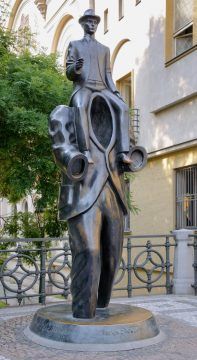
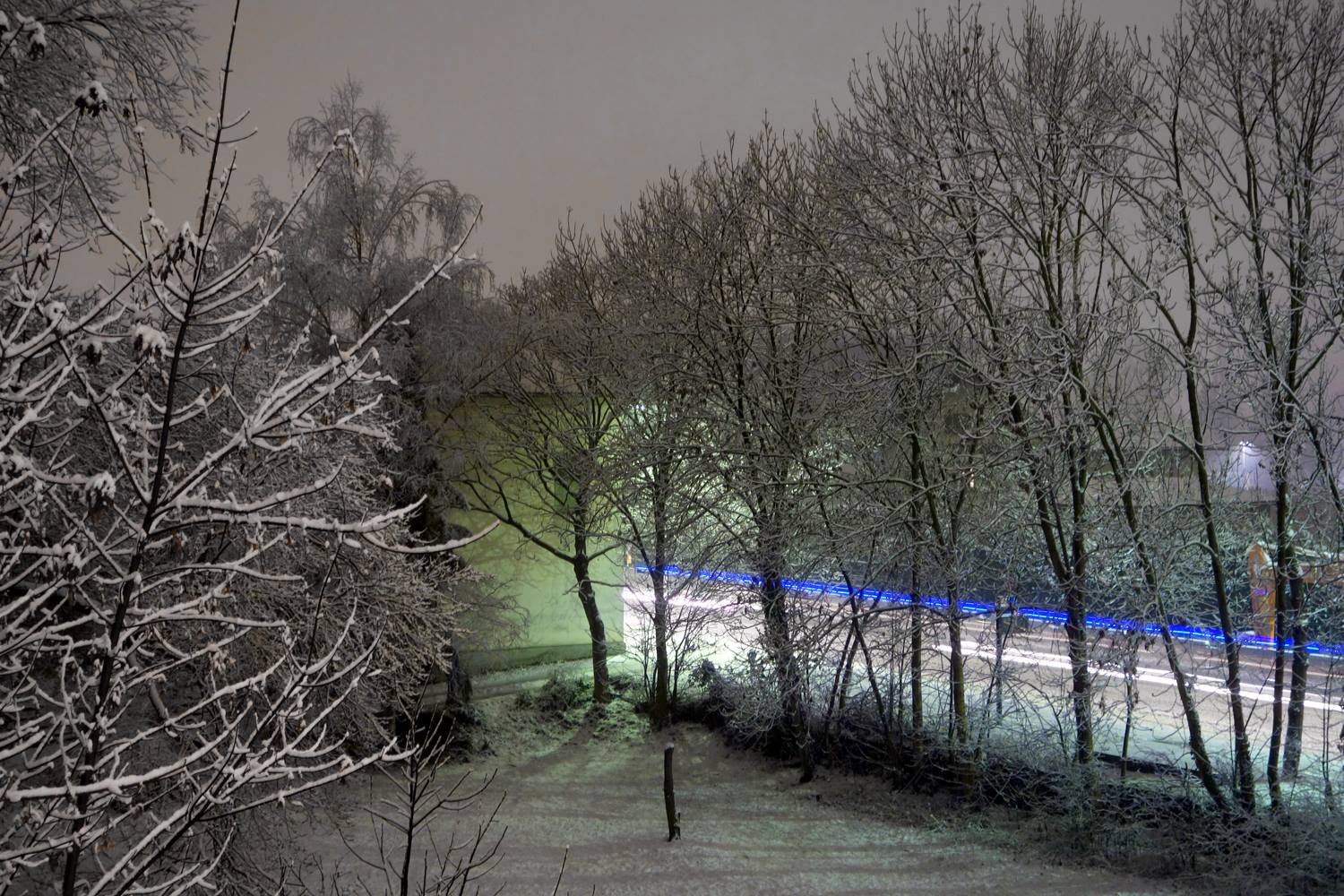
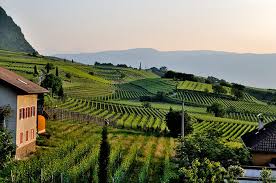 The wine world thrives on variation. Wine grapes are notoriously sensitive to differences in climate, weather and soil. If care is taken to plant grapes in the right locations and preserve those differences, each region, each vintage, and indeed each vineyard can produce differences that wine lovers crave. If the thousands of bottles on wine shop shelves all taste the same, there is no justification for the vast number of brands and their price differentials. Yet the modern wine world is built on processes that can dampen variation and increase homogeneity. If these processes were to gain power and prominence the culture of wine would be under threat. The wine world is a battleground in which forces that promote homogeneity compete with forces that encourage variation with the aesthetics of wine as the stakes. In order to understand the nature of the threat homogeneity poses to the wine world and the reasons why thus far we’ve avoided the worst consequences of that threat we need to understand these forces. I will be telling this story from the perspective of the U.S. although the themes will resonate within wine regions throughout much of the world.
 In May 2014, a young man beat his twenty-year-old sister, Farzana, to death by hitting her head with a brick. He did this in broad daylight just outside the High Court building in Lahore, the cultural, artistic and academic capital of Pakistan. He did it as local policemen and passersby looked on, lawyers in their black flowing robes went in and out of their offices and barely fifty yards away, inside the building, the bewigged and begowned Chief Justice sat with his hand on the polished gavel.



 You shouldn’t curse. People will take you less seriously. Cursing also reveals a certain laziness on your part, suggesting that you can’t be bothered to come up with more descriptive language. In the end, when you curse, you short change both yourself and your audience. Instead, take the time to use the language more fully, more carefully, and more artfully. In so doing, your message will be clearer, more forceful, and better received.


 This is Longyearbyen, Svalbard, Norway, eight hundred miles from the North Pole. Our destination, across the island, is a Russian settlement called Barentsburg.