
by Emily Ogden

The author learns to like it loud.
A friend of mine has an expression he uses when he isn’t wild about a book, or a show, or an artist. For people who like this sort of thing, he’ll say, this is the sort of thing they like. He’s giving his irony-tinged blessing: carry on, fellow pilgrims, with your rich and strange enthusiasms.
My friend is saying something, too, about being imprisoned by our tastes—or by our conscious ideas about our tastes, anyway. There I am, liking the sort of thing I like. How tiresome. Isn’t there some way out of this airless room? Trapped with our own preferences, we find we don’t quite like those things after all—we don’t like only them, we don’t like them unfailingly. Taste not a duty we can obey, nor will it obey us. It wells up from somewhere. It comes in through the side door. It is, at its best, a surprise.
I don’t like loud music. That at any rate has been the official word for some years. There was reason for doubt. In high school I listened to Nine Inch Nails in my pink-and-cream-colored bedroom, tracking the killer bees of The Downward Spiral as they veered from the right to the left headphone. Later, Venetian Snares drove me out of myself when that was what I needed. (If you don’t know the music of Venetian Snares, it is tinny, relentless, almost intolerable, highly recommended.) Nothing has ever been better than hearing Amon Tobin’s waves of musical and found noise at Le Poisson Rouge in New York, more or less alone. My tolerant friend came along but gently left me to myself after a while, perhaps because being in that basement club felt something like participating in a sonic weapon test. Could the sheer percussive force of a sound wave alter the rhythm of your heart? It seemed as though it might. I was ready to pay the price, and so were a lot of other people I saw standing rapt, alone, looking up. Read more »



 The spring ephemeral wildflowers of the Midwest are generally not large or showy. In a relatively short time during one of the less promising parts of the year, these perennial plants must put out leaves and flowers and reproduce, all before disappearing until the next spring. Still, they light up the woods for me every year despite their relatively modest circumstances.

 When Socrates’ students enter his cell, in subdued spirits, their mentor has just been released from his shackles. After having his wife and baby sent away, Socrates spends some time sitting up on the bed, rubbing his leg, cheerfully remarking on how it feels much better now, after the pain.

 I’ve always liked stories that depended on mistaken identity, a very old theme in general. Having a degree in mathematical logic, I was also drawn to the subject on a more theoretical level, on which lies Gettier’s Paradox.

 Movies, music and novels portray a particular ideal of romantic love almost relentlessly. Love is something that happens to you, something you fall into even against your will or better judgement. It is something to be experienced as good in itself and joyfully submitted to, not something that should be questioned.

 Just as Anteus in Greek mythology renewed his strength by touching the earth, so emigrés who live abroad often draw some sort of cultural or spiritual nourishment from returning to their roots. In my case this means returning to Britain, and specifically to the countryside that remains, for the most part, green and pleasant. Usually I do this in the summer, so it made a nice change this year to be in Britain at the beginning of Spring. The trees not yet being in leaf left more of the landscape open and visible. There were fewer flowers, of course, but there were also fewer holiday makers clogging up the roads and the honey pot tourist sites.

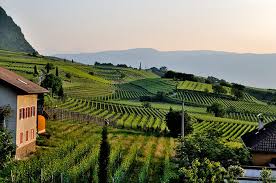 The wine world thrives on variation. Wine grapes are notoriously sensitive to differences in climate, weather and soil. If care is taken to plant grapes in the right locations and preserve those differences, each region, each vintage, and indeed each vineyard can produce differences that wine lovers crave. If the thousands of bottles on wine shop shelves all taste the same, there is no justification for the vast number of brands and their price differentials. Yet the modern wine world is built on processes that can dampen variation and increase homogeneity. If these processes were to gain power and prominence the culture of wine would be under threat. The wine world is a battleground in which forces that promote homogeneity compete with forces that encourage variation with the aesthetics of wine as the stakes. In order to understand the nature of the threat homogeneity poses to the wine world and the reasons why thus far we’ve avoided the worst consequences of that threat we need to understand these forces. I will be telling this story from the perspective of the U.S. although the themes will resonate within wine regions throughout much of the world.
 In May 2014, a young man beat his twenty-year-old sister, Farzana, to death by hitting her head with a brick. He did this in broad daylight just outside the High Court building in Lahore, the cultural, artistic and academic capital of Pakistan. He did it as local policemen and passersby looked on, lawyers in their black flowing robes went in and out of their offices and barely fifty yards away, inside the building, the bewigged and begowned Chief Justice sat with his hand on the polished gavel.