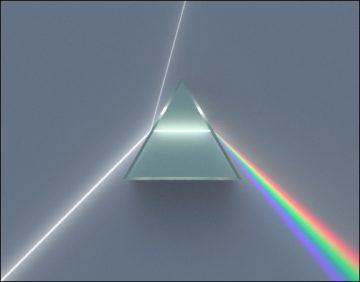
by Adele A Wilby

Although a further eighteen months remain till the next Presidential elections in the United States, speculation as to whether Donald Trump will be a one-term or two-term president is starting to gain momentum amongst political pundits and politicians across the globe. The reasons for the growing interest are varied, not least because for many the thought of another four years of Trump in office sends chills down the spine. His two and half years in office have revealed an astounding lack of knowledge and political skill by an individual with such wide-reaching global power and influence, represented reactionary policies, and a limited communication ability laced with a liturgy of lying that should outrage the sensibilities and conscience of a people, and provide justifiable grounds to disqualify him from any hope of returning to occupy the office as a representative of the American people. Yet the probability of Trump in the Oval Office for another four years is not yet off the table.
This stark reality became apparent recently in a brief interview on a news programme during which Alice Butler-Short, the President of the Virginia Women for Trump (2017) organisation, expressed what could only be considered an impassioned loyalty and defence of Trump, following the disclosure of the Mueller Report. Indeed, so enamoured was she of Trump, Butler-Short articulated a plan to campaign on the virtues of Trump amongst all levels and sections of society not normally Trump supporters, with a view to widen his voting appeal, and to put him back in office. But Butler-Short is not the only woman, or more specifically white woman, in the US, who views Trump through rose-coloured glasses; an army of female Trumpites, as the 2016 election results reveal, are an electoral force to be reckoned with by any politician who aspires to occupy the most powerful office on earth. How do we account for this support for Trump amongst white-women in the US, and what is the possibility of that history of support repeating itself? Read more »

 I don’t know anything about music. I make art, and like many artists I listen to music while working. Nearly every kind of music, but mostly metal for those time-to-get-serious moments. Atmospheric black metal with little discernible speech tends to work best, because it provides a setting such that one can become lost in the droning distortions when working on something. The music I like to hear is that which Kant would endorse as sublime – enormous walls of sound that result in a distractedness where one can go undeterred by outside forces. Of course an fMRI could show what is happening in the brain, what psychically galvanizes me while I listen to music in those moments, but I’m less interested in what’s happening to me as much as what’s happening to it: what happens to artworks when produced to a soundtrack?
 On a whim I decided to visit the gently sloping hill where the universe announced itself in 1964, not with a bang but with ambient, annoying noise. It’s the static you saw when you turned on your TV, or at least used to back when analog TVs were a thing. But today there was no noise except for the occasional chirping of birds, the lone car driving off in the distance and a gentle breeze flowing through the trees. A recent trace of rain had brought verdant green colors to the grass. A deer darted into the undergrowth in the distance.
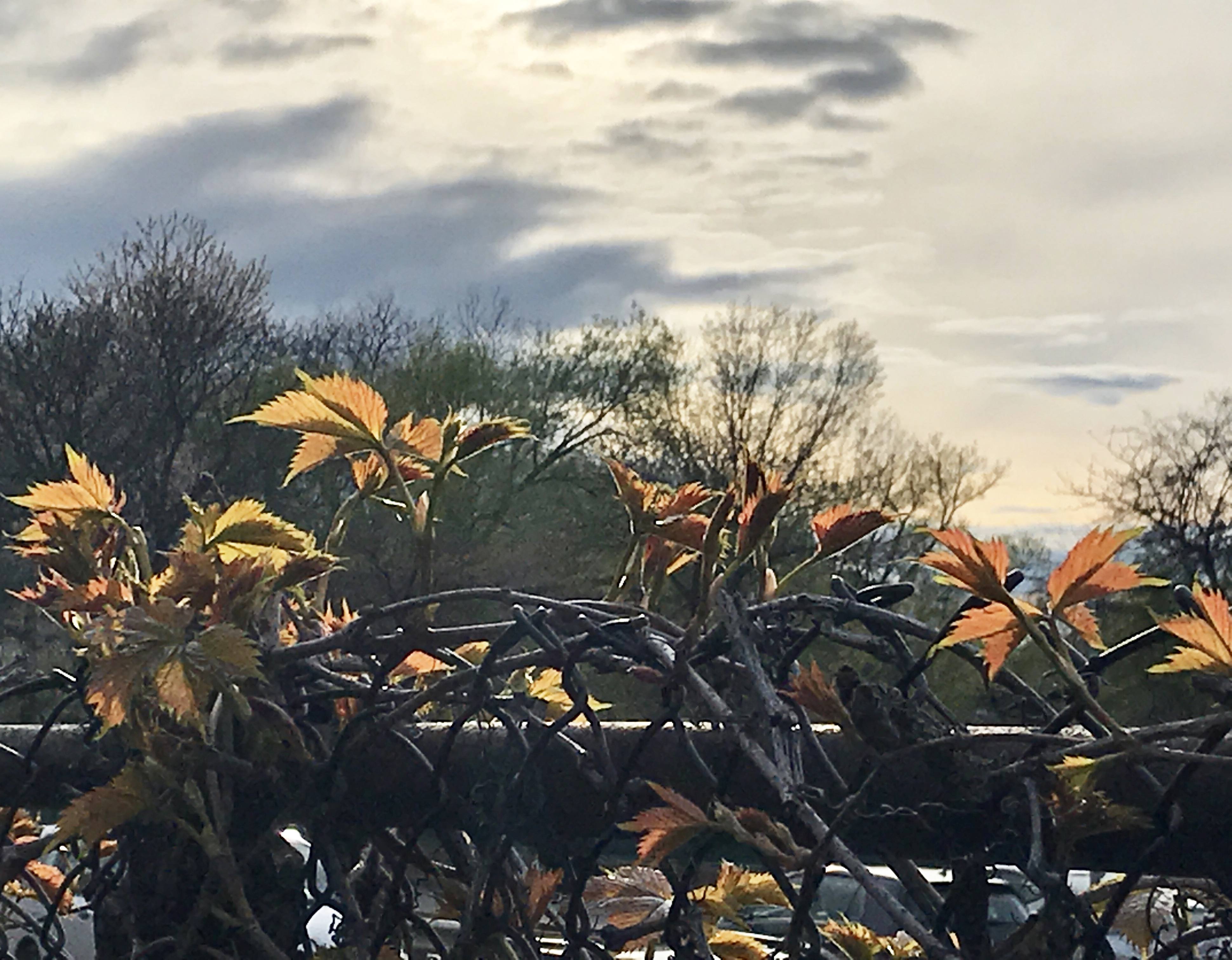 Sughra Raza. Enlightened, April, 2019.
 When I returned to school after my first marriage ended, I had to decide what to study. I’d been working toward a degree in history when I dropped out of a community college to get married, but I’d always been drawn to astronomy. One of the reasons I chose astronomy over history, or any other option, was that I felt that astronomy contained many of the other things I was interested in. To put it another way, I thought that if I didn’t study astronomy, I would regret it, but if I did study it, I wouldn’t necessarily lose touch with the other things I was interested in because they were all part of astronomy, in one way or another.



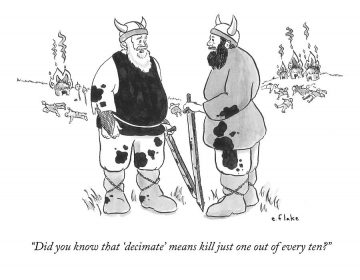 If you took Latin, then you probably have a larger vocabulary than the average bear, and you are more likely to have strong opinions on some words you vaguely remember based on Latin roots (cognates). For example, folks are more commonly using “decimate” to mean destroy or devastate, and it annoys the living materia feculis out of me. Decimate originally meant to kill every 10th person, based on the Latin word for 10 (decem), which is so oddly and satisfyingly specific. “Devastate” and “destroy” are already well known and used, so why do they need another alliterative ally in little weirdo “decimate”?