by Joan Harvey
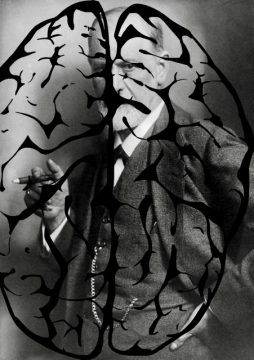 Our expectations sculpt neural activity, causing our brains to represent the outcomes of our actions as we expect them to unfold. This is consistent with a growing psychological literature suggesting that our experience of our actions is biased towards what we expect. —Daniel Yon
Because consciousness is something common to all of us, it is also interesting to many of us, though we may lack both philosophical and scientific backgrounds. And while many regular people are interested to some degree in the workings of their mind, those who have experimented with drugs and meditation may be even more curious about the latest research. From a fairly young age I’ve had a fair amount of experience with both psychedelics and meditation, though certainly not consistently through my life. And, for a while, I had separate conversations with two different persons—one heavily into psychedelics and one a longtime Zen practitioner—about some of the general books on consciousness.
Among the three of us, our biases sometimes came to the fore. Andy Clark’s book on predictive processing has a very sexy title—Surfing Uncertainty–and some very difficult, academic text—my Zen friend found it unreadable, and attributed this to the fact that Clark is not a meditator. My friend, in turn, had me read some recent books on consciousness with a Buddhist bias, which I disliked for their slanted view (though I have had a regular meditation practice at times). Of course the psychedelic expert liked Michael Pollen’s book How to Change your Mind, as did we all. And we all particularly liked Thomas Metzinger’s The Ego Tunnel. Though not much discussed in the book, perhaps Metzinger’s background in both meditation and psychedelics unconsciously played into our appreciation. We could relate to his ideas of conscious experience as a process and a tunnel through reality, as well as his discussion of transparency, the name he gives for the way we are unaware of the medium through which information reaches us. All of us were (the Zen practitioner has since died) atheist materialists (though also all familiar with plenty of ecstatic, mystical, and irrational states which we felt had a purely physical basis), and intuitively Metzinger’s position made sense to us. The “ego tunnel,” as Metzinger says, is a complex property of the neural correlates of consciousness, the “neurofunctional properties in your brain sufficient to bring about a conscious experience.” He also locates out-of-body experiences and other related phenomena squarely in the physical, as opposed to metaphysical, world.
But my beloved grandmother was a Freudian psychoanalyst, and due to her (and alone in my family, and among most of my friends) I became interested in Freud. Read more »
 Into the Woods
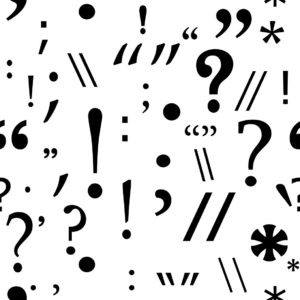 My friend does not use punctuation when he texts, so there is a stream-of-consciousness quality to much of his communications. According to the fine folks at
 The right to own guns is typically justified by the fundamental right to self-defense against bad guys, either our fellow citizens or the state itself if it were to turn tyrannical. Both of these have a superficial appeal but fail in obvious ways. Guns are an effective means of defending oneself against bad guys only so long as they don’t have guns too (because being equally armed doesn’t add up a defense against those who can pick and choose their moment of aggression). Civilians with guns are also ineffective against the armies and ruthless terroristic violence of a truly tyrannical regime.
 So goes a popular snippet from Seinfeld. In a 2014 article in The Guardian titled “Smug: The most toxic insult of them all?” Mark Hooper opined that “there can be few more damning labels in modern Britain than ‘smug.'” And CBS journalist Will Rahn declared, in the wake of Donald Trump’s 2016 electoral victory, that “modern journalism’s great moral and intellectual failing [is] its unbearable smugness.”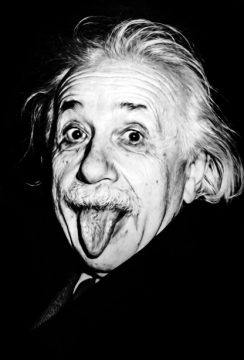


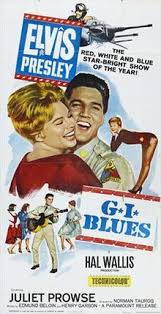 I was perhaps ten years old when I had unending cups of Eatmore’s fresh handmade mango ice cream while sitting on the lawns of Services Club Sialkot. It was one of the brightest days of my life, with my parents all to myself, undistracted by the demands of their daily doings, and the crystal cups of ice cream brought to us. We sat on reclining garden chairs on the perfectly manicured lawn, bordered by fragrant
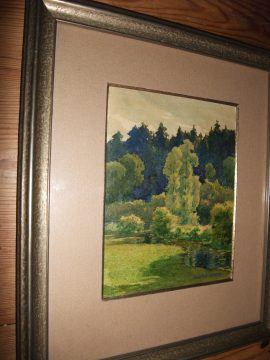


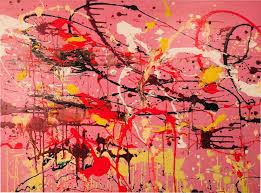 If a rectangular canvas splashed with paint and lines can express freedom or joy, why not liquid poetry?