by Marie Gaglione
 Into the Woods
Most college students would readily submit that there are any number of external forces that inhibit their ability to perform or engage meaningfully with their academic endeavors, even when there is a genuine motivation and desire to do so, although such drives are often compromised by more compelling opportunities (see: survivor hour and other fun! college! activities!). There’s life outside of the university to contend with; relationships end, grandparents die, dads go to jail (the last one is particularly case-specific, but statistics on students with parents in prison would be an interesting metric to have). The necessary reaction to all of these things, for those students who have the means to carry on, is to carry on. These events can be managed, more or less, with the passage of time and the support of the community, in whatever sense of the word. There are Things One Can Do to move on from Hard Times.
I am no stranger to these external forces. Since I’ve been an undergrad, I’ve had partners become exes, I’ve lost my grandmas, I’ve been told over text of far too serious things. It’s an eerie dimension of the modern era that one can read of a friend’s suicide or a father’s prison time via instant message. We bounce from one screen to another in our waking hours and we pretend like Alexa isn’t recording our every word. Every day we let Google know our thoughts, our questions, our hopes, our fears; every day we feed into the ultimate hive mind, an unlimited data collective. We’re living in Bradbury’s fever dream with a heightened dose of Orwellian anxiety. And it’s the world today (in conjunction with certain childhood traumas and genetic predispositions) that contributes to what I’ve found far more difficult to overcome than the Hard Times: the internal forces.
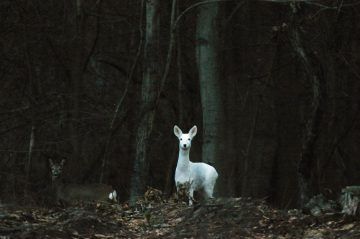
The two ages I oscillate between when considering how long I’ve been depressed are seven and fifteen. At 22, that just means I’ve been depressed for either amount of time. I think about what qualifies as the true beginning – was it the cookie-cutter childhood I missed? Or the chemical dependency that’s kept me prisoner since high school? Was it when I first contemplated the unsustainable and toxic nature of capitalism, and does it get worse the more I study the climate patterns? Whatever the answer may be, the fact remains that a lot of the time I am sad (or worse – sad and panicked). And this isn’t said in an attempt to garner pity or gain sympathy because I’m being vulnerable – it’s the reality of my experience. And it’s relevant here, in a nature essay, because it’s what brought me to the white deer; it’s what made me abandon my car and belongings and head, without intention or explanation, into the woods. Read more »
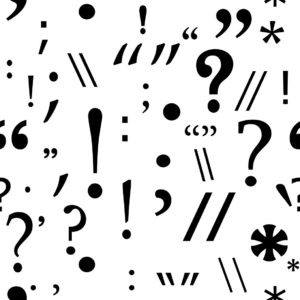 My friend does not use punctuation when he texts, so there is a stream-of-consciousness quality to much of his communications. According to the fine folks at
 The right to own guns is typically justified by the fundamental right to self-defense against bad guys, either our fellow citizens or the state itself if it were to turn tyrannical. Both of these have a superficial appeal but fail in obvious ways. Guns are an effective means of defending oneself against bad guys only so long as they don’t have guns too (because being equally armed doesn’t add up a defense against those who can pick and choose their moment of aggression). Civilians with guns are also ineffective against the armies and ruthless terroristic violence of a truly tyrannical regime.
 So goes a popular snippet from Seinfeld. In a 2014 article in The Guardian titled “Smug: The most toxic insult of them all?” Mark Hooper opined that “there can be few more damning labels in modern Britain than ‘smug.'” And CBS journalist Will Rahn declared, in the wake of Donald Trump’s 2016 electoral victory, that “modern journalism’s great moral and intellectual failing [is] its unbearable smugness.”

 I was perhaps ten years old when I had unending cups of Eatmore’s fresh handmade mango ice cream while sitting on the lawns of Services Club Sialkot. It was one of the brightest days of my life, with my parents all to myself, undistracted by the demands of their daily doings, and the crystal cups of ice cream brought to us. We sat on reclining garden chairs on the perfectly manicured lawn, bordered by fragrant
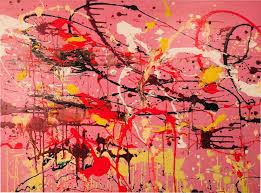 If a rectangular canvas splashed with paint and lines can express freedom or joy, why not liquid poetry?