by Tim Sommers

In Democracy in America (1848), Alexis de Tocqueville concluded from his travels in the United States that “The particular and predominating fact peculiar to” this democratic age “is equality of conditions, and the chief passion which stirs men at such times is the love of this same equality.” Indeed, “The gradual progress of equality,” he wrote, “is something fated. The main features of this progress are the following: it is universal and permanent, it is daily passing beyond human control, and every event and every man helps it along….”
If this is at all accurate, it seems fair to say that our conditions, and our ambitions, regarding human equality, are much diminished. But I want to draw attention to just one specific point de Tocqueville highlights.
Equality, the relevant kind of equality for him, is “equality of conditions”. It’s not abstract moral equality or equality limited to political decision making or equality of opportunity or (as contemporary philosophers say) equality in the distribution of some underlying abstraction like utility, access to advantage, or primary goods. Democracy, and the democratic spirit, called on and depended on, for de Tocqueville, a certain level of real, actual, surface-level equality. The love of equality, that he is both drawn to and repelled by – with “a kind of religious dread” – is just ordinary equality, not some philosophical surrogate.
If you ask someone at a random about equality or inequality in the United States today, they will very likely assume you mean economic inequality. This is partly because economic inequality has gotten more attention recently, but it is mostly because, if you ask people to think about whether the conditions of their life are equal or unequal to the conditions of others’ lives, the first thing many will think about is money.
Yet, at the precise moment Thomas Piketty’s groundbreaking work on economic inequality was drawing new attention to the shocking level of economic inequality that characterizes our new gilded age, philosopher Harry Frankfurt thought it imperative to insist that “Insofar as economic inequality is undesirable…this is not because it is as such morally objectionable. As such, it is not morally objectionable.” Rather, he said, “from a moral point of view economic inequality does not matter very much”.
Unfortunately, many other philosophers writing about economic inequality also deny that it is bad in and of itself. Instead, they insist that substantial economic inequalities are bad because, and where, they have bad effects.
I believe this view is a mistake. Read more »




 Harold Newton. Untitled, 1960s.
 researchers, as well. Indeed,


 Louise Bourgeois

 On January 28th of this year, just as the biggest
 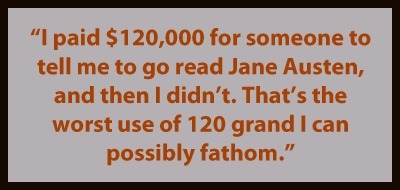 I majored in English in college.
 I came to
 Unknown artist. Zuljanah (devotional folk art related to