by Robert Frodeman and Evelyn Brister
 Where is philosophy in public life? Can we point to how the world in 2020 is different than it was in 2010 or 1990 because of philosophical research?
On the first day of class, philosophy professors tell their students that philosophy promises to make us better citizens and to increase our understanding of science, politics, and art. Or in the words of the American Philosophical Association’s guide for undergraduates, philosophy develops the capacity to see the world from the perspective of other individuals and other cultures; it enhances one’s ability to perceive the relationships among the various fields of study; and it deepens one’s sense of the meaning and variety of human experience.
We agree. But more needs to be said about the relevance of philosophy to shaping society than that. People want to know that philosophy and the humanities are valuable not only to college students while taking a class or two, but also how the massive bodies of professional research that are being produced are relevant to society at large.
This is where philosophy (and the humanities generally) has failed: philosophers don’t investigate the specificities of philosophy’s relevance. Granted, there’s a pile of works (e.g., Martha Nussbaum’s Not for Profit, Fareed Zakaria’s In Defense of a Liberal Education, Michael Roth’s Beyond the University) that provide a general defense of the humanities. But when the question is put: “How specifically is humanities research relevant to society?,” any answer is seen as either a political challenge aligned with a defense of ignorance or else as being self-evident.
We think that asking—and answering—this question is neither a disrespectful nor a trivial task. Read more »

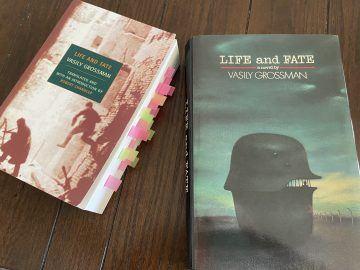 On June 22, 1941, Nazi Germany attacked the Soviet Union in a typhoon of steel and firepower without precedent in history. In spite of telltale signs and repeated warnings, Joseph Stalin who had indulged in wishful thinking was caught completely off guard. He was so stunned that he became almost catatonic, shutting himself in his dacha, not even coming out to make a formal announcement. It was days later that he regained his composure and spoke to the nation from the heart, awakening a decrepit albeit enormous war machine that would change the fate of tens of millions forever. By this time, the German juggernaut had advanced almost to the doors of Moscow, and the Soviet Union threw everything that it had to stop Hitler from breaking down the door and bringing the whole rotten structure on the Russian people’s heads, as the Führer had boasted of doing.



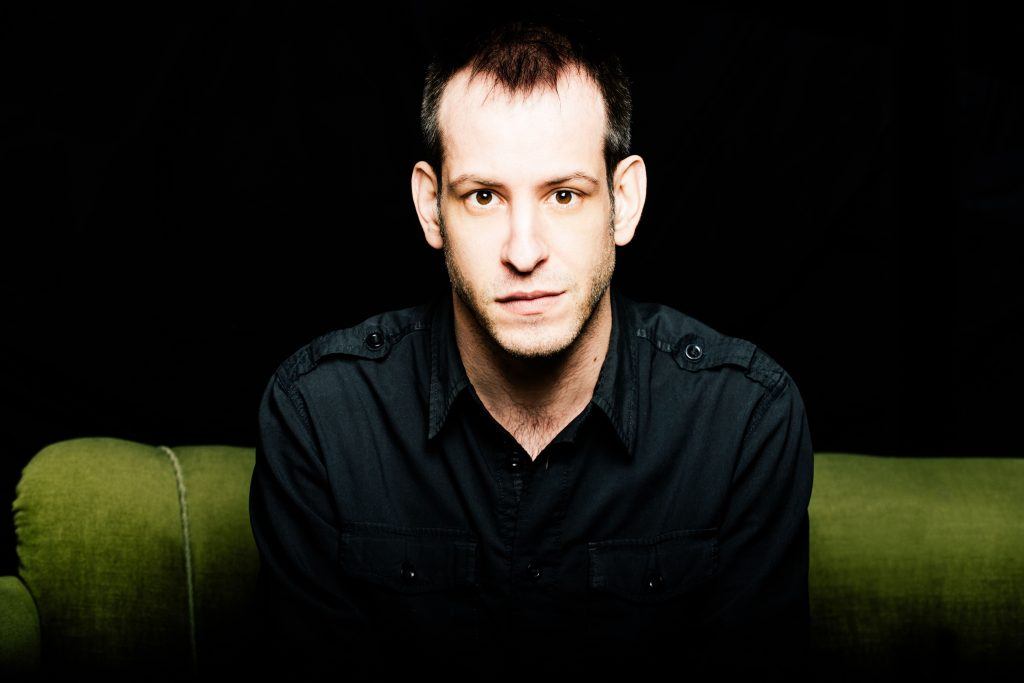 Ryan Ruby is a novelist, translator, critic, and poet who lives, as I do, in Berlin. Back in the summer of 2018, I attended an event at TOP, an art space in Neukölln, where along with journalist Ben Mauk and translator Anne Posten, his colleagues at the Berlin Writers’ Workshop, he was reading from work in progress. Ryan read from a project he called Context Collapse, which, if I remember correctly, he described as a “poem containing the history of poetry.” But to my ears, it sounded more like an academic paper than a poem, with jargon imported from disciplines such as media theory, economics, and literary criticism. It even contained statistics, citations from previous scholarship, and explanatory footnotes, written in blank verse, which were printed out, shuffled up, and distributed to the audience. Throughout the reading, Ryan would hold up a number on a sheet of paper corresponding to the footnote in the text, and a voice from the audience would read it aloud, creating a spatialized, polyvocal sonic environment as well as, to be perfectly honest, a feeling of information overload. Later, I asked him to send me the excerpt, so I could delve deeper into what he had written at a slower pace than readings typically afford—and I’ve been looking forward to seeing the finished project ever since. And now that it is, I am publishing the first suite of excerpts from Context Collapse at Statorec, where I am editor-in-chief.


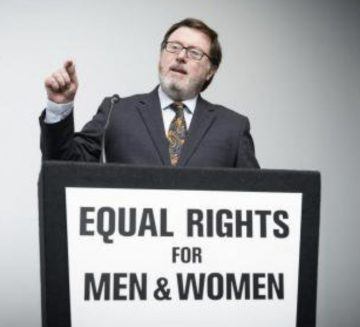 The case for men’s rights follows straightforwardly from the feminist critique of the structural injustice of gender rules and roles. Yes, these rules are wrong because they oppress women. But they are also wrong because they oppress men, whether by causing physical, emotional and moral suffering or callously neglecting them. Unfortunately the feminist movement has tended to neglect this, assuming that if women are the losers from a patriarchal social order, then men must be the winners.