
by Leanne Ogasawara

Arriving in Vienna, we immediately set out for District 14, in the western suburbs of the city. Exhausted after the long journey from Los Angeles, all we wanted to do was get something to eat and crash out in our room. Unfortunately, Viennese architect Otto Wagner’s legendary church was only opened to the public for four hours a week –on Sundays from noon to 4pm. And today was Sunday, so it was now or never!
Completed in 1907, the Kirche am Steinhof is considered to be one of the the most beautiful Art Nouveau churches in the world. Located on top of a wooded hill (Ah, the Vienna Woods!), the church is part of a sprawling psychiatric hospital—once one of the largest in Europe. It is also the place where a dear friend of mine had gone on her first date with the man she fell madly in love with decades ago.
It was an odd spot for a first date. But my friend assured me: It had been perfect–and they were still going strong!
Still, I had never been on the grounds of a psychiatric hospital before. The guard stationed at the front gate inquired if we wanted to see the church: Kirche? We nodded, and he pointed up the hill. There were maybe a dozen old buildings, each set within its own grove of trees, dotting the extensive grounds. The church loomed large above the wooded landscape. Its golden dome–recently renovated– was gleaming in the brilliant sunlight. I could easily understand why the locals called it: limoniberg (the lemon hill).
The hospital grounds were a cheerful place. It was only later that I learned its terrible history. Read more »

 Stefany Anne Golberg’s
 As we continue to distance ourselves from others in the midst of the new coronavirus pandemic, we hear about other people’s new rituals and routines as we formulate our own. As each day to be spent at home stretches (looms) ahead of us when we awake in the morning, rituals give the day shape, symmetry, a framework. What significance do these new rituals have for us individually and as a society? What did the old rituals mean? What if we were to take an anthropological approach to our own predicament?


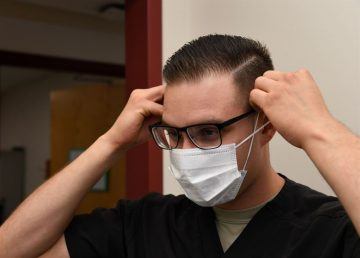 Our society needs virologists. Heeding their advice is valuable and consequential. In the Coronavirus pandemic, German politicians listened to the virologists, and Germany is doing relatively well. Other political leaders have (too long) ignored the virologists, and their citizenry is paying a high price.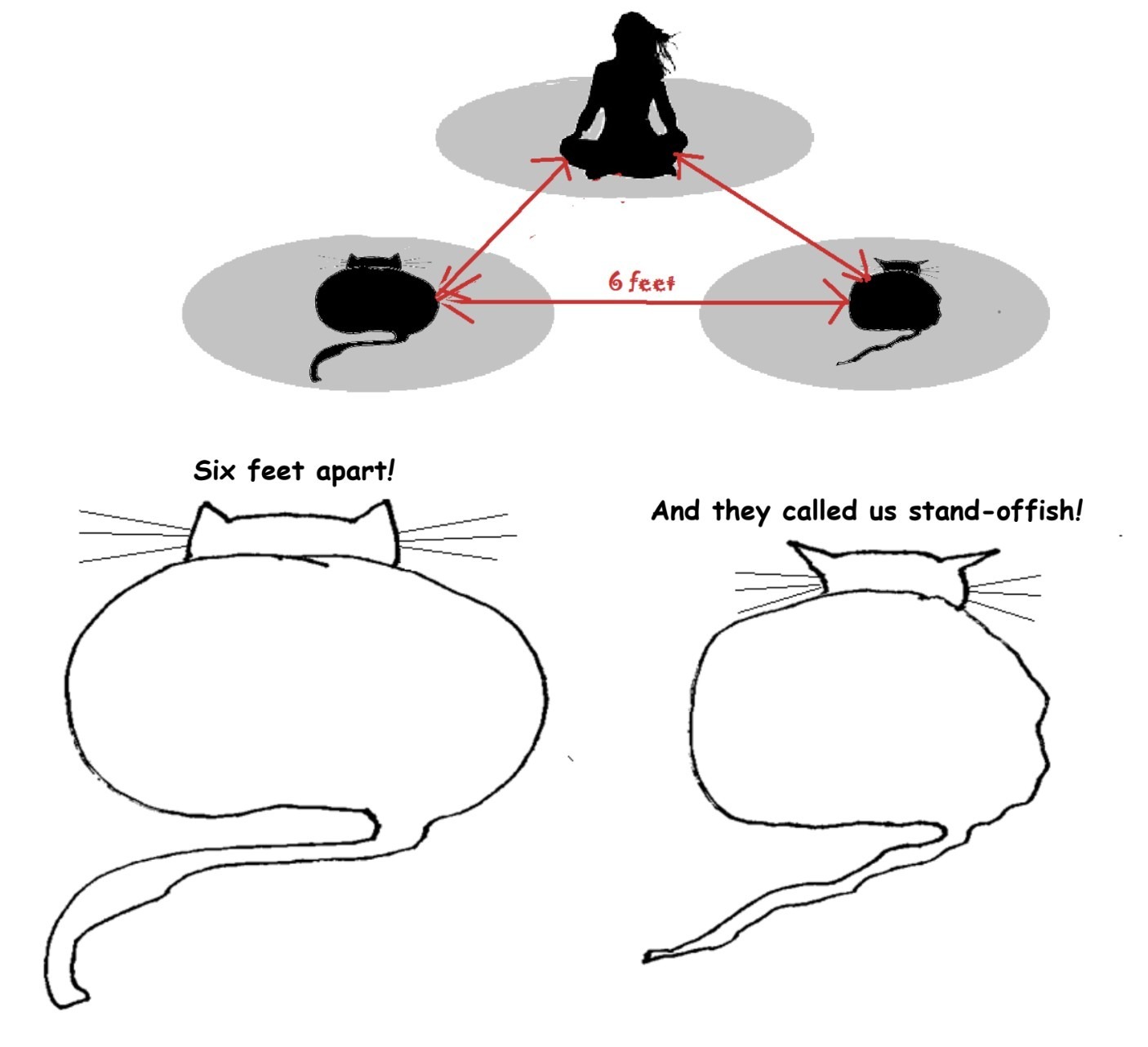



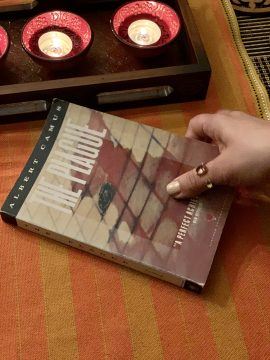
 In contrast with other genres in literature, in crime fiction, which mainly started in the mid-19th century, women writers (and even women sleuths) became active around the same time as male writers and sleuths in their stories. By some accounts around the middle of 1860’s, both the first modern detective novels (by female as well as male writers in US, UK and France) and the first professional female detectives in them (one Mrs. G— in one case, Mrs. Paschal in another, both working for the British police) appeared. Most of us, of course, are more familiar with characters in the Golden Age of crime fiction of the 1920’s and the 1930’s, particularly, Agatha Christie’s Miss Jane Marple and Dorothy Sayers’ Harriet Vane. The number of female writers and sleuths has proliferated in recent decades. It goes without saying that not all of the female crime novelists come out as feminists, and that some male writers can do feminist crime novels quite well.
 Sughra Raza. Untitled; Arnold Arboretum, Boston, March, 2020.
 The “Consequence Argument” is a powerful argument for the conclusion that, if determinism is true, then we have no control over what we do or will do. The argument is straightforward and simple (as given in the Stanford Encyclopedia of Philosophy):