
by Tim Sommers
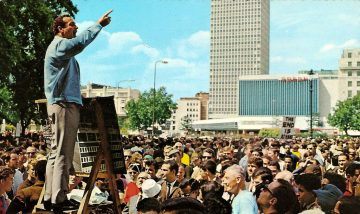
What if most speech is worthless? Or, rather, what if most speech that purports to count as a contribution to “free expression” is mostly worthless? Take the internet. What’s on it? Lots of great information and great journalism and even art. But, also, pornography. Lots of pornography. Between 15% and 80% of net traffic is porn, depending on which study you believe. But if you count semi-nude pictures, it’s got to be at least…well, a lot. Lots of cat pictures, too. Then there are the blogs and comment threads and likes and dislikes. Even where these are about significant topics, most of opinions expressed are repetitive assertions of a fairly narrow range of already well-known opinions. And then there’s the insults, the invectives, and general nastiness. I am not against porn. I am not even against insults per se. What I wonder though is, whatever value porn, for example, has for you, or whatever expressive relief you get from typing insults, should we think that these things ought to count as worthy the high value and high level of protection we ordinarily afford free speech? Maybe. Maybe, not.
There seems to be a lot of agreement that “free speech” is in crisis – on campuses, on the web, or on social media. But not a lot of agreement about what the crisis is supposed to be. There seems to be a lot of agreement that regulating, or interfering in any way, with free speech is bad. But not a lot of discussion of exactly what is bad about it. It sometimes seems that “freedom of speech” is just an empty phrase to be filled in by whatever you happen to think that it would be good not to have interfered with. (Maybe, you’ve encountered the internet joke that suggest you can now argue for anything by saying “what you want to argue for” and then asserting “Because freedom!”) And so, the “crisis” sometimes seems to be just people you don’t like interfering with something you do like. (Have you ever heard of a conservative pundit complaining about a liberal speaker being “de-platformed” or vice-versa?) My point is, unless we engage with what is good or bad about freedom of speech, it’s going to be hard to evaluate what the crisis is and whether we can regulate our way out of it. So, let’s start there. Or, rather, here: What is free(dom of) speech? Read more »
 When Vienna‘s Albertina Museum exhibition of works by Albrecht Dürer ended in January 2020, it seemed quite possible that several of the masterpieces on display might never again be seen by the public, among them The Great Piece of Turf. This may sound like a dire prediction for a fragile work that is routinely exhibited every decade or so, but as the UN announced recently, we may already have passed the tipping point in the race to save our world and ourselves. A decade from now we may be too engaged in the struggle to survive to focus our attention on a small, exquisite watercolor created 500 years ago.

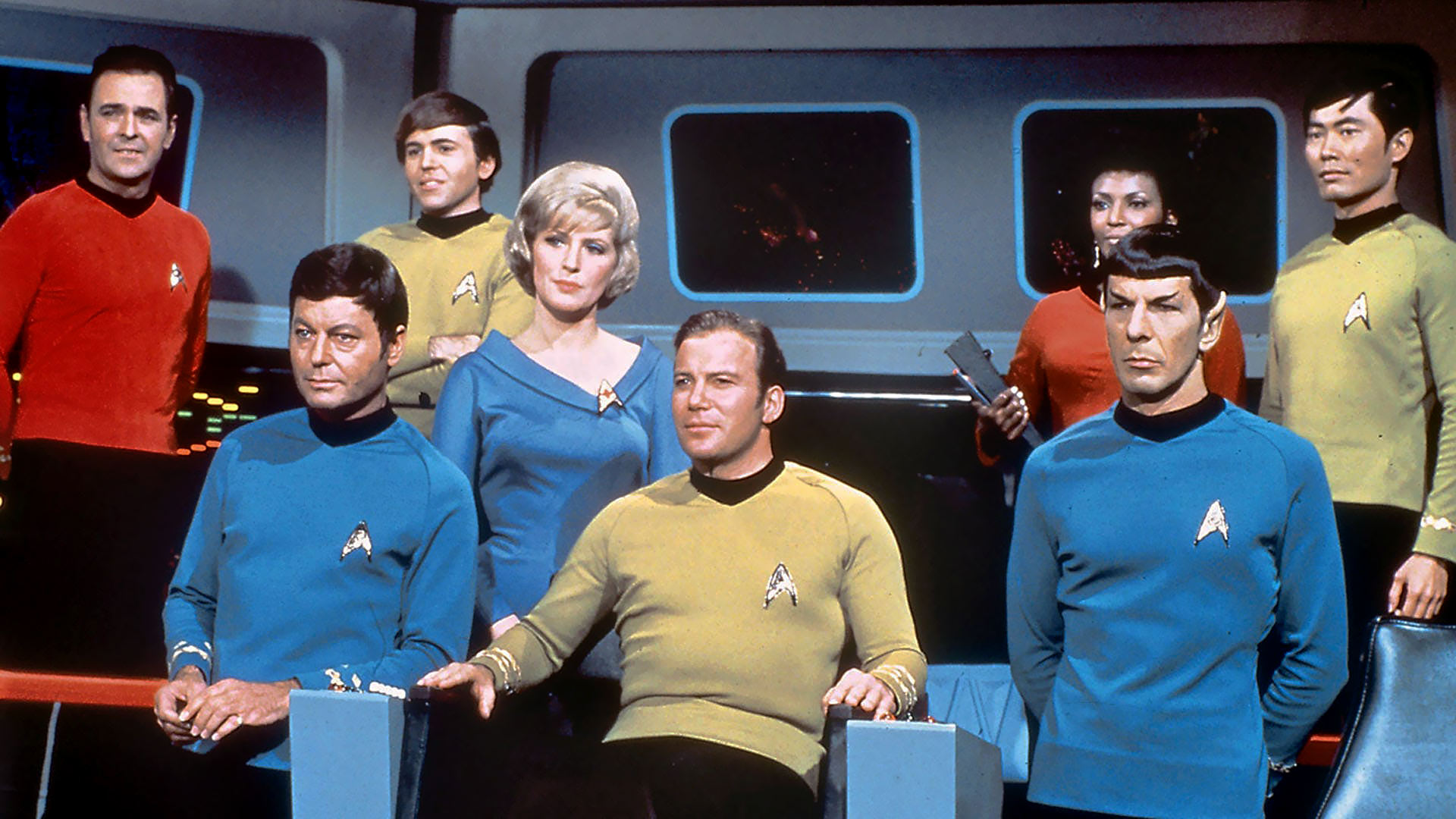 During my late 1970s New York City childhood, repeats of Star Trek aired every weeknight on channel 11, WPIX. The original 79 episodes ran about three times per year, which means that, allowing for the occasional miss, I’d seen each episode about 10 – 12 times before reaching high school.
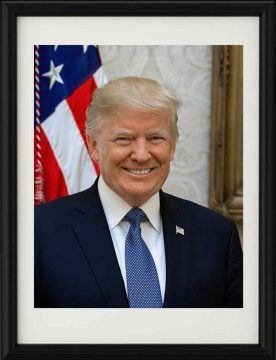 For the last three years, I have struggled with a dilemma: As a reasonable, quite liberal person, what should I think of my 60 million fellow Americans who voted for Donald Trump in 2016, and the vast majority of whom continue to support him today? Normally, a personal dilemma is a private thing, not a topic for public airing, but I feel that this particular problem is one the vexes many others – perhaps even a majority of Americans, as more of us voted for Hillary Clinton and many did not vote at all. Since that bleak day in November 2016, an unspoken – and sometimes loudly spoken – question hangs in the air: What kind of “
 In November 1918, a 17-year-student from Rome sat for the entrance examination of the Scuola Normale Superiore in Pisa, Italy’s most prestigious science institution. Students applying to the institute had to write an essay on a topic that the examiners picked. The topics were usually quite general, so the students had considerable leeway. Most students wrote about well-known subjects that they had already learnt about in high school. But this student was different. The title of the topic he had been given was “Characteristics of Sound”, and instead of stating basic facts about sound, he “set forth the partial differential equation of a vibrating rod and solved it using Fourier analysis, finding the eigenvalues and eigenfrequencies. The entire essay continued on this level which would have been creditable for a doctoral examination.” The man writing these words was the 17-year-old’s future student, friend and Nobel laureate, Emilio Segre. The student was Enrico Fermi. The examiner was so startled by the originality and sophistication of Fermi’s analysis that he broke precedent and invited the boy to meet him in his office, partly to make sure that the essay had not been plagiarized. After convincing himself that Enrico had done the work himself, the examiner congratulated him and predicted that he would become an important scientist.
 I have some very simple New Year’s resolutions, and some that require an entire column to spell out. One example of the latter is that I want to make a subtle but meaningful change in how I talk to my (middle and high school) math students about proofs.

 We find ourselves always in the middle of an experience. But it’s what we do next – how we characterize the experience – that lays down a host of important and almost subterranean conditions. Am I sitting in a chair, gazing out the dusty window into a world of sunlight, trees, and snow? Am I meditating on the nature of experience? Am I praying? Am I simply spacing out? Depending on which way I parse whatever the hell I’m up to, my experience shifts from something ineffable (or at any rate, not currently effed) to something meaningful and determinate, festooned with many other conversational hooks and openings: “enjoying nature”, “introspecting”, “conversing with God”, “resting”, “procrastinating”, and so on. Putting the experience into words tells me what to do with it next.
 Forever is a long time.