by Ashutosh Jogalekar
 On June 22, 1941, Nazi Germany attacked the Soviet Union in a typhoon of steel and firepower without precedent in history. In spite of telltale signs and repeated warnings, Joseph Stalin who had indulged in wishful thinking was caught completely off guard. He was so stunned that he became almost catatonic, shutting himself in his dacha, not even coming out to make a formal announcement. It was days later that he regained his composure and spoke to the nation from the heart, awakening a decrepit albeit enormous war machine that would change the fate of tens of millions forever. By this time, the German juggernaut had advanced almost to the doors of Moscow, and the Soviet Union threw everything that it had to stop Hitler from breaking down the door and bringing the whole rotten structure on the Russian people’s heads, as the Führer had boasted of doing.
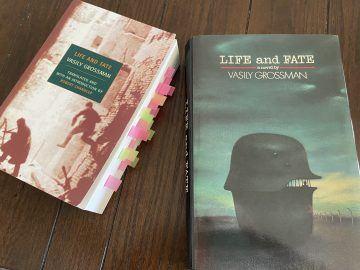
Among the multitudes of citizens and soldiers mobilized was a shortsighted, overweight Jewish journalist named Vasily Grossman. Grossman had been declared unfit for regular duty because of his physical shortcomings, but he somehow squeezed himself all the way to the front through connections. During the next four years, he became one of the most celebrated war correspondents of all time, witnessing human conflict whose sheer brutality beggared belief. To pass the time in this most unreal of landscapes, Grossman had a single novel to keep him company – War and Peace. It was to prove to be a prophetic choice. Read more »



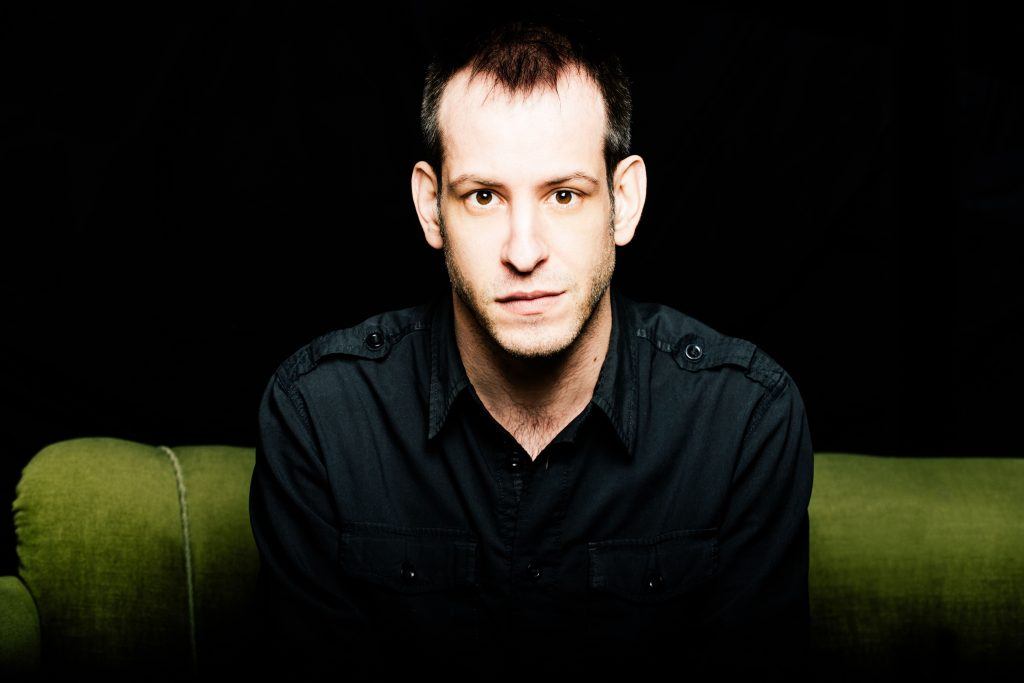 Ryan Ruby is a novelist, translator, critic, and poet who lives, as I do, in Berlin. Back in the summer of 2018, I attended an event at TOP, an art space in Neukölln, where along with journalist Ben Mauk and translator Anne Posten, his colleagues at the Berlin Writers’ Workshop, he was reading from work in progress. Ryan read from a project he called Context Collapse, which, if I remember correctly, he described as a “poem containing the history of poetry.” But to my ears, it sounded more like an academic paper than a poem, with jargon imported from disciplines such as media theory, economics, and literary criticism. It even contained statistics, citations from previous scholarship, and explanatory footnotes, written in blank verse, which were printed out, shuffled up, and distributed to the audience. Throughout the reading, Ryan would hold up a number on a sheet of paper corresponding to the footnote in the text, and a voice from the audience would read it aloud, creating a spatialized, polyvocal sonic environment as well as, to be perfectly honest, a feeling of information overload. Later, I asked him to send me the excerpt, so I could delve deeper into what he had written at a slower pace than readings typically afford—and I’ve been looking forward to seeing the finished project ever since. And now that it is, I am publishing the first suite of excerpts from Context Collapse at Statorec, where I am editor-in-chief.


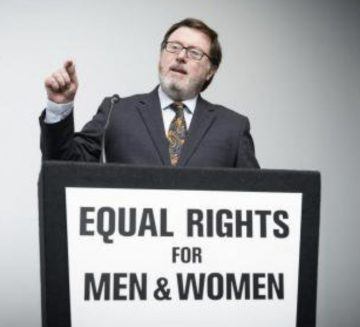 The case for men’s rights follows straightforwardly from the feminist critique of the structural injustice of gender rules and roles. Yes, these rules are wrong because they oppress women. But they are also wrong because they oppress men, whether by causing physical, emotional and moral suffering or callously neglecting them. Unfortunately the feminist movement has tended to neglect this, assuming that if women are the losers from a patriarchal social order, then men must be the winners.

 Some months ago, on a sunny Sunday afternoon, I went to my bank’s ATM in the main market close to where I live in the Defence Housing Authority, Lahore’s latest fancy suburb, which is organized and managed by the military.