Seema Singhal, M.D., is a Professor of Medicine (Hematology Oncology) and Chez Family Professor of Myeloma Research at Northwestern Memorial Hospital and Feinberg School of Medicine, Chicago Illinois. Dr. Singhal has conducted numerous clinical trials and published more than 230 publications describing her findings. She is the key opinion leader in Myeloma treatment and authored the National Comprehensive Cancer Network (NCCN) guidelines for Myeloma Treatment.
Azra Raza, author of The First Cell: And the Human Costs of Pursuing Cancer to the Last, oncologist and professor of medicine at Columbia University, and 3QD editor, decided to speak to more than 20 leading cancer investigators and ask each of them the same five questions listed below. She videotaped the interviews and over the next months we will be posting them here one at a time each Monday. Please keep in mind that Azra and the rest of us at 3QD neither endorse nor oppose any of the answers given by the researchers as part of this project. Their views are their own. One can browse all previous interviews here.
1. We were treating acute myeloid leukemia (AML) with 7+3 (7 days of the drug cytosine arabinoside and 3 days of daunomycin) in 1977. We are still doing the same in 2019. What is the best way forward to change it by 2028?
2. There are 3.5 million papers on cancer, 135,000 in 2017 alone. There is a staggering disconnect between great scientific insights and translation to improved therapy. What are we doing wrong?
3. The fact that children respond to the same treatment better than adults seems to suggest that the cancer biology is different and also that the host is different. Since most cancers increase with age, even having good therapy may not matter as the host is decrepit. Solution?
4. You have great knowledge and experience in the field. If you were given limitless resources to plan a cure for cancer, what will you do?
5. Offering patients with advanced stage non-curable cancer, palliative but toxic treatments is a service or disservice in the current therapeutic landscape?
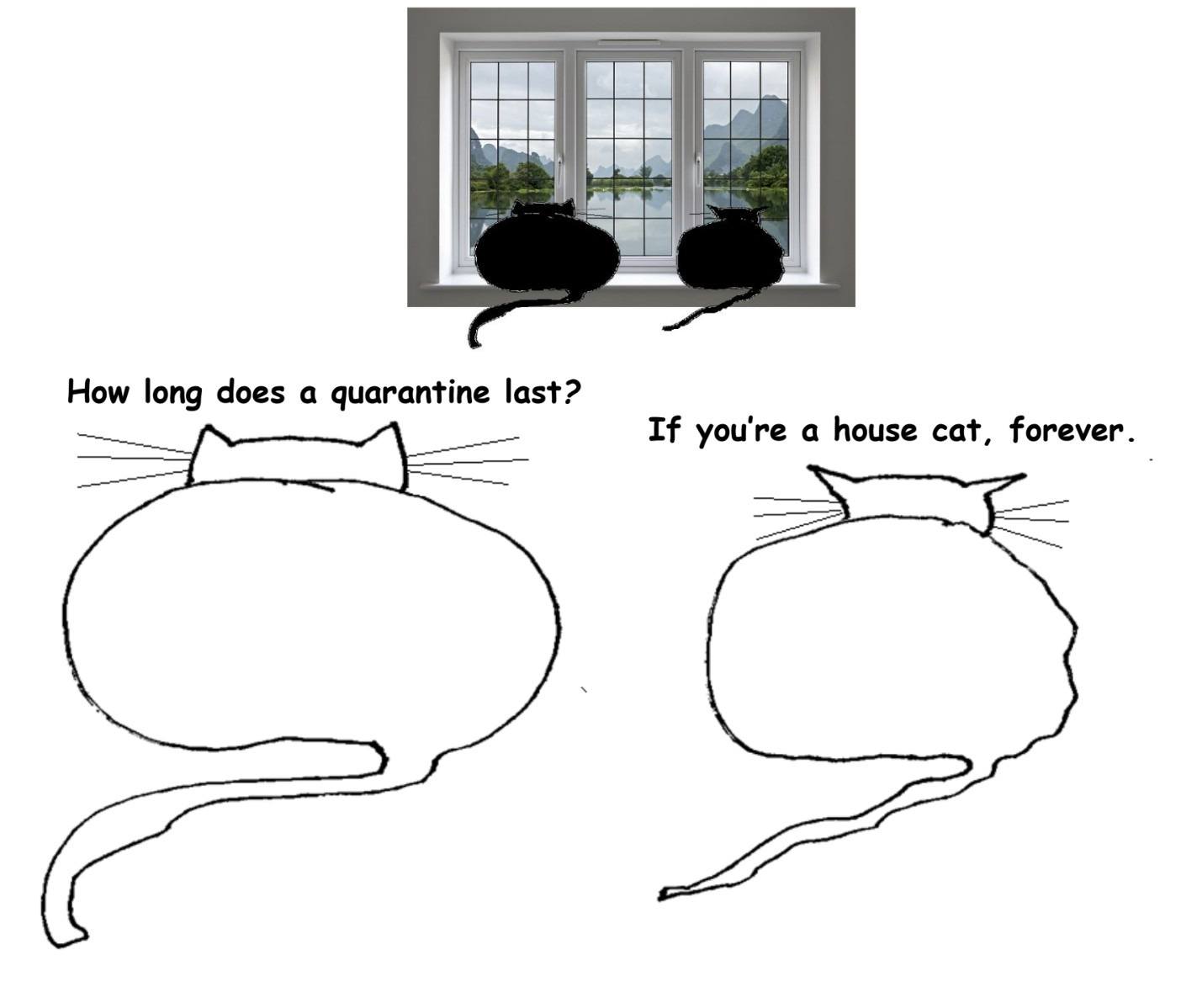

 There should be more.
 So, here’s a game. Try to imagine: “What unbelievable moral achievements might humanity witness a century from now?” Now, discuss.
 The translated versions from Tamil into English of Perumal Murugan’s two books, One Part Woman and the The Story of A Goat, weave stories of the complex life of the rural people of South India in an engaging and highly readable form.
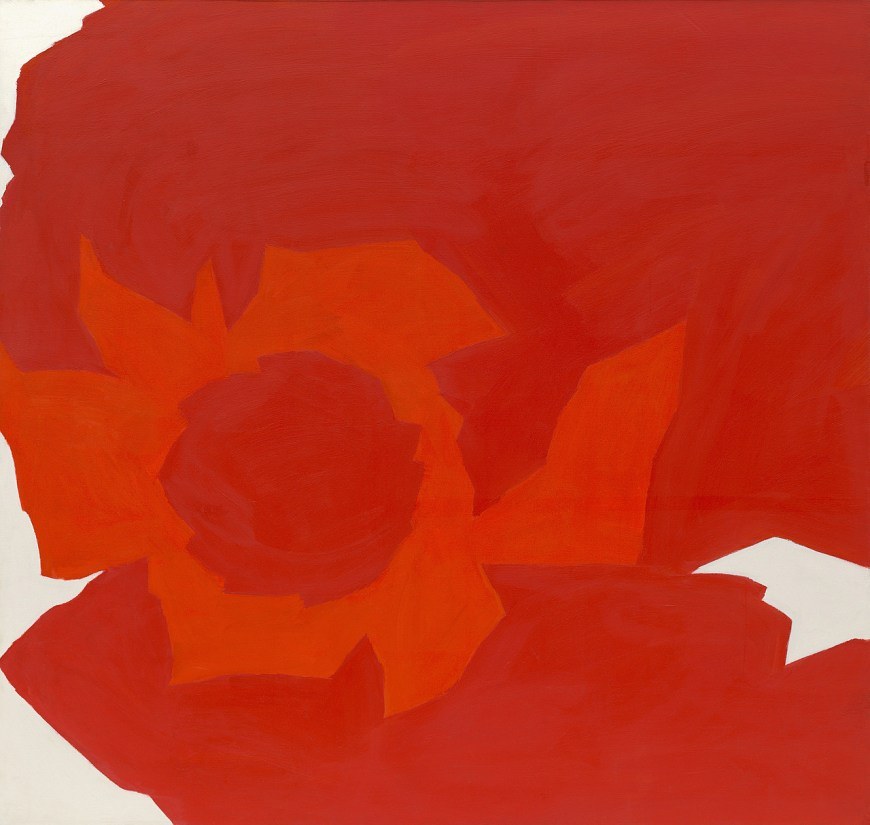 Jack Youngerman. Long March II, 1965.
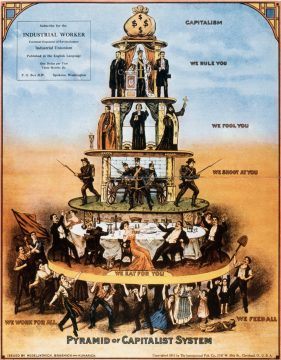 The political philosophy, and more importantly, political practice that took root in the wake of the ‘Age of Revolutions’ (say 1775-1848) was liberalism of various kinds: a commitment to certain principles and practices that eventually came to seem, like any successful ideology, a kind of common sense. With this, however, came a growing sense of dissatisfaction with what it seemed to represent: ‘bourgeois society’. Here is a paradox: at the very point at which the Enlightenment promise of the free society seemed to be coming true, discontent with that promise, or with the way it was being fulfilled, took hold. This was a sense that the modern citizen and subject was somehow still unfree. If this seems at least an aspect of how things stand with us in 2020 it might be worth looking back, for doubts about the liberal project have accompanied it since its inception.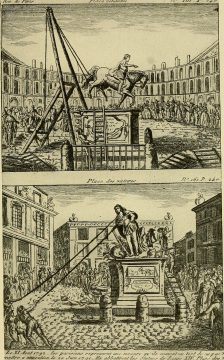
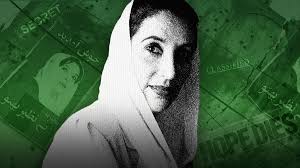
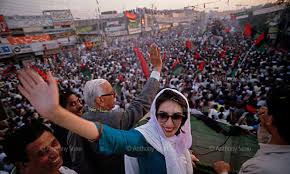 As she returned to her country after eight years of self-imposed exile in Dubai, Benazir reflected in her posthumously-published memoir
 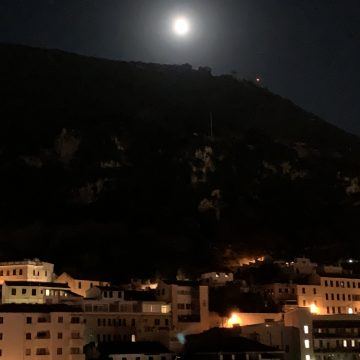 Gibraltar in the background, I pose sideways, wearing a Spanish Chrysanthemum claw in my hair, gitana style, taking a dare from my husband. The photo is from an August afternoon, captured in the sun’s manic glare. My shadow in profile, with the oversized flower behind my ear, mirrors the shape of Gibraltar, Jabl ut Tariq or “Tariq’s rock.” An actual visit to Gibraltar is more than a decade ahead in the future. I would spend years researching the civilization of al Andalus (Muslim Spain, 711-1492) and publish a book about the convivencia of the Abrahamic people before finally setting foot on Gibraltar. “In Cordoba,” I write, “I’m inside the tremor of exile— the primeval, paramount home of poetry” and that “I am drawn to the world of al Andalus because it is a gift of exiles, a celebration of the cusp and of plural identities, the meeting point of three continents and three faiths, where the drama of boundaries and their blurring took place.” At the heart of this pursuit is my own story, one that is illuminated only recently when I see in Gibraltar more facets of my own exile and encounter with borders.


 Most people associate the Cold War with several decades of intense political and economic competition between the United States and Soviet Union. A constant back and forth punctuated by dramatic moments such as the Berlin Airlift, the Berlin Wall, the arms race, the space race, the Bay of Pigs, the Cuban Missile Crisis, Nixon’s visit to China, the Olympic boycotts, “Mr. Gorbachev, tear down this wall!” and eventually the collapse of the Soviet system.
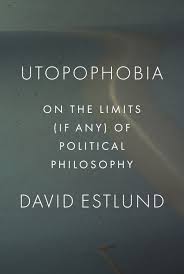
 Where is philosophy in public life? Can we point to how the world in 2020 is different than it was in 2010 or 1990 because of philosophical research?