by Adele Wilby
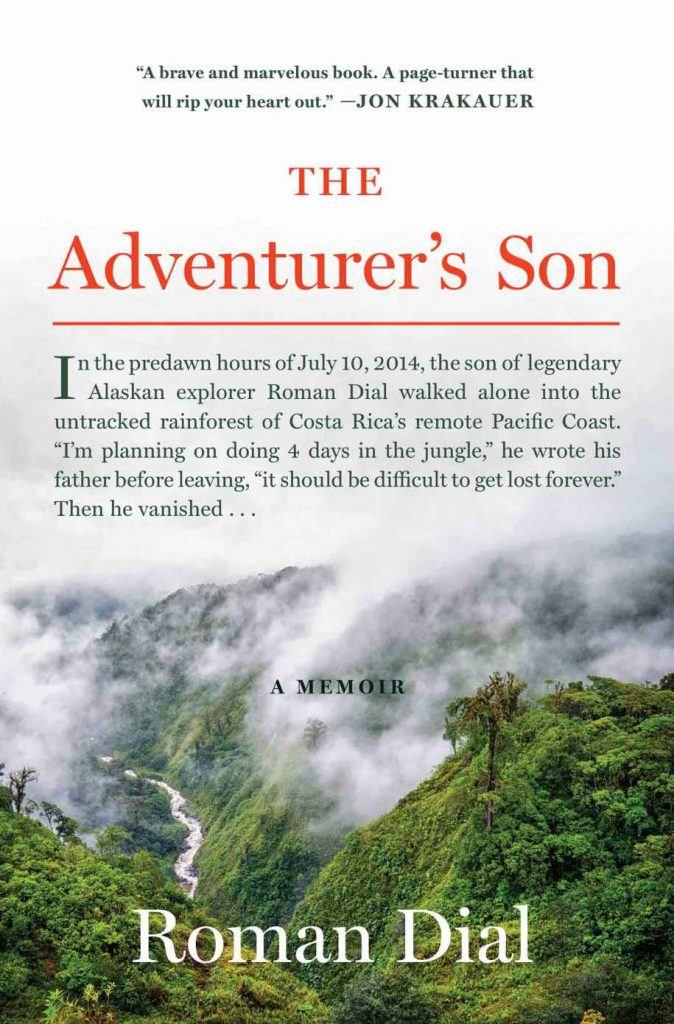 Roman Dial has written a great tribute to his son, indeed to his entire family, in his book The Adventurer’s Son. An adventurer and biologist, Dial writes movingly of his relationship with his only son, Cody Roman Dial in particular and of his accidental death while exploring the rainforests of Central America. Dial’s pride in his son and the pain and grief over his loss are palpable throughout the book. But as Dial himself acknowledges, ‘we never know the future’, and the death of his son at just 27 years old in 2014 is an event he could never have imagined when he began to introduce him to the joys and challenges of exploring the natural world.
The birth of Cody Roman was a celebratory moment for Dial, and he looked forward to establishing a deep father-son bond in a way that he and his father had not. For two decades and over five continents, the bond between the two deepened as they shared momentous times together exploring nature. Thus, Cody’s death at such an early age is a heart-breaking tragedy for Dial, his family and friends, but we learn from the book that Cody’s life was exceptional, rich and fulfilling, attributable to an adventurous and courageous father, and a mother who supported Dial’s aspiration to cultivate a respect and appreciation of the natural world in their son. Read more »
 In coping with the dire economic crisis in the wake of the pandemic many developing countries have resorted to cash assistance to the poor for immediate relief. Beyond the relief aspect, many macro-economists have also pointed to the need for such programs to boost mass consumer demand in a period of one of the deepest slumps of general economic activity in many decades. As I have been an advocate for universal basic income (UBI) in poor countries for more than a decade now—my first published paper on the subject came out in India in March 2011 in the Economic and Political Weekly— I have often been asked if the widespread adoption of such cash assistance programs indicates that it is now a propitious time for UBI. While I have supported the cash relief programs in the context of the crisis (most of these programs have not been universal, mainly targeted to the poor) and consider the experience gained in this as generally useful, I think those who like me have supported UBI have usually thought about it in a longer-time framework and in the context of a more ‘normal’ state of the economy with appropriate institutions, political support base, and administrative structures in place. Of course, I’ll not object if in a post-pandemic world attempts are made to help the temporary crisis programs ultimately extend or evolve into a more general UBI program in poor countries.
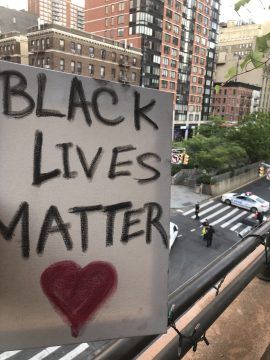
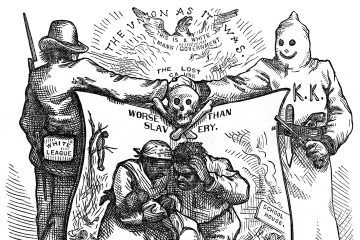 What does it mean to be white in America in 2020?
 May 26, 2020


 Have a look at the
  In thinking about knowledge and consciousness, it is just about irresistible to distinguish between the basic facts of what we observe and interpretations or beliefs about those facts. You and I see the same glass of water – maybe our perceptions of the glass are nearly identical – and yet you see it has half full while I see it as half empty. We look at the same economic reports, and you find reason to celebrate while I find cause to worry. We see an artificial satellite in orbit, and you see it an incursion of government and industry into space while I see it as a glory of science and engineering. And so on – it seems obvious that there is a divide between what everyone can plainly see and what’s a matter of interpretation.



 When I feel myself becoming irritable, disheartened, or just plain fed-up with life during the pandemic, I find it helpful to conduct a thought-experiment familiar to the ancient Stoics. I reflect on how much I have to be grateful for, and how things could be so much worse. That prompts the more general question: Who are the fortunate, and who are the unfortunate at this time?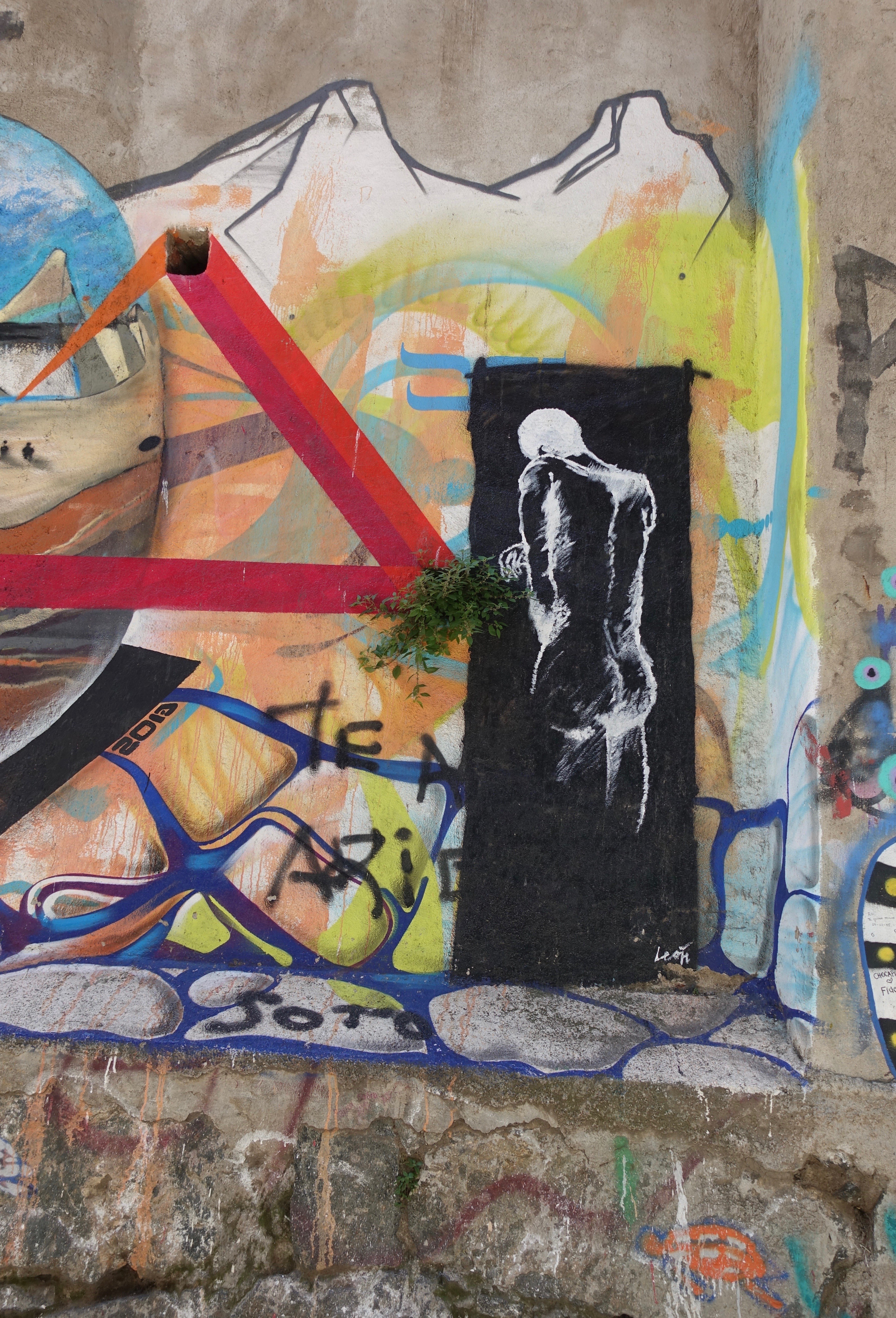
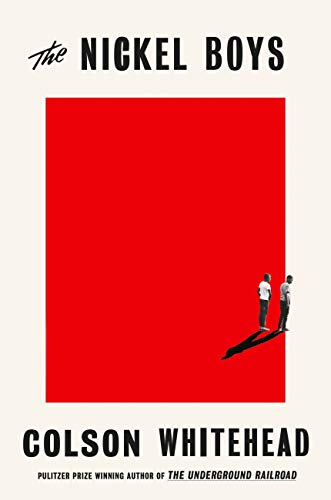 Colson Whitehead won his second Pulitzer Prize for The Nickel Boys in 2020, joining the ranks of three other writers recognized for the rare honor. His first was for another historical fiction The Underground Railroad in 2017. What are the odds of winning the Pulitzer for two books that deal with the same subject – the troubled race relations in America? Pretty good, I would say, if your second book is as brilliant as The Nickel Boys.