
by Michael Liss
[I]t was the first solemn declaration by a nation of the only legitimate foundation of civil government. It was the corner stone of a new fabric, destined to cover the surface of the globe. It demolished at a stroke the lawfulness of all governments founded upon conquest. It swept away all the rubbish of accumulated centuries of servitude. It announced in practical form to the world the transcendent truth of the unalienable sovereignty of the people. It proved that the social compact was no figment of the imagination; but a real, solid, and sacred bond of the social union. —Secretary of State John Quincy Adams, July 4, 1821.
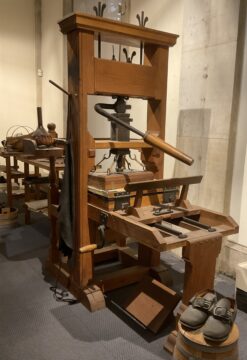
On some past Fourth of July, their store closed for the holiday, my parents packed up a pair of children, hats and sunscreen, coolers filled with salami and roast beef sandwiches, sliced red peppers and cucumbers, and bottles of soda “to wash things down.” Plus a pair of Rolleiflex cameras and rolls upon rolls of Agfa film (with 12 shots to the roll, you needed a lot of rolls). There were also maps (of the paper kind) and towels (of the cloth kind), sunglasses (prescription and flip-up), and packets of Sun-Maid Raisins and Planters Peanuts, just in case we got lost and had to live off the land. Important to be prepared.
North on the Taconic Parkway we went, through Westchester, through Putnam to Dutchess—destination some town or hamlet that would be having a Fourth of July celebration. I rooted for proximity to the Old Rhinebeck Aerodrome, where, along with patriotism on display, there were also biplanes, but, on this occasion, I don’t recall the merging of the secular and religious. The town for which they chose to turn off the road did not have a Sopwith Camel, but it did have a Fourth of July celebration and parade.
Signs, flags, buntings, displays. Food stands. High school marching band, leading a group of what were likely local worthies. Middle-aged WW-II vets in their (slightly tight) uniforms, their families waving at them as they went past. A fire truck. Vintage cars, and particularly the big open ones that carried the WW-I vets—everyone clapped and waved at them. How could you not?
Somewhere, at some point, the parade ended in a town square, with people merging in front of a set of stands and a podium, and, from there, a local worthy (a Mayor, perhaps even a Congressman) got up from a chair and delivered a Fourth of July Speech. Perhaps it wasn’t quite up to John Quincy Adams’s offering, but it was the kind of speech that recalled a great moment of our past and urged us to reaffirm our commitment to the ideals expressed that day. Read more »
 Tycho Brahe was a significant figure in my family. Why? Because my father’s parents were from Denmark, and Tycho Brahe was Danish. Danes were thus important in the Benzon household, as was Danish pastry (wienerbrød, Vienna bread), the real stuff with cardamom seeds, not the fluff you get in diners. And then there is rabarbergrød, a cloudy translucent rhubarb pudding laced with slithers of almonds. Not to mention Danish layer cake, five thin cookie-like layers alternating with custard and currant jelly topped with a lemon-juice & powdered sugar icing, once a year on my father’s birthday. But I digress.
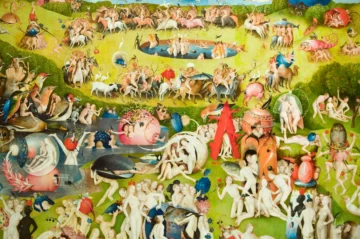


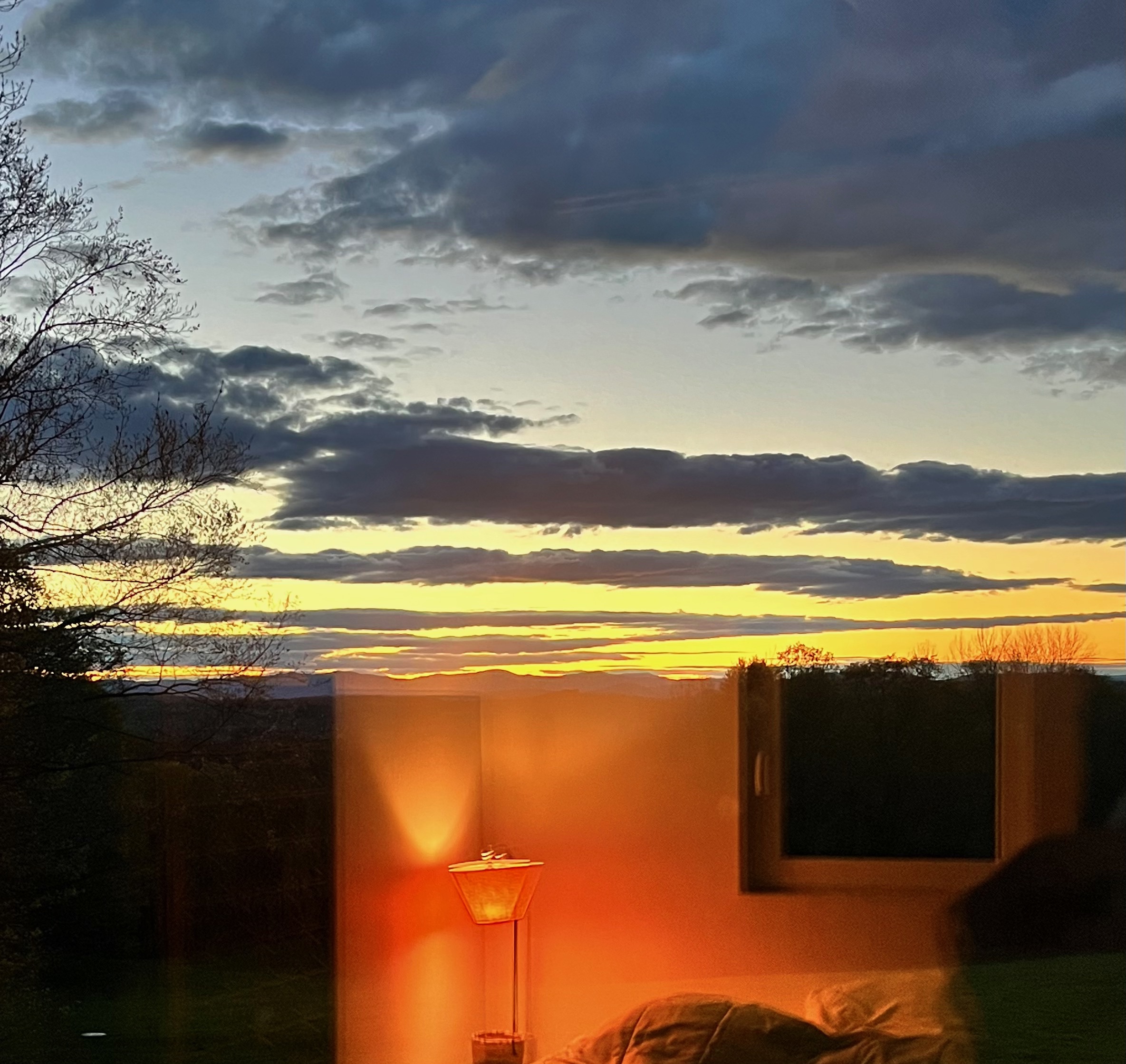 Sughra Raza. Surreal Sunsets, Vermont, May 2026.
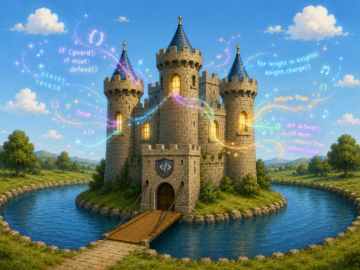 A moat is what protects a business from competition. The term comes from Warren Buffett’s image of a castle surrounded by water. The castle is the business; the moat is whatever prevents rivals from storming the walls. A moat might be a famous brand, a patent, a network effect, control over scarce resources, high switching costs for consumers, or a regulatory barrier that makes it difficult for competitors to enter the market. The deeper the moat, the easier it is for a firm to charge high prices, preserve margins, and survive imitation.
 Dear Readers and Writers,