by Jeroen Bouterse
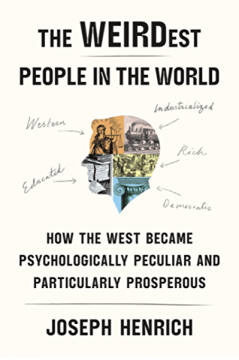 Here’s an interesting game. You receive 20 dollars, and you and three others can anonymously contribute any portion of this amount to a public pool. The amount of money in this pool is then multiplied by 1.5 and divided equally among all players. Repeat 10 times, then go home with your money. What will happen? How much would you contribute in round one, if you knew nothing about your fellow players?
This ‘Public Goods Game’ is one example of the many sophisticated social-psychological experiments that Joseph Henrich brings into play in his recent book The WEIRDest people in the world. It is also a good example of how he puts those experiments to use. One lesson from this game is that people are more cooperative than models of economically rational behavior would suggest (are more homo reciprocans than homo economicus (211)). Another is that average first-round contributions vary significantly between populations. ‘WEIRD’ stands for ‘Western, Educated, Industrialized, Rich, Democratic’, and also serves to emphasize that WEIRD populations are weird in the sense of unusual: they are psychological outliers in a lot of ways.
To stay with the Public Goods Game: Henrich shows that the average share of their endowment that participants from a given country put into the pool in round one correlates negatively with how strongly kinship ties are in that country, as measured either by the so-called ‘Kinship Identity Index’ or by the prevalence of cousin marriage. This is not a surprise to Henrich, who sees the same pattern repeated in other negative correlations: between the strength of kinship ties and the number of blood donations for instance (221), and in general between the strength of kinship and “impersonal prosociality”: a cooperative attitude towards anonymous strangers. Read more »

 Now that a deranged president’s toxic presence will finally—finally!—begin to occupy increasingly smaller tracts of our inner lives, these new days might offer an ideal occasion to celebrate songs that sing of the singular mental spaces hidden inside us all—songs that can help re-acquaint us with ourselves.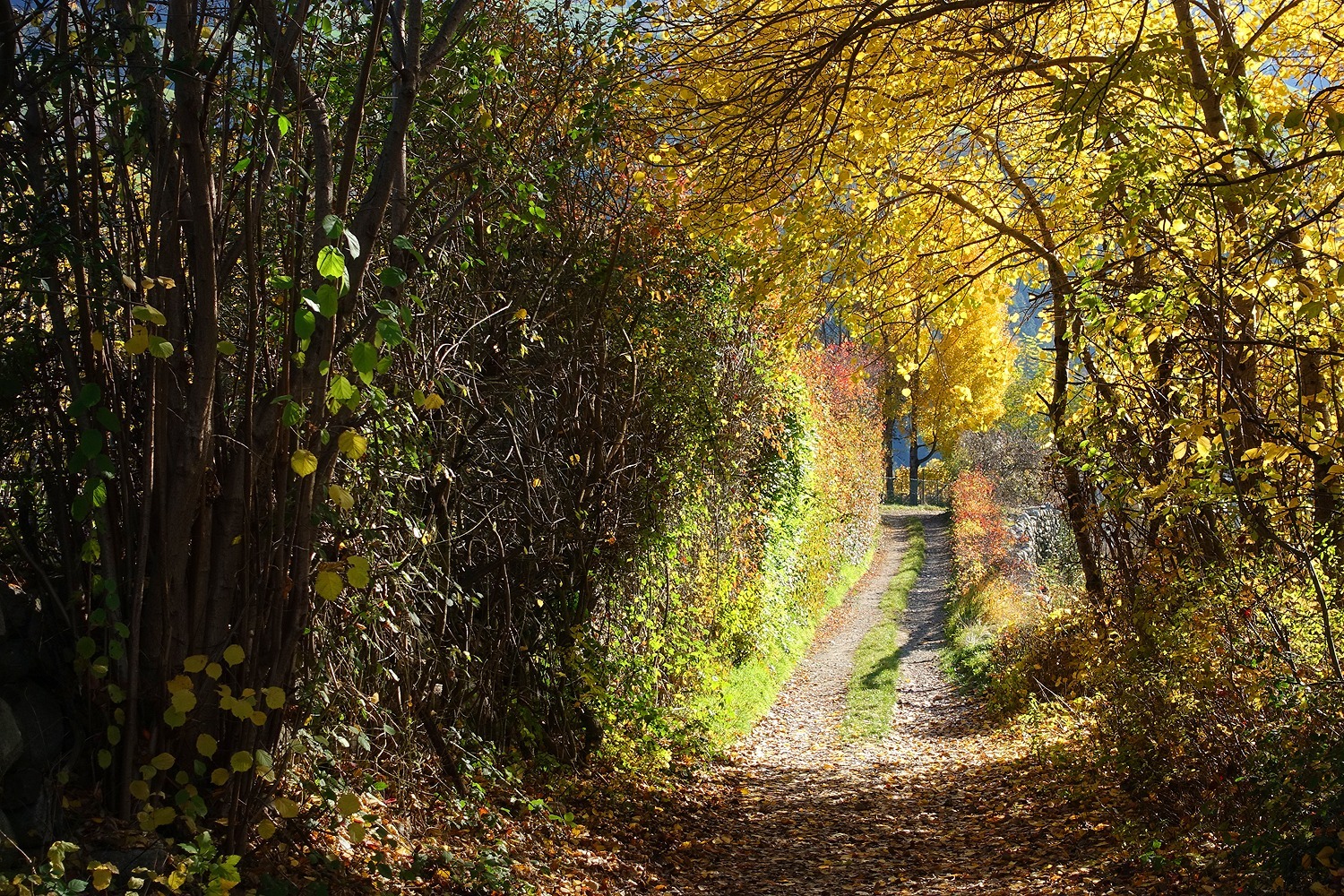
 Put a small child in a room with a single marshmallow. Tell him that, if he can wait for five minutes, he gets a second one. Leave the room, and see what he does. Can he sit there, staring at that scrumptious-if-a-tad-rubbery mound of goo and powdered sugar and just fight off the urge to grab it, tear it to bits, and, like the Cheshire Cat, leave nothing but a smile?
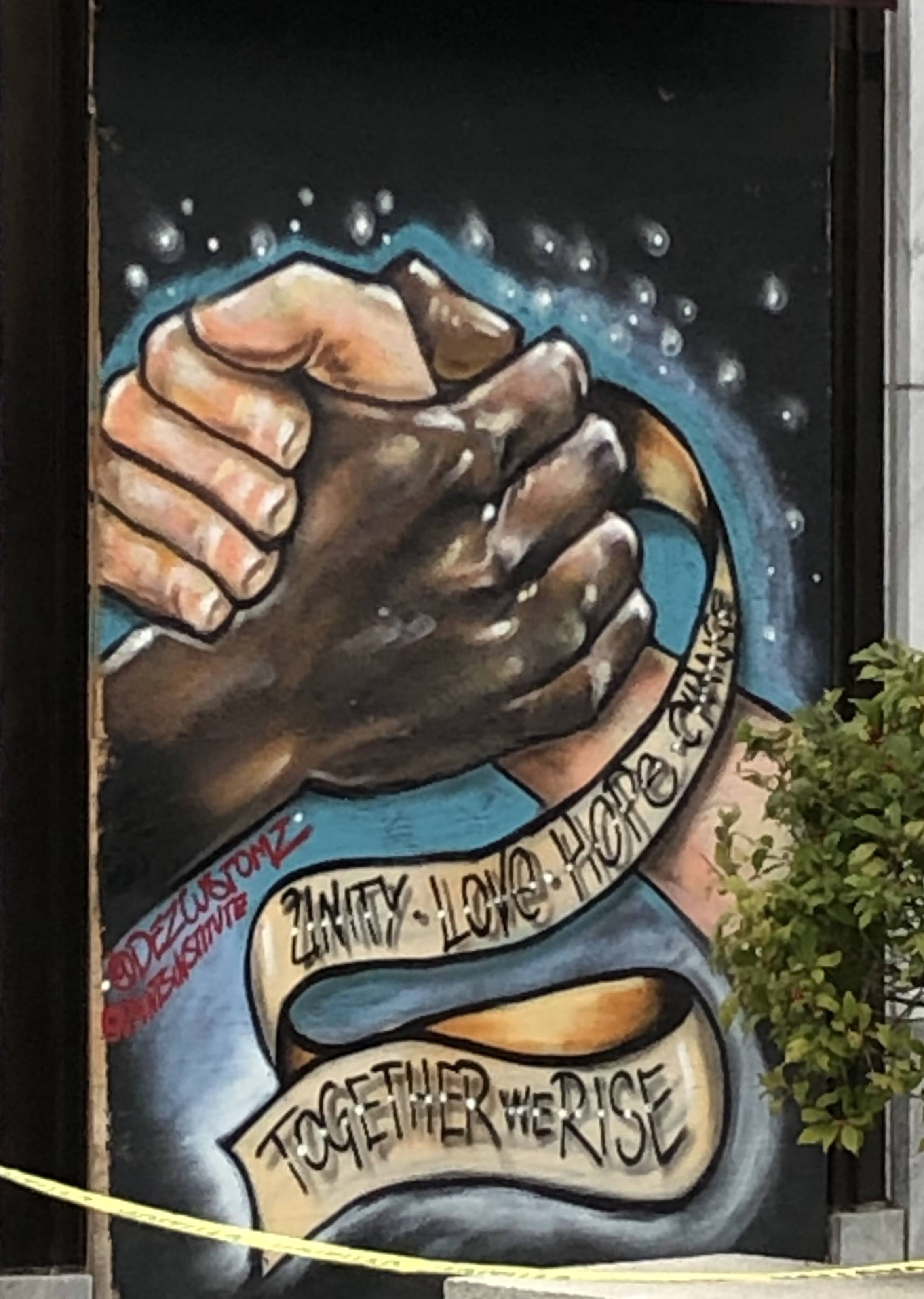 When we are done rhyming words of hope and history to audacity we will need to wake up. When the much needed elation and good cheer wears off, of getting job one done, defeating Trump then the reality will set in.
 think about that. Though others may have one, I lack an analytic framework. The best I can do is to offer some things I’ve been thinking about.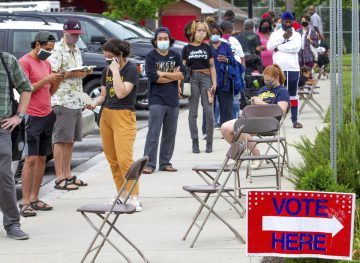
 I’ve been airborne since
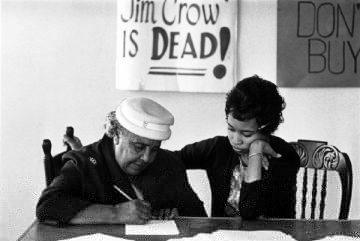 In the presidential election of 2016, around 45% of adult eligible to vote in the USA did not vote. It isn’t disputed that voter suppression, disproportionately affecting people of colour, was one of the causes. Another seems to be a cynicism, or apathy about the process itself. And there may be other reasons. But however you look at it, a situation in which nearly half of the eligible population doesn’t vote in an election for the highest office in the land ought to be causing a good deal of alarm, and not just for those political actors who reckon to be most damaged by this blank statistic. But then, ‘democracy’ has always been rather more of an unfulfilled promise than an accomplished fact, even in the Land of the Free (as well as in the land that boasts the ‘Mother of Parliaments’, where I live).
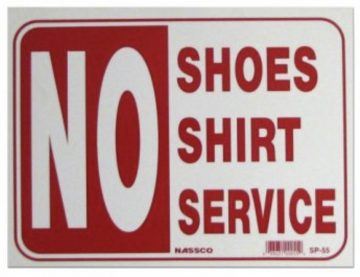 When I was a kid, I used to see this little sign everywhere (still see it occasionally): “No shoes. No shirt. No service.” It was on the door of every store, including the store down at the gas station. It used to make me laugh for some reason. Maybe, just the image of this shoeless, shirtless madman storming the store for more toilet paper.