
by Eric J. Weiner
Ours, like the moments after the Civil War and Reconstruction and after the civil rights movement, requires a different kind of thinking, a different kind of resiliency, or else we succumb to madness or resignation. —Eddie S. Glaude Jr.
Those convictions and motives, upon which the Nazi regime drew, no longer belong to a past that one can count by the intervening years: they have returned with the radical wing of the AfD – up to and including its phraseology – to the democratic everyday. —Jürgen Habermas: Germany’s Second Chance
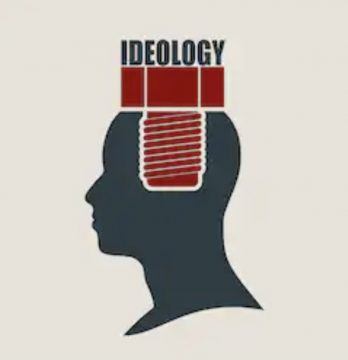
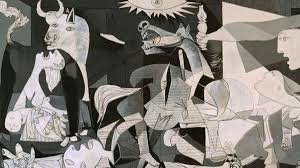 Not since the Civil War and Reconstruction has the citizenry in the United States been so divided. In our current historical conjuncture, the division can be characterized as a fight between Trumpism and “the Resistance.” As a political bloc and in its current formation, the Resistance is comprised of too many fractured groups to have a coherent ideological agenda. The one thing that these disparate groups can agree on is their fury and disdain for Trumpism and the people who support its white-nationalistic, xenophobic, misogynistic, anti-democratic, neoliberal agenda. It’s clear what and who they are fighting against but less clear what they are collectively fighting for. In contrast to the Resistance, Trumpism is a fully realized neofascist ideology with a cult-like following that won’t go away with Trump. It is a principled system that directs and solidifies a disparate constituency with differential attachments yet not at the expense of ideological cohesion and coherence. As this battle rages on in the United States, the democratic experiment teeters on the brink of failure. The election of Joe Biden to the presidency does not end the threat that neofascism represents to democracy in the United States. But it might provide an opportunity to systematically formalize critical educational strategies that can help re-enculturate a divided citizenry into a radically democratic habitus.
I know using the term neofascism to describe something other than formal state systems of uberviolence is provocative and controversial. Yet, according to Brad Evans, Chair in Political Violence & Aesthetics at the University of Bath in the United Kingdom and Henry Giroux, McMaster University Chair for Scholarship in the Public Interest & The Paulo Freire Distinguished Scholar in Critical Pedagogy, there are fourteen political principles of neofascism that articulate with our current historical conjuncture even as they acknowledge that the lived reality of this new form of fascism that is germinating in the United States is substantively different from its 20th century European and South American versions.[1] If we ignore how these political principles of neofascism are undermining the democratic habitus, we are engaging in a form of “historical amnesia” and might miss, as a consequence, an opportunity to develop anti-neofascist/pro-democracy educational projects that can help reverse the rise of its popularity in the United States. Read more »

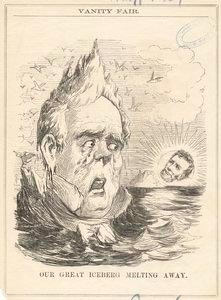 November 6, 1860. Perhaps the worst day in James Buchanan’s political life. His fears, his sympathies and antipathies, the judgment of the public upon an entire career, all converge into a horrible realty. Abraham Lincoln, of the “Black Republican Party,” has been elected President of the United States.

 Back in 1971, I couldn’t have predicted that the release of Joni Mitchell’s fourth album, Blue, would mark the beginning of the end of a friendship.
 2020 has been a wild ride, but it’s almost over, and I’m here to tell you it wasn’t all bad, as some great music came out this year – so much, in fact, that we’ll have to have two or even three podcasts this time even for the small taste which is our annual year-end review. Here’s part 1 (widget and link below).
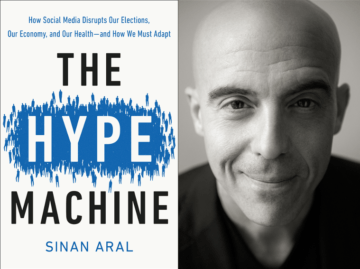 Given where we find ourselves in this late November of 2020, it is hard to think of a book more relevant or timely than The Hype Machine by Sinan Aral. The author is the David Austin Professor of Management and Professor of Information Technology and Marketing at the Massachusetts Institute of Technology. As one of the world’s foremost experts on social media and its effects, Prof. Aral is the perfect person to look at how this phenomenon has changed the world and the human experience. This is what he sets out to do in his new book, The Hype Machine, published under the Currency Imprint of Random House this September, and with considerable success.
 Dylan Kwait. Surfers by Plum Island, October 2020.
 Not long ago there was an article circulating on Facebook about ‘Hating the English’, originally published in a large circulation newspaper. The Irish author says something to the effect that once she thought it was just a few bad ones etc., but now she hates the lot of them. It’s been stimulated, I think, by the repulsive English nationalism that has been raising its head since Brexit, plus the usual ignorance about Ireland, Irish history and Irish interests on the part of your typical ‘Brit’. It’s not a very good piece of writing, and it has a rather slight idea in it. I’d ignore it but for the ‘likes’ and positive comments it’s received, particularly from ‘leftists’. It’s an example of what we could call ‘bloc thinking’ – the emotionally satisfying but futile consignment of entire masses of people into categories of nice and nasty.
 According to Donald Trump, in
 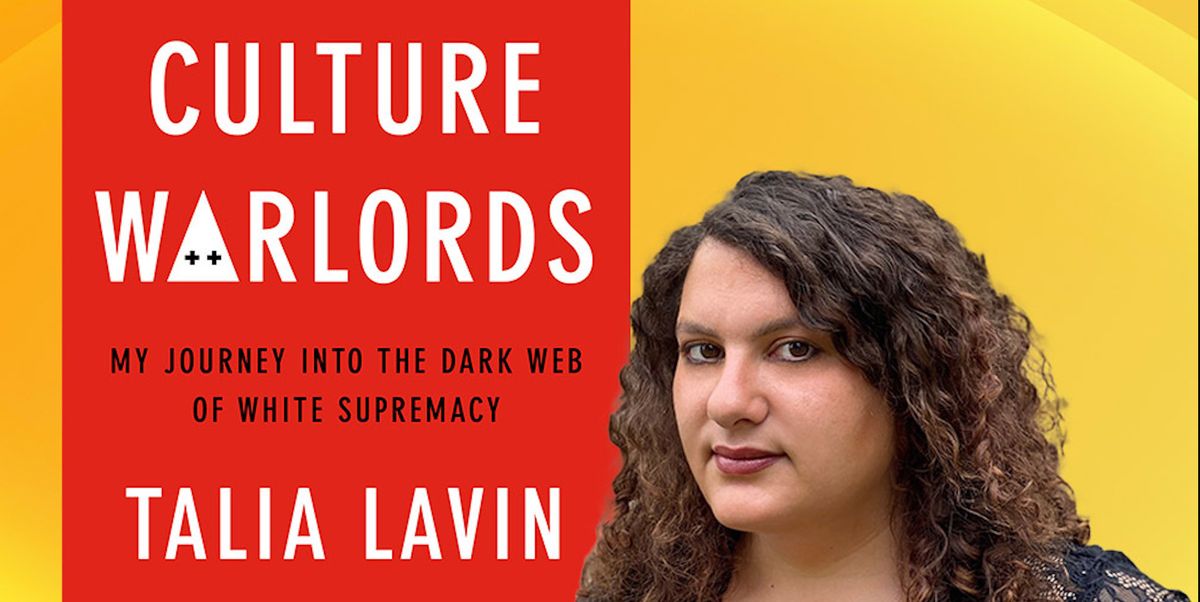 Recent protests in the US by Trump supporters since the election of Joe Biden, highlight just how political ideologies have the potential to tear seemingly ‘stable’ societies apart. A political divide however cannot always be seen as a clear-cut contradiction between the right and the left, as, for example, the way Trump supporters might assert; Biden, and Democrats more broadly, could hardly be seen to represent the left. Likewise, the right has it shades of commitment to conservatism. However, Trump’s 70 million supporters represent a congealing of far-right politics in America identifiable by the policies articulated by Trump that they endorse: anti- immigration, racism, a resurgent nationalism. While there is little doubt that such policies have been magical music to the ears of many right wingers, for others Trump and the Republican Party do not go far enough, and it is these extreme right-wing groups that are the subject of Talia Lavin’s book Culture Warlords: My Journey into the Dark Web of White Supremacists.
 When I was seventeen years old, I took my first college science course, a summer class in astronomy for non-majors. The professor narrated his wild claims in an amused deadpan, calmly showing us how to reconstruct the life cycle of stars, and how to estimate the age of the universe. This course was at the University of Iowa, and I imagine that the professor was accustomed to intermittent resistance from students like me, whose rural, religious upbringing led them—led me—to challenge his claims. Yet I often found myself at a loss. The professor used a soft sell, and his claims seemed somewhere beyond the realm of mere politics or belief. Sure, I could spot a few gaps in his vision (he batted away my psychoanalytic interpretation of the Big Bang by saying he had never heard of Freud), but I envied him. I wished that my own positions were so easy to defend.
 Cosmology is a young science. Maybe the youngest. Some people say it started in the 1920’s when these little glowing clouds visible at certain points in the sky were found, by better and better telescopes, to be composed of billions and billions of stars, just like our own galaxy – the Milky Way – and it was then discovered that no matter what direction you looked they were all rushing away from us. More than one cosmologist has wondered if these galaxies know something that you and I don’t.
 Many decades back when I was teaching at MIT, a senior colleague of mine, Paul Rosenstein-Rodan, a famous development economist, asked me at the beginning of our many long conversations what my politics was like. I said “Left of center, though many Americans may consider it too far left while several of my Marxist friends in India do not consider it left enough”. As someone from ‘old Europe’ he understood, and immediately put his hand on his heart and said “My heart too is located slightly left of center”. A 2015 study by psychologist Jose Duarte and his co-authors found that 58 to 66 per cent of social scientists in the US are ‘liberal’ (an American word, which unlike in Europe or India, may often mean ‘left of center’), and only 5 to 8 per cent are conservative. If anything, social scientists in the rest of the world are on average probably somewhat to the left of their American counterparts. If that is the case, for the world in general social democracy is likely to be an important, though not always decisive, ingredient of their ideology. In European politics and intellectual circles there was a time when social democrats were considered the main enemy of the communists, at least in their rivalry to get the attention of working classes, but now with the fading away of old-style communists, social democrats have a larger tent, which includes some socialists of yesteryear as well as liberals, besieged as they both now are by right-wing populists.