
by Usha Alexander
[This is the seventh in a series of essays, On Climate Truth and Fiction, in which I raise questions about environmental distress, the human experience, and storytelling. All the articles in this series can be read here.]
“Our plan B has always been grounded in our beliefs around the continued evolution of technology and engineered solutions to address and react to whatever the climate system and its outcomes present to us, whether that be in the form of rises in sea level, which we think you can address through different engineering accommodations along coastal areas, to changing agricultural production due to changes in weather patterns that may or may not be induced by climate change.” —Rex Tillerson, as CEO of ExxonMobil, to shareholders in 2015
***
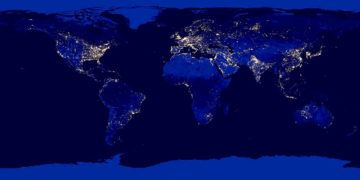 For the past few years, I’ve been taking a fairly deep dive into attempting to understand the physical and ecological changes occurring on our planet and how these will affect human lives and civilization. As I’ve immersed myself in the science and the massive societal hurdles that stand in the way of an adequate response, I’m becoming aware that this exercise is changing me, too. I feel it inside my body, like a grey mass coalescing in my chest, sticking to everything, tugging against my heart and occluding my lungs. A couple of months ago, I decided to stop writing on this subject, to step away from these thoughts and concerns, because of their discomfiting darkness.
But I’ve discovered that walking away from this matter is no longer something I can just choose to do. For I now experience the world in a different way than I once did, as this grey mass clouds my vision and leaves its residue on everything I touch. I’ve come to see the changing Earth as the greatest single force shaping human affairs into the future, the backdrop against which the human story will play out and respond.
Just as the temperate stability of the Holocene once enabled the shift from nomadism to settled farming and all of civilization, so the ongoing mass extinction of species and the rapidly warming climate will erode our present modes of life and maps of political order to make way for something new. Not just new, but very likely burdened by unprecedented collective hardship that stresses and tests our political systems, economies, infrastructures, and provisioning networks as never before. Some of these systems will fail. Without knowing how extremely or how quickly the planetary changes will occur, but knowing with some predictive capacity—unlike our Paleolithic ancestors—that an essential and irreversible change is underway, makes it difficult not to feel frightened and aggrieved for our future, even if I may not live to see the most startling changes. But then, what I’ve already witnessed has been startling enough. Read more »
 If one enters the name “Ellen Page” into the search box at
  Arma virusque cano: Sing,
 This Christmas, I stayed in a Marriott in the town where my kids live. Like most people, my business and personal travel has mostly ground to a halt in the last 9 months. So I was pleasantly surprised by the check-in experience the hotel provided me to allow for social distancing. I’m a long-time Marriot member and have their app on my phone. Using it, I was able to check-in ahead of time, and when my room was ready, they sent me a mobile key.
  In the early months of 1966, whenever a familiar look of boredom settled in my mother’s eyes at the thought of cooking, I’d suggest, “Why don’t we go out for pizza?”
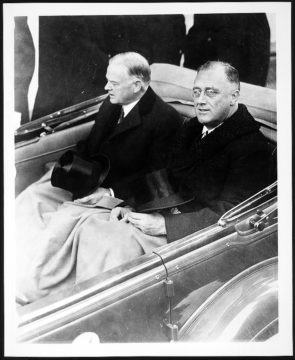 Adlai Stevenson, in the concession speech he gave after being thoroughly routed by Ike in the 1952 Election, referenced a possibly apocryphal quote by Abraham Lincoln: “He felt like a little boy who had stubbed his toe in the dark. He said that he was too old to cry, but it hurt too much to laugh.”



 It’s Monday, 1:45, and six men and I sit in a circle with our German-trained psychotherapist, an imperious woman who reminds us that she is here to help only if we get bogged down or offer guidance and that we men need to find our own way through our turmoil, which is the point of the group and the point of each of us paying $3000 per year. I’m fairly new, so before I speak, I’m seeking some level of comfort or commonality among us, and every week I come up short. I’m not yet adjusted and unsure what I should be adjusting to.
 We are entering the aftermath. Two of the most epic and wrenching struggles in American history are finally playing out to their conclusions. At last we see a conclusive democratic rejection of a presidency built on systematic lying and racism. At the same time we look just weeks or months ahead for vaccines that will liberate us from our deadly yearlong pandemic.