
by Godfrey Onime
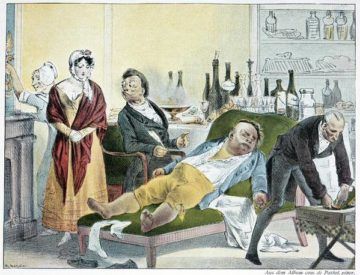
I am reminded of an observation made by an African comedian at a wedding reception I once attended in Atlanta. He quipped that the English language tends to identify even the most hideous diseases by the most beautiful names. Names so lyrical, so poetic, so sensuous you almost wish to contract the disease. He rattled off some examples: Hepatitis. Cholecystitis. Syphilis. Cancer. “How beautiful!” he exclaimed.
The jokester contrasted this proclivity with some gruesome names Africans assign to even the most benign conditions, such as with the Yorubas of Nigeria — Lapalapa (for dermatitis); or jedijedi (for diarrhea). The comedian may romanticize the English names for diseases, but not so with most of my patients. Especially not so with the middle-aged woman whom I diagnosed with syphilis a few years back. “You mean my nose could fall off?” seemed to be her biggest fear, explaining that she once heard that syphilis could destroy the “snout,” as she put it.
I scrutinized the woman, taking in her straight nose and high cheekbones. Giggling, I said, “Maybe you get to go back in time and join the ‘No Nose Club’. Perhaps you could find out who Mr. Crumpton really was.”
“Mr. who?”
###
Beautiful or not, it turns out that the origin of the name for syphilis, ironically, came from a poem, written by Girolamo Fracastoro, an Italian physician, scholar and poet. The poem, Syphilis sive morbus gallicus (translated to Syphilis or The French Disease), tells the story of a shepherd boy named Syphilis who angered the Greek god Apollo and was given the disease bearing his name as punishment. Although the affliction was more colloquially called “The Pox,” the term syphilis stuck as the proper name. Read more »
 For many wine lovers, understanding wine is hard work. We study maps of wine regions and their climates, learn about grape varietals and their characteristics, and delve into various techniques for making wine, trying to understand their influence on the final product. Then we learn a complex but arcane vocabulary for describing what we’re tasting and go to the trouble of decanting, choosing the right glass, and organizing a tasting procedure, all before getting down to the business of tasting. This business of tasting is also difficult. We sip, swish, and spit trying to extract every nuance of the wine and then puzzle over the whys and wherefores, all while comparing what we drink to other similar wines. Some of us even take copious notes to help us remember, for future reference, what this tasting experience was like.
 Covid has
  One problem plaguing contemporary anti-Cartesians (pragmatists, Wittgensteinians, hermeneutic philosophers, etc.) is that it can seem that we are competing against each other, trying to do better than everyone else what we all want to do: get past the dualisms and other infelicities of the modern picture while at the same time absorbing its lessons and retaining its good aspects. We waste our time fighting each other instead of our common enemy. Why is it so hard to see ourselves as all on the same team?
 Travelers to India came from all corners of the world through the ages for different reasons. The very first modern humans probably came there in order to escape harsh climate conditions elsewhere in the world. Latter day visitors arrived with varied objectives in mind. Some came seeking material fortune, some for spiritual enlightenment and others merely out of curiosity. A few who came, took what
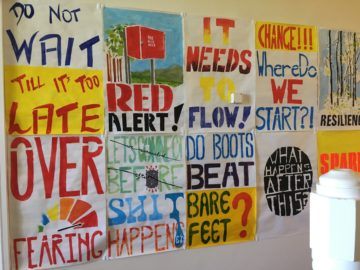 —Change. Resilience. Where do we start? I’ve got no idea. What happens after this? Listen! The answer is here!—
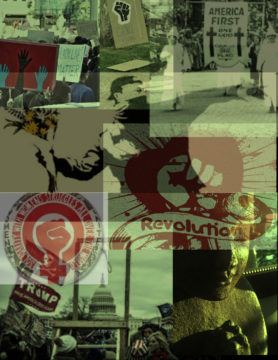 In 1940, at the height of Hitler’s invasion of Western Europe, Walter Benjamin, from Vichy France wrote, “The tradition of the oppressed teaches us that the ‘emergency situation’ in which we live is the rule. We must arrive at a conception of history that is in keeping with this insight.”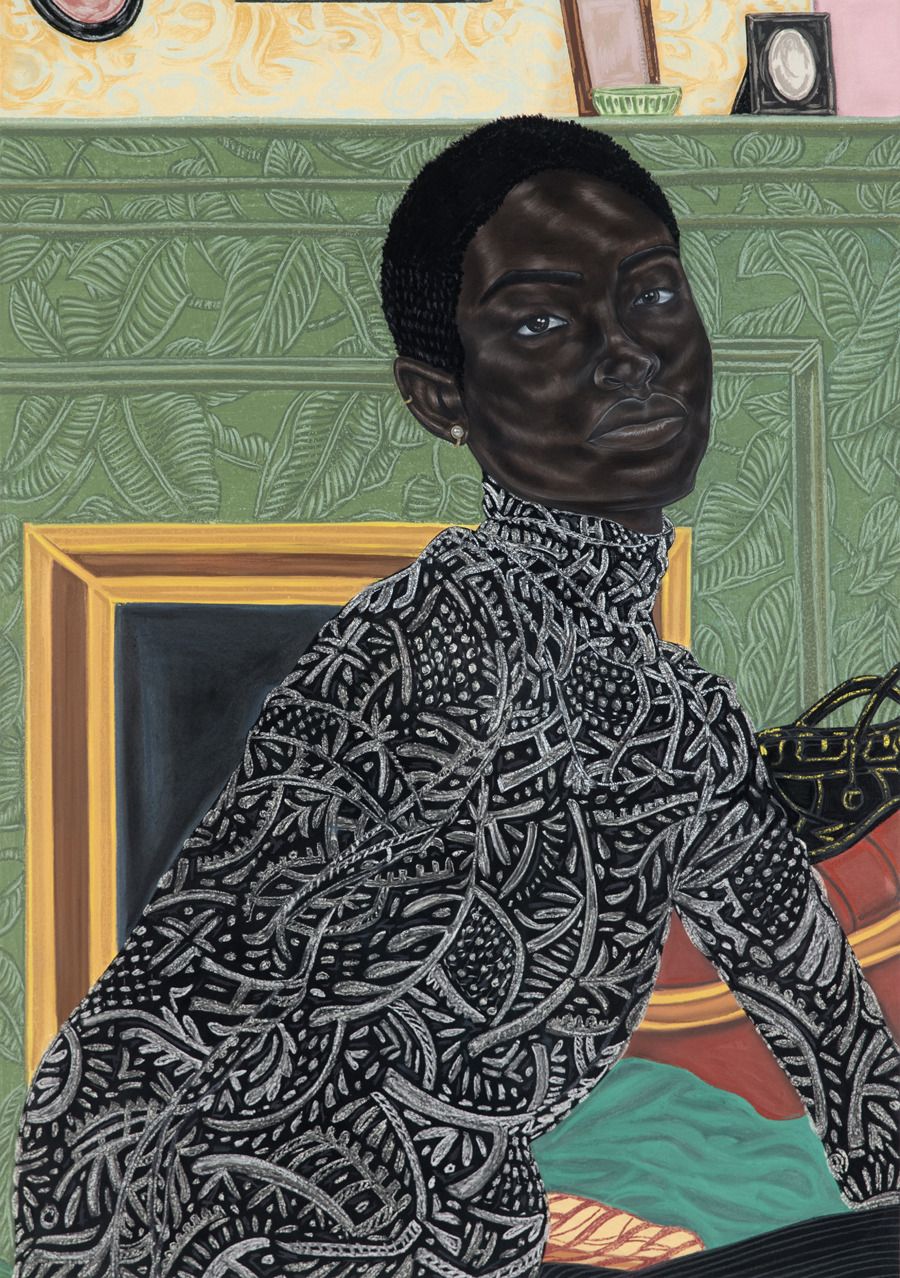
 Mourning is in season. Newspapers of record these days publish interactive mass obituaries, images of “ordinary” people fallen to “the opioid crisis” or to Covid-19 (the front page of the Sunday New York Times was recently riven down the middle by a monolith composed of thousands of dots, growing denser towards the base, each representing a victim of the virus: the whole reminiscent of the graphic tributes to 9/11). The inauguration of the US president in January featured, in lieu of most spectators, ranks of flags, symbolizing the past year’s losses. The annual observation of International Holocaust Remembrance Day in Germany, held this year as for the past quarter century on January 27 at the Reichstag in Berlin, featured a remarkable ceremony marrying reconciliation with the starkest grief. In his latest book, the memoir-cum-poetics Inside Story, Martin Amis eschews his characteristic charades in a sincere and extended eulogy for Saul Bellow, Philip Larkin, and Christopher Hitchens, three of the central figures in the author’s professional and affective life. And, 15 years after it first appeared, The Year of Magical Thinking, Joan Didion’s essay on death and bereavement, persists on various bestseller lists.
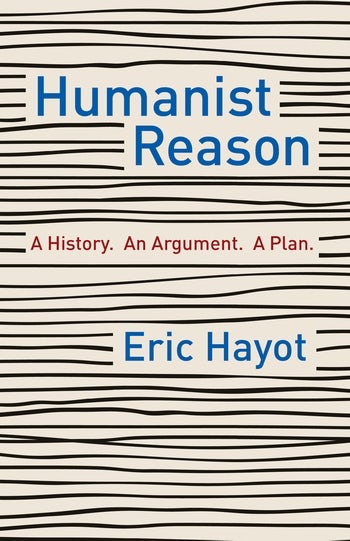 Unfortunately, it is always worth your time to read a book in praise of the humanities. Given the unenviable position of the humanities in public education and in contemporary cultural and (especially) political discourse about valuable expertise, any author that comes to their defense has to find a strategy to shift the narrative, and will thereby almost invariably do something interesting.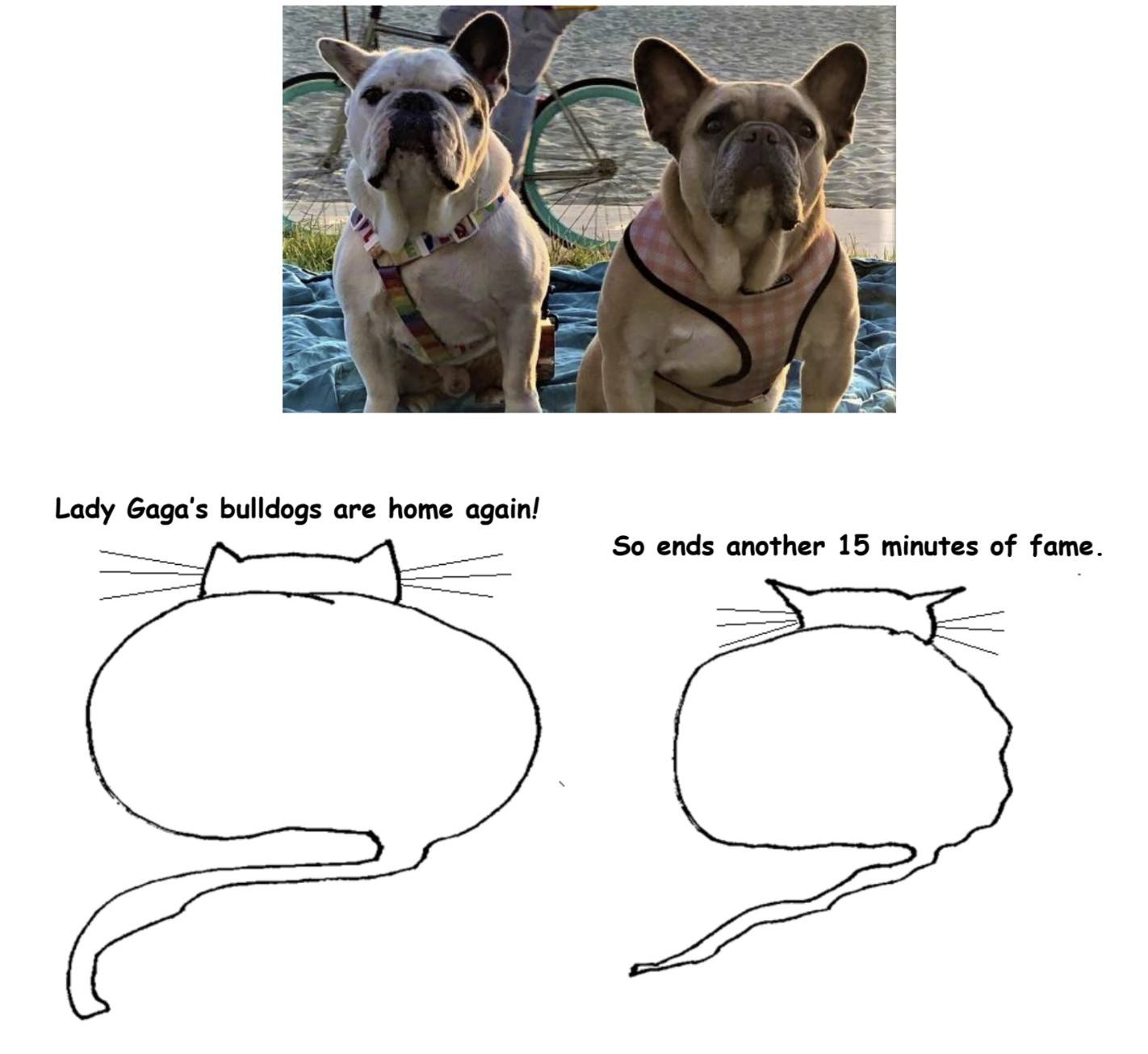
 Former Finnish President and
  I just spent two months living on the Caribbean island of Grenada. It’s a wonderful place with a somewhat antiquated healthcare system. To visit Grenada, I had to have a negative PCR test within 72 hours of flying. I was planning to go to a clinic and wait in line, which I’d done for a previous PCR test. I’d waited in line in the freezing cold for almost 3 hours. But a couple of weeks before my flight in January, Jet Blue let me know that Grenada was accepting PCR tests through a company called Vault who would mail me an at-home test. I signed up, they sent me the test, and three days before my flight, I logged onto a Zoom call with Vault from the comfort of my own living room. My test kit had a barcode and I had to show that to the technician on the Zoom. She then watched me spit into the vial with the barcode and instructed me how to package up the kit appropriately to send it back. I walked it over to UPS 30 minutes later, and within 48 hours, I received my results by email.
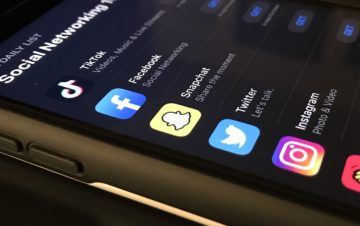 The Machine has me in its tentacles. Some algorithm thinks I really want to buy classical sheet music, and it is not going to be discouraged. Another (or, perhaps it is the same) insists that now is the time to invest in toner cartridges, running shoes, dress shirts, and incredibly expensive real estate.