
by Peter Wells
One of humanity’s greatest problems is that everyone thinks they are right. We are aware, of course, that we might be wrong, because we know that on certain issues we have changed our minds, and therefore must have been wrong at least once. Nonetheless, at any given moment, we believe that we are right. The contrary would be ridiculous. We can say, if we wish, ‘I believe in the nuclear deterrent, but I might be wrong,’ but we can’t possibly say, ‘I believe in the nuclear deterrent, and I am wrong.’
Our beliefs on specific issues are part of a pattern of interconnected opinions, which we believe to be consistent, and they are related to the beliefs of members of our community, particularly our friends and colleagues. This tendency for our attitudes to be reinforced by our community has been exacerbated in recent years by social media. On the whole, we meet disappointingly few people who disagree with us, and this reduces the possibility that we might be persuaded to reconsider our views, to modify them or to compromise – which means we have fewer opportunities to grow in maturity and understanding.
In his essay ‘Trinity and Pluralism,’ Rowan Williams has an arresting observation about what people should do about the beliefs they hold – how they should regard them, and what they should do when they encounter people who hold different beliefs. He writes, of course as a Christian, but I wonder if the suggestions he makes can be applied to people of different persuasions. He proposes that
The Christian does not ask how he or she knows that the Christian religion is exclusively and universally true; he or she simply works on the basis of the ‘christic’ vision for the human good, engaging with adherents of other traditions without anxiety, defensiveness or proselytism, claiming neither an ‘exclusivist’ perspective invalidating others, nor an ‘inclusivist’ absorption of other perspectives into his or her own, nor yet a ‘pluralist’ meta-theory, locating all traditions on a single map and relativizing their concrete life.
Let’s unpack what Williams is saying. Read more »



 We think of AI as the stuff of science, but AIs are born artists. Those artistic talents are the key to their scientific power and their limitations.

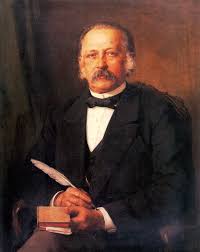 A friend, knowing that I’ve been learning German, recently sent me a volume of Theodore Fontane’s poetry. Fontane (1819-1898) is best known today for the novels that he wrote in the later part of his life. But some his poems have an affecting simplicity–a simplicity that is perhaps especially charming to those of us who are less than fluent in German. Here is one lyric that particularly caught my attention. It expresses a sentiment that seems most suitable to the present time as we approach the end of a bleak winter and, one hopes, of a devastating pandemic. Naturally, the translation takes some liberties in an attempt to retain something of the feel and spirit of the original.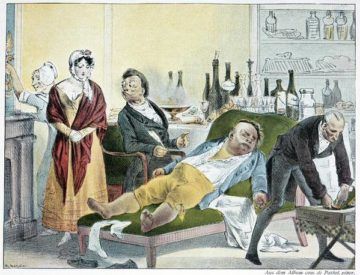
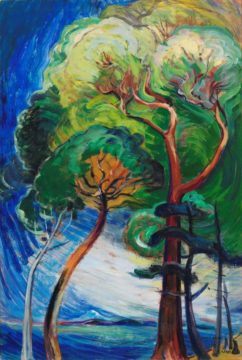
 For many wine lovers, understanding wine is hard work. We study maps of wine regions and their climates, learn about grape varietals and their characteristics, and delve into various techniques for making wine, trying to understand their influence on the final product. Then we learn a complex but arcane vocabulary for describing what we’re tasting and go to the trouble of decanting, choosing the right glass, and organizing a tasting procedure, all before getting down to the business of tasting. This business of tasting is also difficult. We sip, swish, and spit trying to extract every nuance of the wine and then puzzle over the whys and wherefores, all while comparing what we drink to other similar wines. Some of us even take copious notes to help us remember, for future reference, what this tasting experience was like.
 Covid has
  One problem plaguing contemporary anti-Cartesians (pragmatists, Wittgensteinians, hermeneutic philosophers, etc.) is that it can seem that we are competing against each other, trying to do better than everyone else what we all want to do: get past the dualisms and other infelicities of the modern picture while at the same time absorbing its lessons and retaining its good aspects. We waste our time fighting each other instead of our common enemy. Why is it so hard to see ourselves as all on the same team?