by Azra Raza
All of the articles in this series can be found here.
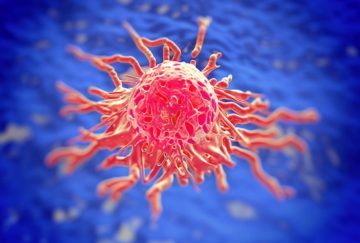 Cancer has occupied my intellectual and professional life for half a century now. Despite all the heartfelt investments in trying to find better solutions, I am still treating acute myeloid leukemia patients with the same two drugs I was using in 1977. It is a devastating, demoralizing reality I must live with on a daily basis as my entire clinical practice consists of leukemia patients or leukemia’s precursor state, pre-leukemia. My colleagues, treating other and more common cancers, are no better off. I obsess over what I have done wrong and what the field is doing wrong collectively.
Cognitive Biases in Cancer Research
The Nobel Laureate Daniel Kahneman was speaking to Krista Tippet on NPR about the faulty hardwiring of our brains and the cognitive biases that provide ongoing confirmation for the erroneous assumptions we regularly and naturally make (May 9, 2021). To illustrate his point, Kahneman recounted a sweet personal story. Some years ago, he and his wife returned from dinner with friends and were casually talking about the couple they had been with when his wife declared, “He is sexy.” As Kahneman pondered this possibility, trying to decide if he agreed or not, she then said something quite shocking, “He does not undress the maid himself.” Kahneman stared at his wife in disbelief. What could she possibly mean by this bizarre statement? What he should have done next was to ask himself, “But this is so uncharacteristic of her that there must be an error on my part”. Instead, he demanded to know what on earth she meant. And of course, what she had actually said was, “He does not under-estimate himself.”
There are some 180+ entries listed by Wikipedia as examples of these cognitive biases. Among these, the confirmation biases are particularly problematic where scientists are concerned. Science is a discipline devoted to the strictures of methodology based on formulating a hypothesis, designing experiments to test the hypothesis, and modifying the original proposal as needed through precise measurements and observations. Critical evaluation is the backbone of the scientific method. Yet, given the tendency toward cognitive biases, we become less critical, more readily accepting of emerging information that confirms our existing hypothesis, and we ignore the parts that don’t quite fit in. With time, this type of “confirmation bias” in support of a half-baked hypothesis builds up and an entire field is hijacked by its loud and powerful proponents.
I have regularly witnessed this during a four-decade long career in oncology research. Read more »
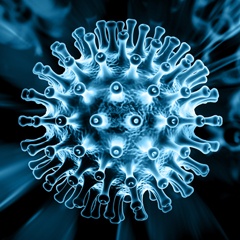 Covid-19 has led to various reactions akin to the various phases in the process of grieving.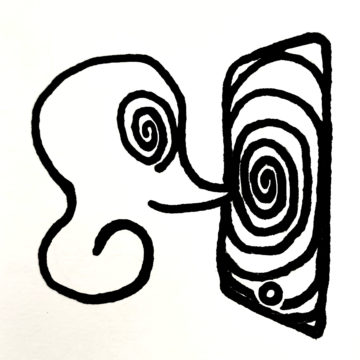
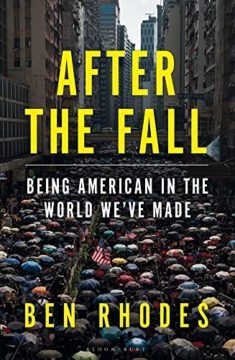 Many of us read with interest Ben Rhodes’ insider account of his time as a speech writer and advisor to Barack Obama during that historic presidency in his book The World as It Is: Inside the Obama White House. There were suggestions of his displeasure at some aspects of US politics in that publication, as for example the racism he thought Obama was subjected to while in office. His new book After the Fall: Being American in the World We’ve Made, goes further and is a clearer articulation of his concern about US and international politics. The conclusions he draws could be viewed as a personal coming of age in his understanding of the impact of American foreign policy on the world, and indeed experiencing and confronting more realistically, the ‘darker’ angels in US domestic politics.
 In 1994, Chauvet cave was discovered near the township of Vallon-Pont-d’Arc in southern France. The cave is a
  One day, I used to say to myself and anyone else who’d listen, I’m going to write a book called ‘everything you know about these people is wrong’. I have given up on the idea, and I expect anyway that someone else has already done it. What prompted the repeated thought was the way in which so little of what well known thinkers and artists did or said is actually reflected in public consciousness,
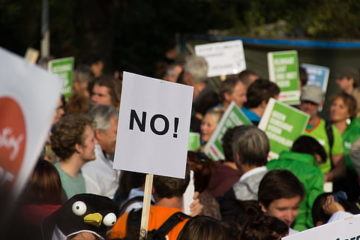 You may know everything that you need to know about the on-going “Critical Race Theory” debate. Indeed, you might have concluded that actually there is no such
  Where I live in Colorado there are unstable elements of the landscape that sometimes fail. In severe cases, millions of tons of rock, silt, sand, and mud can shift, leading to massive landslides. The signs aren’t always evident because the breakdown in the structural geology often happens quietly underground. The invisible changes can take hundreds or thousands of years, but when a landslide takes place, it is fast and violent. And the new landscape that comes after is unrecognizable.
 A number of issues in the study of nationalism ought to be widely accepted nowadays, most notably perhaps the claim that political nationalism – the idea that a citizen pledges allegiance to a nation-state rather than to a village or a town – is a modern phenomenon. After all, nationalism properly takes hold in a territory when modern tools such as universal schooling are employed to produce a national identity – the inhabitants of a territory must speak the same language and recognise a common culture if a nation is to surface – and this is a product of the last 200 years. A national identity doesn’t come about on its own.