
by Joseph Shieber
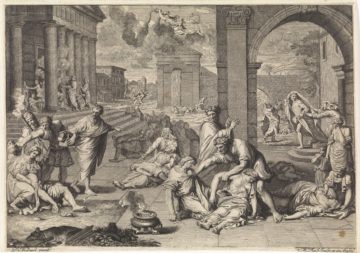
On June 15 of this year, the National Constitution Center hosted a session entitled, “Free Speech, Media, Truth and Lies”. The topic for the session, as described by the National Constitution Center website, was “Should the government or private companies identify and regulate truth and lies?” There were three speakers. Harvard Law School Professor (and former Dean) Martha Minow argued for the role of government regulation to reverse the tide of internet misinformation, the Cato Institute’s Paul Matzko argued against a government role (predictably; he’s at the Cato Institute), and Jonathan Rauch (of Brookings), author of the seemingly omnipresent recent book The Constitution of Knowledge: A Defense of Truth, landing somewhere in the middle. (There’s a nice write-up of the discussion by Rachel Reed at Harvard Law Today.)
Minnow sketched a number of remedies to address the problems plaguing today’s online information ecosystems. To reverse the decline of local newspapers and legacy media publications, Minnow suggested that online media outlets should be required to provide “payment for the circulation of material developed by others.” Minnow also discussed the revival of the Fairness Doctrine for the internet age, mandating coverage of a range of ideas by online media sources.
Matzko pushed back most directly against this latter suggestion of Minnow’s, the idea of reviving the Fairness Doctrine. As he put it, “Few things send a shudder down my spine quite like hearing we should apply a public interest standard.” (Remember, Cato Institute.) Matzko drew on research that he did for his book, The Radio Right, which documented how the Kennedy Administration used the Fairness Doctrine to censor critics of Kennedy’s legislative agenda. Read more »
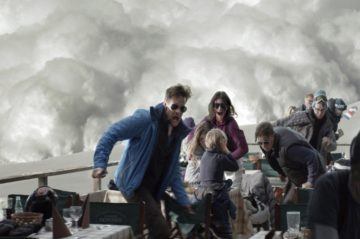 Everyone agrees that early cancer detection saves lives. Yet, practically everyone is busy studying end-stage cancer.
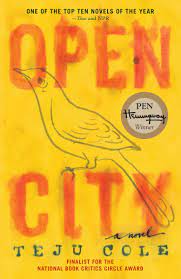 As an aspiring writer of fiction, I like to try and understand the mechanics of what I’m reading. I attempt to ascertain how a writer achieves a certain effect through the manipulation of language. What must happen for us to get “wrapped up” in a story, to lose track of time, to close a book and feel that the world has shifted ever so slightly on its axis? The first step, I think, is for writers to persuade readers to believe in the world of the story. In a first-person narrative, this means that the reader must accept the world of the novel as filtered through the subjective viewpoint of the narrator. But it’s not really the outside world that we are asked to accept, it’s the consciousness of the narrator. To create what I’m calling consciousness—basically, a feeling of being in the world—and to allow the reader to experience it is one of the joys of reading. But how does a writer achieve this mysterious feat?
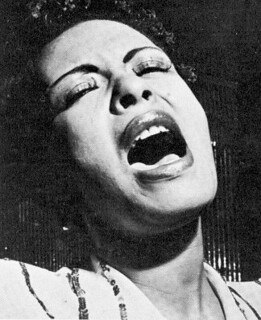 Following Hulu’s release of “The United States vs Billie Holiday”, the singer’s musical career has become a topic of discussion. The docu-drama is based on events in her life after she got out of prison in 1948, having served eight months on a set up drug charge. Now she was again the target of a campaign of harassment by federal agents. Narcotics boss Harry Anslinger was obsessed with stopping her from singing that damn song – Abel Meeropol’s haunting ballad “Strange Fruit”, based on his poem about the lynching of Black Americans in the South. Anslinger feared the song would stir up social unrest, and his agents promised to leave Holiday alone if she would agree to stop performing it in public. And, of course, she refused. In this particular poker game, the top cop had tipped his hand, revealing how much power Holiday must have had to be able to disturb his inner peace.
 Wendel White. South Lynn Street School, Seymour, Indiana, 2007.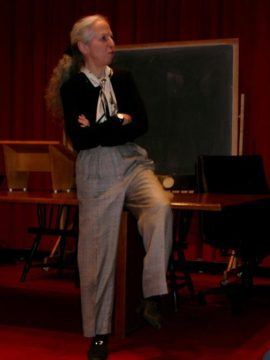
 Santiniketan in my childhood used to attract a lot of foreign scholars, artists and students, which was a boon to a young stamp-collector like me. Every day the sorting at the small post office was completed by mid-morning and many of the residents used to come and collect their mail themselves. I, along with a couple of other children, used to wait there for the foreigners to collect their mail. As soon as one was spotted, we used to scream “Stamp! Stamp!”; they obliged us by tearing off the stamps in their envelopes. Soon I had a thick album of foreign stamps. I used to linger wistfully over every stamp and imagined things about those distant foreign lands. (I remember Swiss stamps said only ‘Helvetia’ on them, which I could never find in the only world map I had at home).



 Billions of people around the world continue to live in great poverty. What is the responsibility of rich countries to address this?
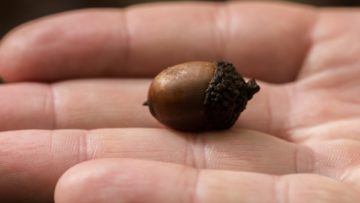 The best thing about a painting is that no two people ever paint the same one. They could be sitting in the same garden, staring at the same tree in the same light, poking the same brush in the same pigments, but in the end none of that matters. The two hypothetical tree-paintings are going to turn out different, because the two hypothetical painters are different also.
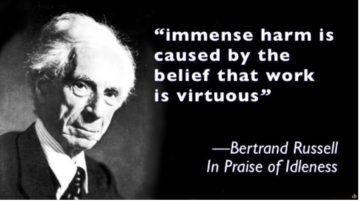 The work ethic is deeply ingrained in much of modern society, both Eastern and Western, and there are many forces making sure that this remains the case. Parents, teachers, coaches, politicians, employers, and many other shapers of souls or makers of opinion constantly repeat the idea that hard work is the key to success–in any particular endeavour, or in life itself. It would be a brave graduation speaker who seriously urged their young listeners to embrace idleness. (I did once hear Ariana Huffington advise Smith College graduates to “sleep their way to the top,” but she essentially meant that they should avoid burn out by ensuring that they get sufficient rest.)
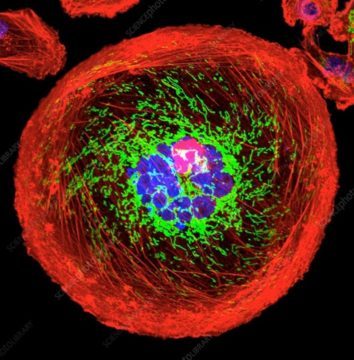 Ninety percent cancers diagnosed at Stage I are cured. Ninety percent diagnosed at Stage IV are not. Early detection saves lives. Unfortunately, more than a third of the patients already have advanced disease at diagnosis. Most die. We can, and must, do better. But why be satisfied with diagnosing Stage I disease that also requires disfiguring and invasive treatments? Why not aim higher and track down the origin of cancer? The First Cell. To do so, cancer must be caught at birth. This remains a challenging problem for researchers.
 In the beginning, the god of the