by Raji Jayaraman
We’d had dogs for as long as I could remember. My family had a pair of Labradors back in India when I was born. Blackie was black. Brownie was brown. My cousin, who inherited Blackie when my parents left the country, later got a ginger-haired Labrador. He named her Ginger. It was clearly in this family tradition that I named Waggy, Waggy.
He was a jolly fellow, always happy to see us. He’d race after the Land Rover as we drove into the driveway of our house in Somalia, wagging his tail, bounding up to greet us under the thorn tree where we parked the car. Although he was always ready to play, we didn’t often oblige because it was just too hot. That winter though, the winter Waggy died, the weather was exceptional. It was an unusually wet December. The temperatures fell with the rain. The dust settled and, with the thorns in the yard briefly buried, we played with Waggy outside until we could no longer bear the stench of ants that came with the rains. I just learned that although these ants’ genus is Paltothyreus, they are commonly known as the “African stink ant”. Clearly, more erudite people than I take the descriptive function of names seriously.
That year, we had a house guest. Anand bhaia was a Bengali-Fijian priest and, it being December, our parents adopted his Christmas traditions with gusto. We were unenthusiastic, but our parents insisted on our active participation. “Atithi Devo Bhava,” our mother explained. A guest is God. The irony of this Hindu foundation for her embrace of Christianity was not lost on her but, blinded by indignation, we mistook her generosity for hypocrisy. Read more »

 Billions of people around the world continue to live in great poverty. What is the responsibility of rich countries to address this?
 The best thing about a painting is that no two people ever paint the same one. They could be sitting in the same garden, staring at the same tree in the same light, poking the same brush in the same pigments, but in the end none of that matters. The two hypothetical tree-paintings are going to turn out different, because the two hypothetical painters are different also.
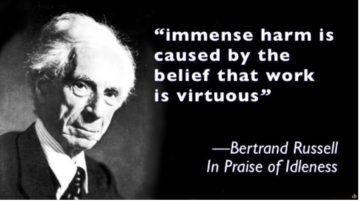 The work ethic is deeply ingrained in much of modern society, both Eastern and Western, and there are many forces making sure that this remains the case. Parents, teachers, coaches, politicians, employers, and many other shapers of souls or makers of opinion constantly repeat the idea that hard work is the key to success–in any particular endeavour, or in life itself. It would be a brave graduation speaker who seriously urged their young listeners to embrace idleness. (I did once hear Ariana Huffington advise Smith College graduates to “sleep their way to the top,” but she essentially meant that they should avoid burn out by ensuring that they get sufficient rest.)
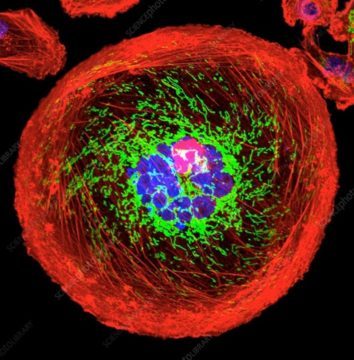 Ninety percent cancers diagnosed at Stage I are cured. Ninety percent diagnosed at Stage IV are not. Early detection saves lives. Unfortunately, more than a third of the patients already have advanced disease at diagnosis. Most die. We can, and must, do better. But why be satisfied with diagnosing Stage I disease that also requires disfiguring and invasive treatments? Why not aim higher and track down the origin of cancer? The First Cell. To do so, cancer must be caught at birth. This remains a challenging problem for researchers.
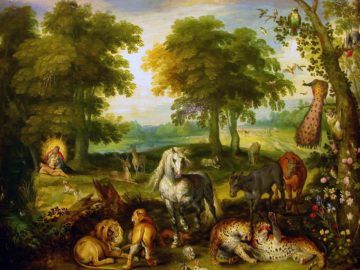 In the beginning, the god of the
  In long plane journeys I do not sleep well. But some years back in one such journey I was tired and fell fast asleep. When I woke up, I saw a little note on my lap. It was from the captain in charge of the plane. It said, “I did not want to disturb you, but from our computer log I could see that your total travel so far with our airlines group just crossed 3 million miles. So congratulations! It seems you travel almost as much as I do.” I made a quick calculation, 3 million miles is like 6 return trips from the earth to the moon. With a deep sigh I chanted to myself, as our plane was hurtling through the night sky, a word from an ancient Sanskrit hymn: Charaiveti (keep moving!)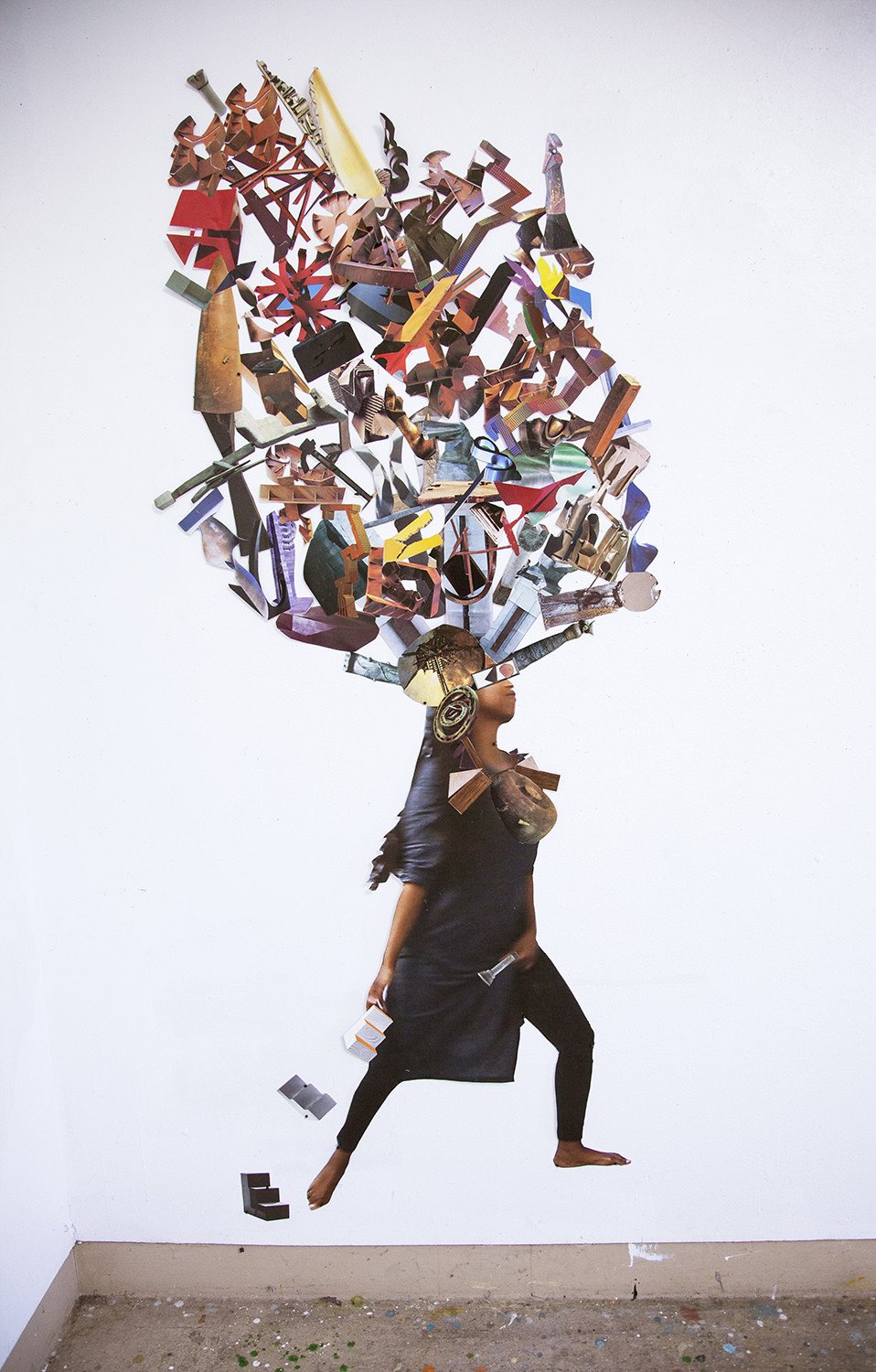

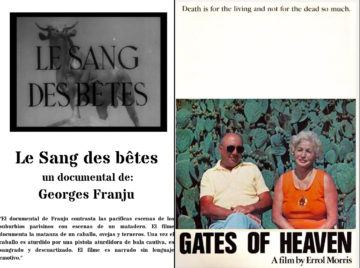 Blood of the Beasts (Le sang des bêtes)

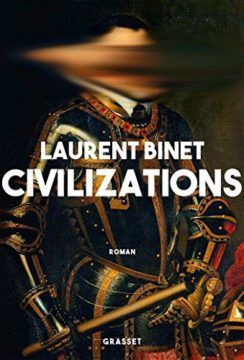 One of my oldest friends, an economic historian who serves as the Academic Director of a museum of Jewish life in northern Germany, is, like me, a child of May; and, during our recent birthday month, as is our custom, we exchanged gifts by post. Since we also share a love of books and history and a taste for grand, occasionally outlandish theory, as well as an abhorrence for futuristic science fiction, the novels we sent each other were in equal measures fantastical and backward-looking: examples of counterfactual historical fiction, what has come to be known as uchronia, the imaginative remaking of a bygone era that is the temporal counterpart to utopian geography.