by Jochen Szangolies
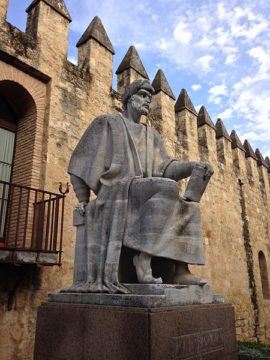
The Incoherence of the Philosophers (Tahâfut al-falâsifa) is an attempt by 11th century Sunni theologian and mystic al-Ghazâlî to refute the doctrines of philosophers such as Ibn Sina (often latinized Avicenna) or al-Fârâbî (Alpharabius), which he viewed as heretical for favoring Greek philosophy over the tenets of Islam. Al-Ghazâlî’s methodological principle was that in order to refute the assertions of the philosophers, one must first be well versed in their ideas; indeed, another work of his, Doctrines of the Philosophers (Maqāsid al-Falāsifa), gives a comprehensive survey of the Neoplatonic philosophy he sought to refute in the Incoherence.
The Incoherence, besides its other qualities, is noteworthy in that it is now regarded as a landmark work in philosophy itself. Ibn Rushd (Averroes), in response, penned the Incoherence of the Incoherence (Tahāfut al-Tahāfut), a turning point away from Neoplatonism to Aristotelianism.
In modern times, most allegations of ‘incoherence’ levied against philosophy come not from the direction of religion, but rather, from scientists’ allegations that their discipline has made philosophy redundant, supplanting it by a better set of tools to investigate the world. The perhaps most well-known example of this is Stephen Hawking’s infamous assertion that ‘philosophy is dead’, but similar sentiments are readily found. While the proponents of such allegations have not always shown shown al-Ghazâlî’s methodological scrupulousness in engaging with the body of thought they seek to refute, these are still weighty charges by some of the leading intellectuals of the day. Read more »
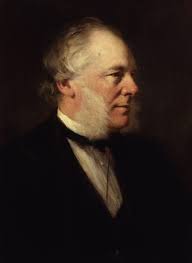 1859 was not a bad year for publishing in Britain. Books that came out that year included Darwin’s On the Origin of Species, John Stuart Mill’s On Liberty, and George Eliot’s Adam Bede. The first installments of Dickens’ A Tale of Two Cities and Wilkie Collins’ The Woman in White also made their appearance. And Samuel Smiles published Self-Help.
 According to the website Rotten Tomatoes, there are four types of movies: good-good movies, good-bad movies, bad-good movies, and bad-bad movies. These types can be identified using the Rotten Tomatoes score for each movie, particularly the relationship between the critics’ score and the audience’s score. Let me explain. Rotten Tomatoes is a website that collects movie reviews and assigns them a rating of either “fresh” (if the review is positive) or “rotten” (if the review is negative). It then calculates the percentage of fresh reviews and assigns this as a score to the movie. If the score is 60% or greater, the film itself is considered fresh, whereas if the score is lower than 60%, the film is rotten. This is a useful way of rating a movie, but there’s a problem here, too. Let’s imagine every reviewer gives a movie three out of four stars, indicating a good film but not a great one. These reviews would all be classified as fresh, and the film would receive a misleadingly high score of 100% (The Terminator has a 100% rating, for example, while The Godfather does not). Let’s imagine another film receives all two out of four-star reviews. These would be classified as rotten, and the film would receive a rating of 0%, indicating one of the worst movies of all time. But the movie wouldn’t really be that bad.
 Is loneliness a choice? Is love?
 Presidency College had a good Department of Economics and Political Science. I’d say that the teaching standard at my time there would compare quite favorably with the standard I found later when teaching undergraduate classes in Berkeley. I remember in my first lecture in Berkeley in a large undergraduate class I was using some bit of calculus. After my class a female student came to see me to complain about the use of calculus in class. I told her that I was not using any advanced calculus, so if she brushed up her high school-level calculus she should have no difficulty in following the class. She said that in her high school in Carmel, a California coastal town, there was the option to take either calculus or yoga, and she had chosen the latter. I told her, unhelpfully, that this was a choice unheard-of in the land of yoga, India, and, I thought to myself, certainly in Presidency College.
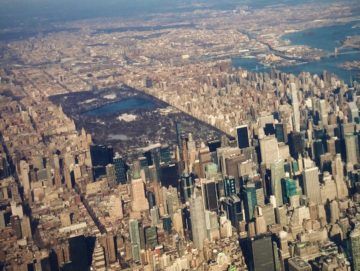 I live on an island. It happens to be a rather densely populated island, with a surface that seems largely covered by steel, masonry, glass, and architectural curtain wall, with nary a coconut or palm tree in sight. Still, it’s an island.
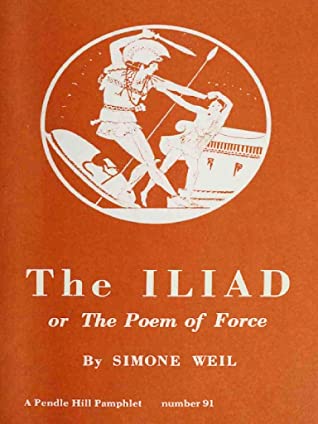 “The Iliad, or The Poem of Force” is a now-canonical lyrical-critical essay by the French anarchist and Christian mystic, Simone Weil. In it, Weil critiques the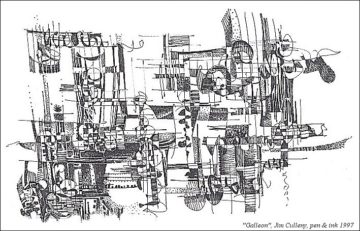
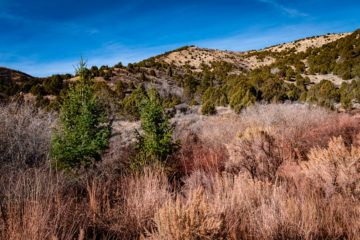 In the late 1960s and early 70s, Pocatello, Idaho, was one of the fastest growing towns in the United States. It was, and still is, a bland little place in the arid montane region of the American West. I don’t know why it mushroomed then; it has since stagnated and even shrunk. Nevertheless, the summer I turned four, my family was one among many who moved to reside there. Our little red brick house, still unfinished on the day we moved in, was the last house at the end of a newly laid street, still half-empty of houses. Our street stretched like a solitary finger into a kind of wilderness, an austere, high-desert landscape that surrounded our foundling residential colony. From my vantage as a child, preoccupied with the flowers, spiders, and thistles that stuck to my socks, I would see this place transformed.
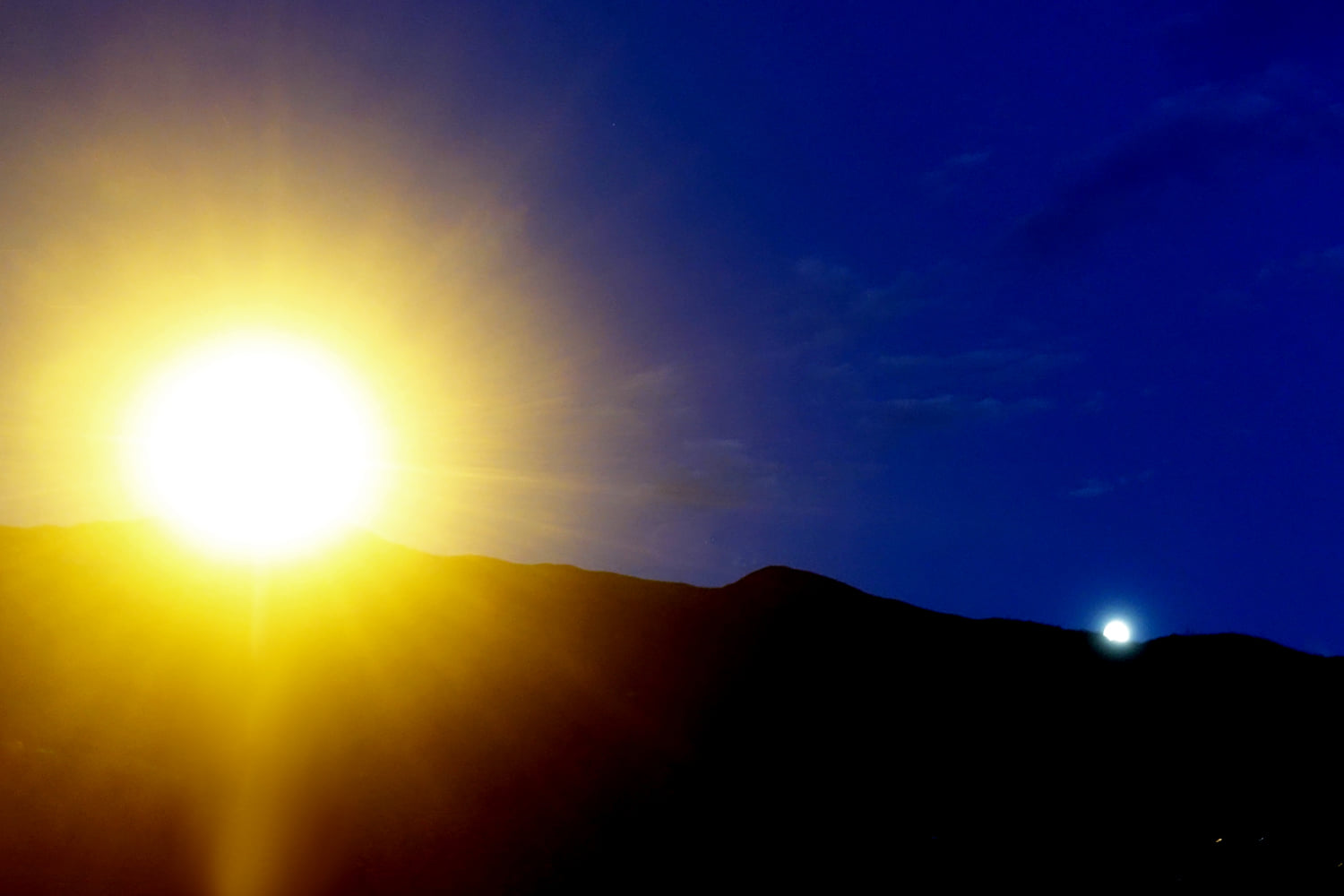
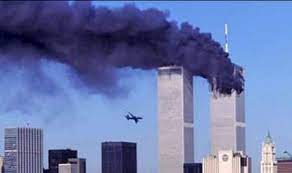 The chill in the early morning air hinted of autumn, yet the intensity of the rising sun promised summer heat. Black Tupelo and Red Maple leaves teased memories of fall with premature wisps of yellow and orange. The sky was a depthless cobalt blue, its crystallinity making everything and everyone shimmer. It makes sense that the stunning weather on that particular morning should become a shared referent for our collective dissonance, a common denominator of terror, mourning, and remembrance spanning two decades.
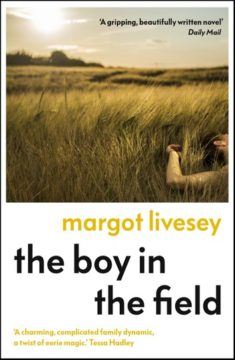 Margot Livesey’s The Boy in the Field is a mystery novel in the broadest sense of that literary term. Yes, the novel begins with the discovery of a crime, and the perpetrator remains at large for most of the narrative. Yet the “what happened next” of a standard mystery novel concentrates on the three siblings who came upon the victim lying in a field, the reverberations of that event on their young lives, and of the family they are a part of. “Mystery” can reside within all of us, to locate or evade, and that is the deeper reveal that Livesey hunts for in this wise and haunting book.