by Guy Elgat
 A couple of weeks ago, on the pages of this website, some critical comments on Richard Rorty’s general argumentative style were made, and, sympathetic to these comments, this inspired me to join the discussion with some criticism of Rorty of my own and, while I am at it, throw in some criticism of Daniel Dennett, for, as will be seen, they both have some mindboggling and implausible things to say about the experience of pain. This, in my view, stems from one of the things they have in common despite their many and substantial differences, namely, their deep animosity to anything Cartesian.
The experience of pain, and indeed any qualitative experience at all – what is referred to in philosophical circles with that ugly word “qualia” – is the bugbear of all hard-nosed and tough-minded philosophers who, enamored of the methods and results of the sciences, seek to eliminate or reduce any and every residue of the mental that is subjective, first-person, infallible, private, intrinsic, or indeed, qualitative. These properties, characteristic of the Cartesian mind, though certainly not conceived by Descartes in these very terms, threaten the scientific image of the world where everything is supposed to be objective, quantitative, extrinsic, and open to experimentation, verification and revision. As such, qualitative, first-person experiences are to be, if not explained away, expelled or expunged from any respectable philosophy. And while Rorty himself was not in any way a science-enthusiast, he shared Dennett’s scientifically-infused critical attitude to the Cartesian mind: the Cartesian legacy in the philosophy of mind must (not without some glee) be quashed, no matter the philosophical cost. Read more »
 One of those mysterious concepts that we use as a criterion for judging a novel or film is a “sense of place.” I call it mysterious because it’s so often poorly defined—we recognize it because we can feel it, but what goes into creating it? How can one go about transporting a reader, for example, into a time and place via text? I’m under the impression that if asked this question, most people would mention things like using the five senses to describe a character’s impressions of his or her surroundings, or providing detail via adjectives and adverbs. This may be a gross generalization, but it’s what I’ve gathered from my experience in creative writing courses. It’s also the sense I get from reading short stories in literary journals, which seem to be where aspiring writers publish their attempts at fiction. I often find this writing technically good, but lifeless; it has all the components of effective writing but doesn’t add up to anything compelling. I don’t mean to suggest that I could do better, but I do know what I enjoy reading and what I don’t.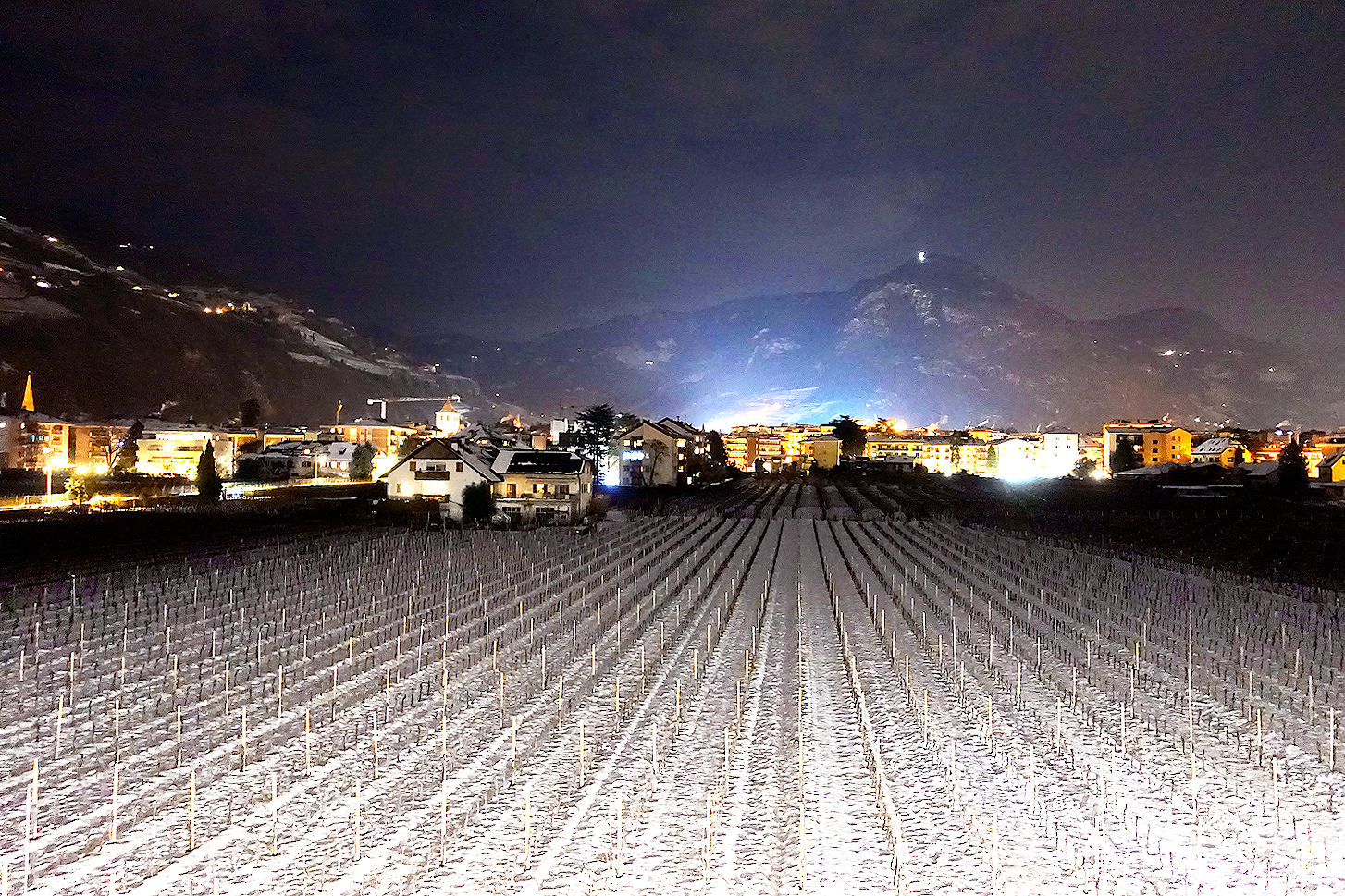
 Though I decided to go back to India, which institution I’d join there took some more time to determine. I had a standing invitation from K.N. Raj at the Delhi School of Economics. Even before I left MIT he asked me to teach a course in MIT’s summer-vacation period. I went and taught part of a course, which had good students (including Amitava Bose, who in his later professional life became close to me, served as a Director of the Indian Institute of Management in Kolkata, and finally lost his long battle against cancer). But I soon found out that the only job Raj could offer me was that of a Readership (Associate Professorship), as a full Professorship was not yet vacant. Amartya-da advised me against accepting a Readership, since in Indian universities there could be ‘many a slip’ even when a Professorship became vacant. I went back to MIT after the vacation, and soon after I got a message from T.N. Srinivasan of the Indian Statistical Institute (ISI) in Delhi, offering a full Professorship there, which I accepted.
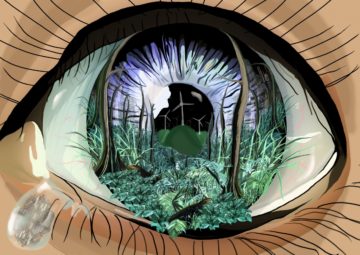 I began writing this series eighteen months ago to explore the human experience and human potential in the face of climate change, through the stories we tell. It’s been a remarkable journey for me as I followed trails of questions through new fields of ideas along entirely unexpected paths of enquiry. New vistas revealed themselves, sometimes perilous, always compelling. And so I went. The more I’ve learned, the more I’ve come to realize that our present environmental predicament is actually far worse off—that is to say, more threatening to near-term human wellbeing and civilizational integrity—than most of us recognize. This journey is changing me. So when I now look at contemporary works of fiction about climate change—so-called cli-fi, which I’d hoped might provide fresh insights—so much of it strikes me as somewhat underwhelming before the task: narrow, shallow, tepid, unimaginative, or even dishonest.
 When I was growing up during the 1970s, America still had a vibrant and thriving newspaper culture. My hometown New York City boasted a half-dozen dailies to choose from, plus countless neighborhood newspapers. Me and other kids started reading newspapers in about the 5th grade. Sports sections, comics, and movie listings mostly, but still. By middle school, newspapers were all over the place, and not because teachers foisted them upon us, but because kids picked them up on the way to school and read them.


 Although there might be nothing wrong with our hearing, we are quickly losing our ability to practice three formative modalities of democratic listening: Mindful, Aesthetic and Critical. These three modalities support our active participation in sustained, intimate conversations where we learn with and from each other. Millennials in particular struggle to listen to their friends, parents, and teachers for more than a few seconds without their brains becoming distracted by the ubiquitous hand of technology.
 Many years ago, I returned to my old high school for a visit with friends who were classmates back in the ’80s. Exploring the school and marveling over what had changed and what remained exactly the same, we ventured into the language lab. The room smelled exactly the same as it had in 1983, and it took me right back to those days of incredibly boring language lessons and sitting in that room with headphones on repeating monotonous phrases.
 Cogito Ergo Sum? Welcome to the party. There’s a lot more going on out there than we sometimes think: Cephalopods