by Ali Minai
But nature is a stranger yet:
The ones that cite her most
Have never passed her haunted house,
Nor simplified her ghost.
—Emily Dickinson, “What Mystery Pervades a Well”
 The first article of this 2-part series laid out the idea of emergence in complex systems, discussed how the appearance of abilities such as the generation of grammatical, syntactically correct, and meaningful text can reasonably be seen as an example of emergence, but also why these emergent abilities are just a shadow – or ghost – of the deeper language generation process in humans. This second part gets more deeply into the last point, making a detailed argument for why the linguistic abilities of LLMs should be seen as limited, and what would be needed to extend them.
The Meaning of Meaning
Perhaps the most critical difference between an LLM’s model of language and that of a human is in the way meanings are understood in the two. The task on which LLMs are trained provides no explicit information about meanings, and depends only on knowing the structural relationships between words in text. However, the fact that LLMs almost always use words in meaningful ways indicates that they have an implicit model of meanings too. What is the nature of that? The answer lies almost certainly in a linguistic idea called the distributional hypothesis of meaning, which says that the meaning of a word can be inferred from the statistics of its use in the context of other words. As described above, LLMs based on transformers are pre-disposed to the statistical learning of structural relationships in text, and their representations of meaning must be derived implicitly from this because of the tight linkage between word usage and meaning per the distributional hypothesis. Given enough data, the statistics can become very accurate – hence the meaningful output of GPT-4 et al. But such meanings – though accurate for purposes to usage – are abstractions. In contrast, the meanings in the human mind are grounded in experience. GPT-4 might understand the meaning of the word “burn” as something associated with the words, “fire”, “heat”, “flame”, “smoke”, “pain”, etc., but a person understands it in terms of the sensation of feeling heat and getting burned. Similarly, GPT-4 may use the words “near” and “far” correctly, but it has no experience of an object being near enough to touch or too far away to recognize. Concrete meanings in the human mind are thus grounded in the fact of the human animal being embodied – a physical system with sensations and the capability of action that leads to physical consequences. The LLM is “all talk” – just simulating concrete meanings as ungrounded symbols. Of course, not all concepts in human language are concrete enough to be defined in direct experiential terms, and there is ongoing debate about how the mind grounds abstract meanings. However, it seems plausible that they are grounded in the substrate of more concrete meanings, and thus indirectly in experience as well (see reference [1] for a recent overview, reference [2] for my views in detail). It is in this sense above all that LLM models are ghosts in the machine. Read more »


 Every generation, when it reaches a certain age, makes two proclamations: Saturday Night Live used to be funnier, and “kids these days” are lazy and stupid.

 I think of Pearl S. Buck and end up thinking of William F. Buckley. I think of
 In late March the United Nations adopted a landmark

 The term “gastronomy” has no agreed-upon, definitive meaning. Its common meaning, captured in dictionary definitions, is that gastronomy is the art and science of good eating. But the term is often expanded to include food history, nutrition, and the ecological, political, and social ramifications of food production and consumption. For my purposes, I want to focus on the conventional meaning of gastronomy for which that dictionary definition will suffice.


 One of the most interesting debates within the larger discussion around large language models (LLMs) such as GPT-4 is whether they are just mindless generators of plausible text derived from their training – sometimes termed “



 Misha Japanwala. Breastplate, ca. 2018.

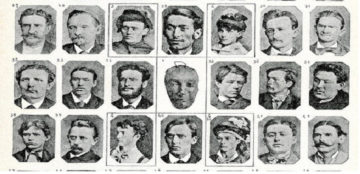 When they arrived in the U.S., Southern Italians brought with them the sense that they’d been branded as underdogs, that they belonged and would forever belong to a lower class, but the birth of the Italian-American gangster was rooted in attitudes toward the Mezzogiorno that dated back far earlier. After Italy was unified under Vittorio Emanuele II in 1861, a new national government imposed Piedmont’s centralized administrative system on the South, which led to violent rebellion against State authority. Politicians and intellectuals took pains to deflect responsibility for what they saw as the “barbarism” of the Mezzogiorno, and were particularly receptive to theories that placed the blame for the South’s many problems on Southern Italians’ own inborn brutishness. The decades following Unification saw the nascent fields of criminal anthropology and psychiatry establish themselves in the universities of Northern Italy; implementing the pseudosciences of phrenology and anthropometry in their search for evolutionary remnants of an arrested stage of human development manifested in the people of the Mezzogiorno, they used various instruments to measure human skulls, ears, foreheads, jaws, arms, and other body parts, catalogued these, and correlated them with undesirable behavioral characteristics, inventing in the process a Southern Italian race entirely separate from and unrelated to a superior Northern race and officially confirming the biological origins of Southern “savagery.”