by Ethan Seavey
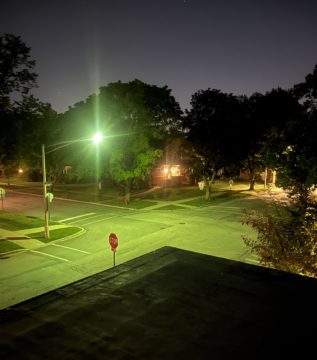 My last night in the house on Euclid Avenue will go one of two ways:
A. When I climb through a window in my bedroom (which will no longer be my bedroom tomorrow) and onto the flat roof outside in order to smoke the very last bowl of cannabis in my home (which will no longer be my home tomorrow), a moth will seize the opportunity to fly into the room.
B. Scenario A won’t happen.
The chances of scenario A occurring can be described as somewhat unlikely but certainly possible. This possibility is mostly blamed on the size and age of the window. It is about thirty square feet in total. This is a blessing in the fact that I can fit through the window easily and even sit in the frame comfortably if it’s raining. But in August its great size becomes a problem. A greater surface area gives moths a greater chance of entering my room. Moths are rather persistent when they’re around, but they’re often exploring other lights. So, they’re rare but not uncommon. I saw one a few days ago, but I haven’t seen one since. When I do see moths, I see them in August. It is August. It is August 26. I leave for New York in late August, August 27, the 27th, August 27, I’ll fly from Chicago to New York on August 27, which is tomorrow, it’s already here. Read more »
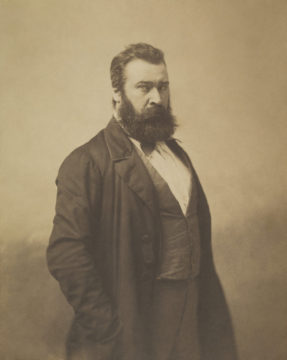 Jean-François Millet, a Frenchman, frowned beneath his full beard as he lay dying in Barbizon. It was 1875, and he was not to be confused with Claude Monet—not yet—who would later paint water lilies and haystacks but wasn’t, in 1875, rich and famous; on the contrary—and in spite of Édouard Manet’s having just painted him painting from the vantage of a covered paddle boat, appearing pretty well-to-do in the process—he was barely getting by.
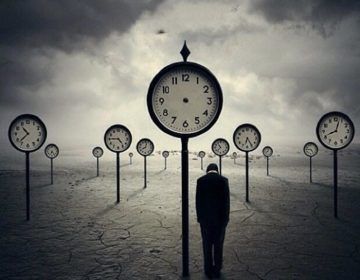 As with game theory, I also attended some courses in Berkeley in another relatively new subject for me, Psychology and Economics (later called Behavioral Economics). In particular I liked the course jointly taught by George Akerlof and Daniel Kahneman (then at Berkeley Psychology Department, later at Princeton). I remember during that time I was once talking to George when my friend and colleague the econometrician Tom Rothenberg came over and asked me to describe in one sentence what I had learned so far from the Akerlof-Kahneman course. I said, somewhat flippantly: “Kahneman is telling us that people are dumber than we economists think, and George is telling us that people are nicer than we economists think”. George liked this description so much that in the next class he started the lecture with my remark. On the dumbness of people I later read somewhere that Kahneman’s earlier fellow-Israeli co-author Amos Tversky once said when asked what he was working on, “My colleagues, they study artificial intelligence; me, I study natural stupidity.”
![Righting America at the Creation Museum (Medicine, Science, and Religion in Historical Context) by [Susan L. Trollinger, William Vance Trollinger]](https://m.media-amazon.com/images/I/511yK1hsSBL.jpg)

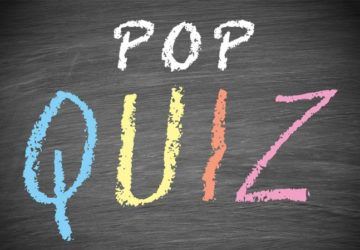 Herschel Walker claims that we have enough trees already, that we send China our clean air and they return their dirty air to us, that evolution makes no sense since there are still apes around, and freely offers other astute scientific insights. He may be among the least knowledgeable (to put it mildly) candidates running for office, but he’s not alone and many candidates, I suspect, are also surprisingly innocent of basic math and science. Since innumeracy and science illiteracy remain significant drivers of bad policy decisions, it’s not unreasonable to suggest that congressional candidates (house and senate) be obliged to get a passing grade on a simple quiz.
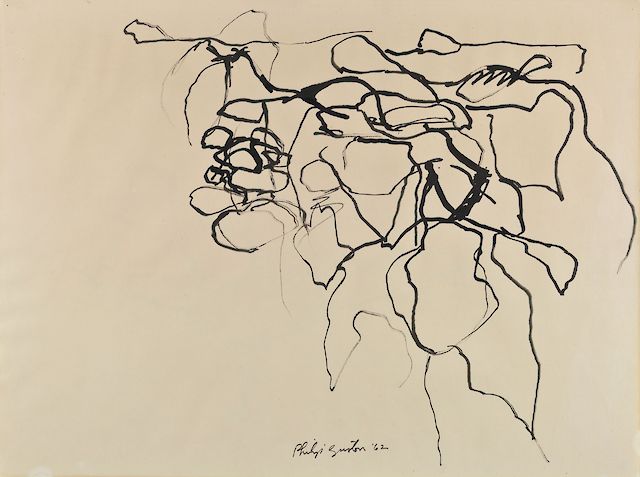 Philip Guston. Still Life, 1962.
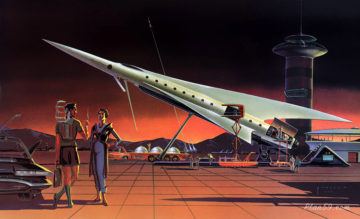 I recently listened to a discussion on the topic of
 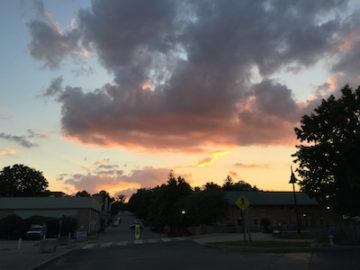 This summer I noticed that I was sharing a lot of sunset photos on social media. I don’t think of myself as a photographer, and I’m much more likely to share words than images. When I thought about it, I realized this wasn’t a sudden change. I’ve been taking the odd set of sunset pictures with my Canon every now and then, and I’ve noticed that my eyes are increasingly drawn to the sky and the light when I look at landscape photos.