by Terese Svoboda
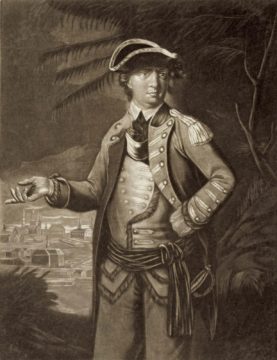
In my last post, I focused on the 100,000 Loyalists who fled to Canada after the Revolutionary War, and hypothesized that they were fleeing an American war of terror. Otherwise, why move? Now I’m living in Canada as a permanent resident, though for only half the year at a time, wallowing in socialism-lite and Canada’s very sane “peace, order and good government” rather than America’s individualistic “life, liberty and the pursuit of happiness.” I found living under Trump regime terrifying, and fled. A victim of terrorism? Or a traitor?
Depends on who’s asking. If it’s Fox News, the instigators of the January 6th debacle were patriots. The case of Benedict Arnold, America’s best known traitor, is more clearcut. This “most enterprising and dangerous” of all the American generals,[1] led revolutionary forces against British-held Quebec in a blinding snowstorm on the last day of 1775, just hours before the soldiers’ contracts were up. [2] It was the first defeat of the Revolution. Five years later, he surrendered the American fort at West Point to the British in return for money and a command in the British army. That was the same year he informed the British of a proposed American invasion of Canada. After his defection, he should’ve fled to Canada with other wealthy Loyalists because when he settled in England, he was spurned. [3]The bottom line is that a traitor can’t be trusted.
As victims of terrorism, as political refugees – the losers! – the Loyalists struggled to leave America. Many of them walked through land held by hostile Native Americans who had been badly treated by double-dealing Americans and British. Sometimes the trip took months, especially those from New York where the majority of the Loyalists lived. Much like asylum-seekers today, once they arrived in Canada, they were kept in camps and given the bare minimum and dreadful prospects: the least productive land, not enough shoes, terrible housing, and, in some cases, some dreadful weather. Many starved. Read more »
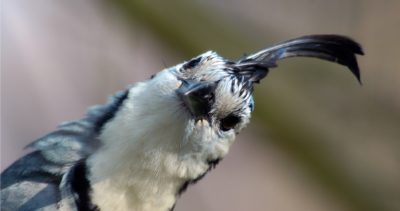 obscure, often extraordinary abilities of animals and plants. Today, let’s look at a few more:
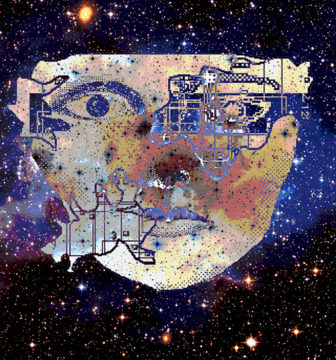 reading “GPT for Dummies” articles. Some were more useful than others, but none of them gave me what I wanted. So I started poking around in the technical literature. I picked up a thing or two, enough to issue a working paper,
 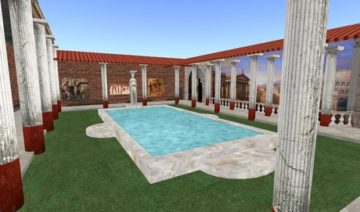 Google the phrase “is it time to care about the metaverse?” and there are a wealth of articles, mostly claiming that the answer is yes! Are they right?
 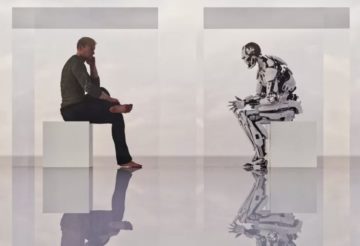 Like most people, I have been baffled, mystified, unimpressed and fascinated by

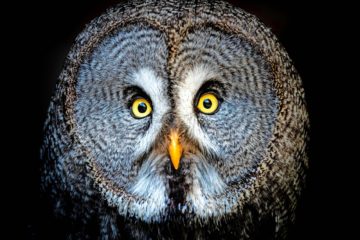 1. In nature the act of listening is primarily a survival strategy. More intense than hearing, listening is a proactive tool, affording animals a skill with which to detect predators nearby (defense mechanism), but also for predators to detect the presence and location of prey (offense mechanism).
 Njideka Akunyili Crosby. Still You Bloom in This Land of No Gardens, 2021.
 A metal bucket with a snowman on it; a plastic faux-neon Christmas tree; a letter from Alexandra; an unsent letter to Alexandra; a small statuette of a world traveler missing his little plastic map; a snow globe showcasing a large white skull, with black sand floating around it.
 I liked to play with chalk when I was little. Little kids did then. As far as I can tell they still do now. I walk and jog and drive around town for every other reason. Inevitably, I end up spotting many (maybe not