
Patrick Healy in The New York Times:
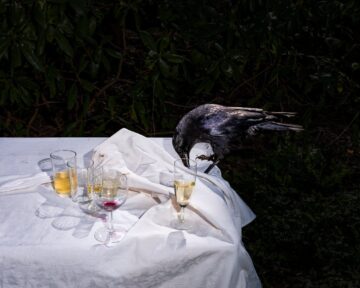 Last Wednesday night I received an email out of the blue from Larry David, the comedian and creator of “Curb Your Enthusiasm,” saying that he had a guest essay submission. I opened the document and read the first line: “Imagine my surprise when in the spring of 1939 a letter arrived at my house inviting me to dinner at the Old Chancellery with the world’s most reviled man, Adolf Hitler.”
“OK,” I thought. “This is different.”
Times Opinion has a high bar for satire — our mission is geared toward idea-driven, fact-based arguments — and we have a really, really high bar for commenting on today’s world by invoking Hitler. As a general rule, we seek to avoid Nazi references unless that is the literal subject matter; callbacks to history can be offensive, imprecise or in terrible taste when you are leveraging genocidal dictators to make a point.
I also understood Larry’s intent in writing this piece. We had spoken about American politics and how some on the left and in the center think it’s important to talk and engage with President Trump. Like many people, Larry listened to Bill Maher talk about his recent dinner with Trump; Bill, a comedian Larry respects, said in a monologue on his Max show that he found the president to be “gracious and measured” compared with the man who attacks him on Truth Social. Larry’s piece is not equating Trump with Hitler. It is about seeing people for who they really are and not losing sight of that.
More here.
Enjoying the content on 3QD? Help keep us going by donating now.
 I don’t carry a camera in my hometown of Chapel Hill, and even though my cellphone contains a camera, I use it only for snapshots. Naturally, there were moments when I wished I had a camera with me. Once, while walking in my neighborhood at twilight, I felt a strange rush of energy in the air, and, suddenly, no more than twenty feet away, a majestically antlered whitetail buck soared over a garden fence and hurtled down the dimming street. Yet even as it was happening—this unexpectedly preternatural moment—I tried to imagine it as a photograph. That’s how we’ve been taught to think. “Oh, I wish I’d had a camera!” But that presumes I would have been prepared to capture the moment—instead of being startled by it. Yet being startled by beauty is a uniquely, and all too rare, human gift. The photograph comes later, when I journey back from astonishment and begin to fiddle with my camera.
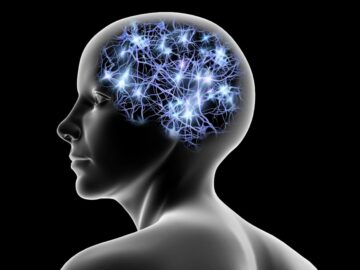 For decades, neuroscientists have thought that the brain learns by changing how neurons are connected to one another. As new information and experiences alter how neurons communicate with each other and change their collective activity patterns, some synaptic connections are made stronger while others are made weaker. This process of
  It’s been nearly two decades since I finished my undergraduate degree, and my memories of my philosophy major, like most things associated with one’s early adulthood, are hazy at best.
 B
B We all want
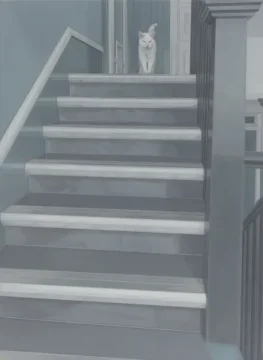 GILLIAN CARNEGIE’S current show at
 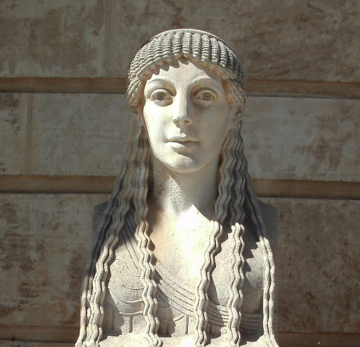 In Plato’s dialogue Symposium, seven varied speeches are made on the meaning of love at an all-male drinking party set in ancient Athens in
 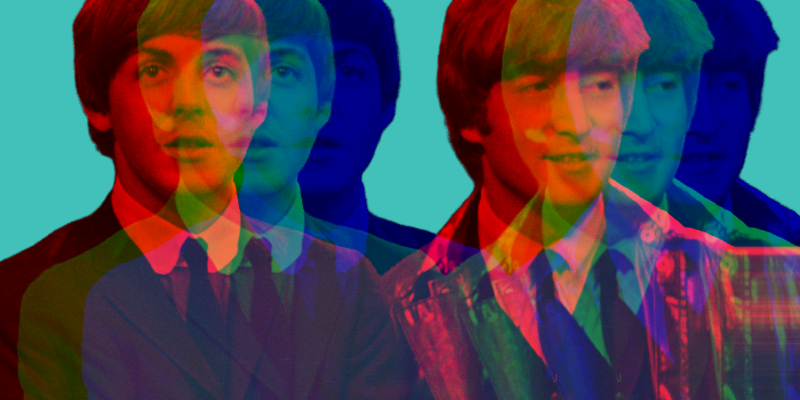 In the early months of 1966, whenever Paul McCartney sat down at a piano, wherever it was, he would start tinkering with a song he called “Miss Daisy Hawkins.” From the moment he found its first five syllabic notes, the song seems to have found its themes: loneliness, futility, the end of life. McCartney was twenty-three. Without discussing it, both John Lennon and Paul came back from their break with songs about death, written from a detached, omniscient perspective.
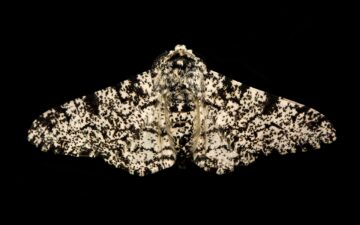 Sixty years ago, a debate raged between two titans of evolutionary biology that came to be
  Inflation is, at base, a tax on consumption – and it hits the poor the hardest, since they consume more of their incomes and the rich consume less.
 Sometime in the next several months, a team of US scientists plans to pour a solution of antacid into the waves off the coast of Massachusetts. Using boats, buoys and autonomous gliders, the scientists will track changes in water chemistry that should allow this tiny patch of the Atlantic Ocean to absorb more carbon dioxide from the sky than it normally would.