Baffling chronic pain eases after doses of gut microbes

Humberto Basilio in Nature:

What Rina Green calls her “living hell” began with an innocuous backache. By late 2022, two years later, pain flooded her entire body daily and could be so intense that she couldn’t get out of bed. Painkillers and physical therapy offered little relief. She began using a wheelchair.

Green has fibromyalgia, a mysterious condition with symptoms of widespread and chronic muscle pain and fatigue. No one knows why people get fibromyalgia, and it is difficult to treat. But eight months ago, Green received an experimental therapy: pills containing living microorganisms of the kind that populate the healthy human gut. Her pain decreased substantially, and Green, who lives in Haifa, Israel, and is now 38, can go on walks — something she hadn’t done since her fibromyalgia diagnosis.

Green was one of 14 participants in a trial of microbial supplements for the condition. All but two reported an improvement in their symptoms. The trial is so small that “we should take the results with a grain of salt”, says co-organizer Amir Minerbi, a pain scientist at the Technion — Israel Institute of Technology in Haifa. “But it is encouraging [enough] to move forward.” The trial results and data from other experiments linking fibromyalgia to gut microbes are published today in Neuron1.

More here.

Enjoying the content on 3QD? Help keep us going by donating now.

Sunday, April 27, 2025

Global BYD

Paolo Gerbaudo in Phenomenal World:

Tariffs are typically used at one of two key junctures in the development of a national economy: either at the time of industrial infancy, when they are trying to cultivate fledgling national champions, or at the time of financial senility, when a country’s elites are hoping to forestall impending decline. Donald Trump’s chaotically managed trade war is a clear example of the latter. Amid the intensifying retreat of American hegemony, however, an alternative geo-economic and geopolitical arrangement is coming into view: a battery-powered globalization with Chinese characteristics. In this reordering, China is poised to be the leading actor, with green technology the driver. Its most evident manifestation is the massive international expansion of its electric vehicles (EV) industry.

The excellence of Chinese EVs, which were until recently derided by the likes of Elon Musk, is now incontrovertible. What is more, China’s tech supremacy is quickly translating into market dominance, so much so that it is now threatening to overtake other leaders not only in the EV market, but in the automotive industry as a whole. This bears seismic consequences for international economic geography.

More here.

Enjoying the content on 3QD? Help keep us going by donating now.

Critique Without Reason

Jensen Suther in Sidecar:

Few scholars have done more in recent decades to preserve the legacy of Theodor Adorno than Peter Gordon. An intellectual historian at Harvard, Gordon first rose to prominence in the 2000s with his prize-winning works on the affinities between Heidegger and Rosenzweig and the Heidegger–Cassirer debate. These were followed by Adorno and Existence (2016), in which Gordon set out to recover Adorno’s forceful critique of Heidegger, and existentialism more broadly, as a form of anti-rationalist metaphysics rooted in late-capitalist alienation. In his recent writings, including his introduction to the new edition of The Authoritarian Personality, Gordon makes the case for the continued relevance of the Frankfurt School’s analysis of totalitarianism, bringing it to bear on the rise of the contemporary far right. Yet his chief contribution arguably lies in his careful, systematic reconstruction of Adorno’s peculiar form of materialism – which is said to underpin his conception of the ‘good life’.

If the aim of Adorno and Existence was to highlight the ‘negative’ dimension of Adorno’s project – his critical interrogation of existentialism – then the central ambition of Gordon’s new book, A Precarious Happiness: Adorno and the Sources of Normativity, is to recover the positive, normative dimension of his theory of modernity. For Gordon, Adorno not only offers a scathing account of how the modern bourgeois form of life has failed; he also ‘measures that failure against a maximalist demand for happiness or human flourishing’.

More here.

Enjoying the content on 3QD? Help keep us going by donating now.

The War on the Liberal Class

David Klion in The Ideas Letter:

Liberalism has never been merely a set of abstract ideas, and it has never been uniformly experienced within the liberal polity. As Antonio Gramsci observed, cultural hegemony allows the bourgeoisie to maintain its dominant position in society by creating a broad social consensus around its own norms and values, and very often those norms and values have been liberal. Liberalism has always been the ideology of a particular socioeconomic stratum: from the Parisian haute bourgeoisie that declared the Rights of Man in the late 18th century to the New Class of college-educated intellectuals, professionals, and creatives that by the 1970s had come to dominate liberalism in the United States—at least according to its many critics. James Burnham anticipated capitalism’s managerial turn as early as 1941. Christopher Lasch, in his posthumously published 1995 book The Revolt of the Elites and the Betrayal of Democracy, criticized upper-middle-class groups as having alienated themselves materially and culturally from the rest of the population, describing them as “a new class only in the sense that their livelihoods rest not so much on ownership of property as on the manipulation of information and professional expertise.” The right-wing ideologue Curtis Yarvin, a court favorite of Vice President J.D. Vance and the Silicon Valley oligarch Marc Andreessen, calls this cohort “the cathedral.” Nate Silver has dubbed it “the Village.” Musa al-Gharbi, who recently responded in The Ideas Letter to a critical review of his book We Have Never Been Woke: The Cultural Contradictions of a New Elite, has described approximately the same group as “symbolic capitalists—professionals who work in fields like finance, consulting, law, HR, education, media, science and technology.” Less hostile observers might simply say “the establishment” or “liberal civil society” or, as Barbara and John Ehrenreich put it in 1977, “the professional-managerial class.”

It is a version of this class that lives and breathes liberalism and forms its core constituency in any given place and time. And it is this class that is under sustained assault from all directions right now, with both corporate capital and much of the lumpenproletariat targeting its prevailing fashions (often cast as “wokeness”) and the rights (media and academic freedom, the rule of law) that undergird the material basis of its influence (government bureaucracies, elite universities, publishing houses, legacy newspapers and magazines, the entertainment industry). Across many countries, the authority and autonomy of the liberal class is being challenged and undermined; on every front, the liberal class faces precarity, professional frustration, and ambient despair over the state of the culture

More here.

Enjoying the content on 3QD? Help keep us going by donating now.

The Sameness of Different Things

Benjamin Kunkel in Harper’s Magazine:

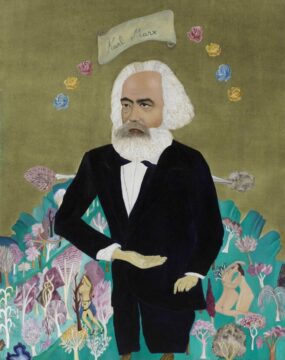
Let us approach Capital as naïvely as possible, while admitting that in the case of Capital this decision can hardly be anything but a ruse. The ruseful naïveté I have in mind will consist in our pretending not to have any extratextual information about the book—­in particular, information about the enormous literature of partisan commentary that has grown up around Marx’s analysis of capitalism or about the international Communist movement that took Capital for its warrant.

The paragraph above copies almost word for word the first sentences of “Against Ulysses,” a 1988 essay by the critic Leo Bersani about another book whose reputation almost ruinously precedes it, namely Joyce’s novel about a June day in Dublin. Such helpless plagiarism on my part (turns out I couldn’t imagine a naïve or innocent reading of Capital without recalling Bersani’s similar gambit) should by itself imply how hard it is to achieve true naïveté in the face of an exceptionally famous book. Already it was more than 140 years ago that an old man named Karl Marx and an infant baptized James Augustine Joyce shared the air for some thirteen months, and by now all the endless discussion of the notorious books that these writers produced means that any attempt to read them in a spirit of innocence smacks of too much experience. I was just a kid when I first heard of Das Kapital, evidently such a sinister title that, like Mein Kampf, it could only be uttered in German. Most people have been hearing about Marx and Marxism forever; even Donald Trump, whom no one would suspect of having read Capital, routinely castigates his opponents as Marxists.

More here.

Enjoying the content on 3QD? Help keep us going by donating now.
Social Media Use and Adult Depression

Erin O’Donnell in Harvard Magazine:

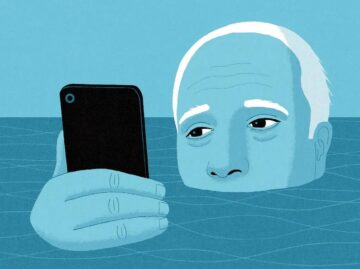
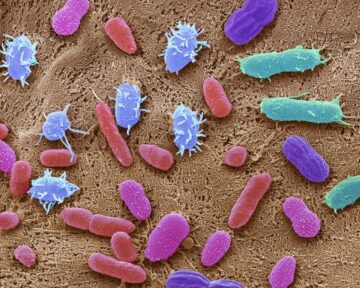
Parenting teenagers in 2022 generally entails worrying about their use of platforms such as Instagram, Snapchat, and TikTok; multiple studies point to links between social-media use and anxiety and depression among children and adolescents. Yet a new study reveals similar associations between depression and social-media use for their parents and grandparents too.

The findings come out of the COVID States Project, a series of surveys of adults in all 50 states, which began in spring 2020, soon after the pandemic began. It’s led by a multidisciplinary team of researchers from four universities, including Roy Perlis, the Dozoretz Professor of Psychiatry at Massachusetts General Hospital and Harvard Medical School, and John Della Volpe, director of polling at the Harvard Kennedy School’s Institute of Politics. For this study, they identified more than 5,000 people, with an average age of 56, who showed no signs of depression as measured by a standard screening. Participants initially were asked if they use social media. When surveyed again later, those who used Snapchat, Facebook, and TikTok were more likely to report symptoms of depression.

More here.

Enjoying the content on 3QD? Help keep us going by donating now.

Sunday Poem

The Lost One

Floating on the great night sea, your little boat
secure as a comforter. Something comes your
way – a swell? a seasurge? something rising
from the deep, shaping itself out of all that
amorphousness. Now it has a hand reaching
out to you – you lean its way more and more
until the gunwale almost touches the water,
but you can’t quite reach it. You see the hand
start to lose confidence, “Hold on,” you say, “I’ll
wake up, take notes, write you down. We’ll be
friends. I’ll listen,” but the hand knows its only
talk and slides back down into the general drift.
When you come to shore in the morning your
only catch is knowing something was lost.

by Nils Peterson

Enjoying the content on 3QD? Help keep us going by donating now.

Friday, April 25, 2025

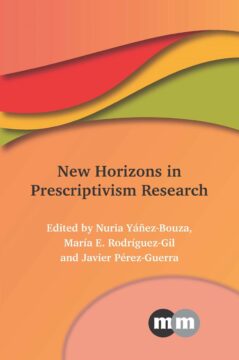
New Horizons in Prescriptivism Research

Stan Carey at Sentence first:

In the Preface to his landmark Dictionary of 1755, Samuel Johnson wrote that ‘sounds are too volatile and subtile for legal restraints; to enchain syllables, and to lash the wind, are equally the undertakings of pride’. Any dictionary, any grammar, is but a snapshot: all living languages change, and they do so constantly and at every level.
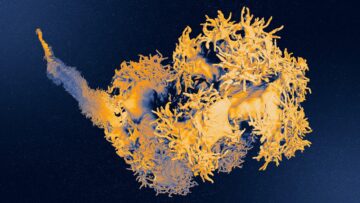
Yet there is an instinct in many of us to fix aspects of our language or to nudge it in this or that direction. It’s commonplace to the point of banality to flinch at a pronunciation, spelling, idiom, or other usage. The trick is to acknowledge the subjectivity (and usually futility, and often infelicity) of such a feeling – maybe even to get over it.

The caricature of prescriptivism – the prescribing of norms in language use – is of pedants and purists decrying variation and innovation in language, insisting on style rules they learned in school. But prescriptivism is a broad church. It can make a linguistic variety more consistent, enhancing its communicative reach and facility. Some prescriptivism, contra the conservative stereotype, is progressive, advocating a more inclusive lexicon.

More here.

Enjoying the content on 3QD? Help keep us going by donating now.

David Ginty has spent his career cataloging the neurons beneath everyday sensations

Ariel Bleicher in Quanta:

Like many proud parents, David Ginty has decorated his office with pictures of his genetic creations. There’s the prickly one sporting a spiked collar and the wannabe cowboy twirling a lasso. There’s the dramatic one, always reacting to the slightest provocation; the observant one that notices every detail; the golden child Ginty loves to boast about. “They’re like a family,” he said. “Each one has its own quirks and individual characteristics.”

They’re not really a family and, anyway, they’re not his children. They have evolved over millions of years to give humans and other mammals an interface with the physical world around us. But Ginty, who heads the neurobiology department at Harvard Medical School, has been studying this quirky cast of characters — the sensory neurons of touch — for more than two decades, and has gotten to know them better than anyone else ever has.

More here.

Enjoying the content on 3QD? Help keep us going by donating now.

America, América

Jennifer Szalai at the NYT:

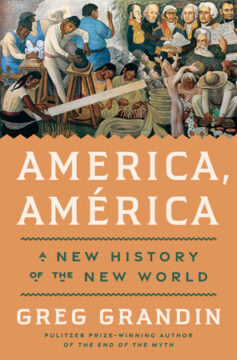
“America, América” is implicitly a companion volume to Grandin’s Pulitzer Prize-winning “The End of Myth,” which explored the role played by the frontier in the American imagination. Grandin posited that the mythology of an ever-expanding frontier encouraged fantasies of infinite growth and delusions of innocence. Instead of grappling with scarcity and contradiction, Americans learned simply to go west. He traced how the United States became “inured to its brutality and accustomed to a unique prerogative: its ability to organize politics around the promise of constant, endless expansion.”
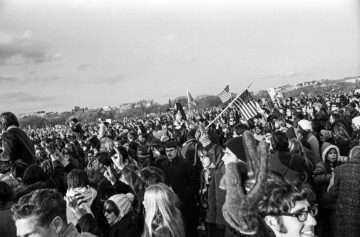
South of the United States, a starkly different experience made for a different understanding of the world. In “America, América,” Grandin shows how Spanish Americans viewed frontiers not as escape valves but “as historic theaters of terror and domination.” He maintains that this sense of anguish gave rise to a strain of Latin American humanism that became foundational to ideals of international cooperation and global institutions, including the United Nations.

more here.

Enjoying the content on 3QD? Help keep us going by donating now.

Fifty years after the Vietnam War’s end, lessons from the peace movement on mobilizing resistance

David Cortright at the Boston Review:

We hoped that our collective struggles had made a difference in ending a war that never should have been fought.

Fifty years later, the consensus is firm: we had. Over the years, scholars have documented the many influences of peace protest in altering U.S. policy. As Carolyn Eisenberg affirms in her recent history, Fire and Rain, “Waves of mass demonstrations, accompanied by growing resistance inside the military, ongoing electoral activity, and lobbying efforts on Capitol Hill imposed significant constraints on presidential decision making.” Over the course of the war, as the pressure intensified, White House decisions were increasingly based on concerns about public opinion and antiwar action, writes historian Melvin Small.

Today, amid the political devastation in Washington, examining how peace protesters confronted the U.S. war machine holds vital lessons.

More here.

Enjoying the content on 3QD? Help keep us going by donating now.

On Trash And Speculative Fiction

B.D. McClay at The Point:

A proposition: though “trash art” remains with us, the trash artist is a dying species. Trash art is focus-grouped these days, high-gloss. Trash art is a direct-to-streaming show full of people who are slightly too attractive that’s meant to be played in the background while you play Candy Crush on your phone. Even our truly lowbrow cultural productions, like The Bachelor, are not the product of particular people; they’re crafted through a system. Without romanticizing the old days of pulp magazines and Brill Building song writers, we can—ah hell! Let’s romanticize them. Why not? They certainly put out lots of garbage, but it was honest human garbage. Look at an old issue of Weird Tales—in terms of nostalgic reverence, the Partisan Review of pulp fiction—with its now charmingly dated pinup girls on the cover, and its promise of many stupid adventures within, and try not to romanticize it.

In terms of its social standing, all trash is genre, but not all genre is trash.

more here.

Enjoying the content on 3QD? Help keep us going by donating now.

Many Jews say Trump is politicizing the fight against antisemitism

Naftali Bendavid in The Washington Post:

The Trump administration declared last week that “harassment of Jewish students is intolerable” as it suspended $2.2 billion in grants to Harvard University. The school’s president, Alan Garber, fired back Monday that “as a Jew and as an American,” he is well aware of rising antisemitism but that defunding Harvard is no solution.

The Trump administration has frequently cited antisemitism to justify its decisions to slash funding for elite universities, deport foreign students it accuses of anti-Jewish sentiment, and seek more control over what American schools and universities teach. Some Jewish leaders welcome President Donald Trump’s efforts as the most aggressive fight against anti-Jewish bigotry in American history. But others worry that Trump is politicizing the fight against antisemitism by using it to promote his agenda — potentially hurting Jews in the long run, especially as Trump dismantles other antidiscrimination efforts.

More here.

Enjoying the content on 3QD? Help keep us going by donating now.

Larry David Imagines a Private Dinner With Hitler

Patrick Healy in The New York Times:

Last Wednesday night I received an email out of the blue from Larry David, the comedian and creator of “Curb Your Enthusiasm,” saying that he had a guest essay submission. I opened the document and read the first line: “Imagine my surprise when in the spring of 1939 a letter arrived at my house inviting me to dinner at the Old Chancellery with the world’s most reviled man, Adolf Hitler.”

“OK,” I thought. “This is different.”

Times Opinion has a high bar for satire — our mission is geared toward idea-driven, fact-based arguments — and we have a really, really high bar for commenting on today’s world by invoking Hitler. As a general rule, we seek to avoid Nazi references unless that is the literal subject matter; callbacks to history can be offensive, imprecise or in terrible taste when you are leveraging genocidal dictators to make a point.

I also understood Larry’s intent in writing this piece. We had spoken about American politics and how some on the left and in the center think it’s important to talk and engage with President Trump. Like many people, Larry listened to Bill Maher talk about his recent dinner with Trump; Bill, a comedian Larry respects, said in a monologue on his Max show that he found the president to be “gracious and measured” compared with the man who attacks him on Truth Social. Larry’s piece is not equating Trump with Hitler. It is about seeing people for who they really are and not losing sight of that.

More here.

Enjoying the content on 3QD? Help keep us going by donating now.

Friday Poem

Growing Cynical

Sometimes, lately, I don’t believe it:
the news, the grocery store flyer hawking
deals on things I never buy.
Any speed limit, weather report,
my weight on the scale, even my bills.
I say to myself a likely story! Or
you’ve gotta be kidding. Hannah Arendt
wrote about this, how the lies
are not meant to fool us but teach
us in time to not believe anything.
Well, it’s working on me, Hannah.
I didn’t snap, I floated away
into some sort of muted universe
where my brain isn’t sharp
and doesn’t care, I’m back
in a middle-class San Francisco
childhood walking our beagle Skipper
up to the corner, around to the flat
part of the block and turning again
while she smells invisible
neighborhood news from curb
and driveway until I tug the leash
and say Come. She is a good dog
and comes. I can feel the edge
of a fog bank far out at sea, waiting.

by Molly Fisk
from Rattle Magazine

Enjoying the content on 3QD? Help keep us going by donating now.