
 Maya Adereth, Shani Cohen and Jack Gross interview Stephen Marglin in Phenomenal World:
Stephen Marglin: There’s a story that keeps coming back and is never going to go away: most people believe that I only revealed my radical leanings after receiving tenure. The facts of the story are true—I was a neoclassically trained economist, I got tenure, and I changed my orientation. But the implied cause and effect are false.
I was a pink diaper baby. Pink, not red. I vividly remember my cousin coming back from WWII and trying to convince my parents to join the Communist Party, and their heated push-back. As a young adult, I was broadly left wing, but I didn’t view economics as an ideological discipline. For me it was a kind of operations research; I was at the tail end of a generation who entered economics in order to improve the world through appropriate government interventions. I saw no contradiction at all between doing neoclassical economics from nine to five and going to demonstrations against the Vietnam War evenings and weekends.
Things changed dramatically in 1968. I was in India during the academic year 1967–68, working on water-resources planning and teaching graduate students at the Indian Statistical Institute. Their mathematical preparation was so much better than that of Harvard grad students I had taught the previous year that I could indulge my own predilection for mathy economics. But I was surprised to learn that for many of my students, who had grown up in rural villages with largely communal forms of living, classical theory which began with the interests of individuals made little sense to them. The theoretical assumptions of economics bore no clear relation to how they lived. Working with these students formed the personal transformation through which I registered the assassinations of Martin Luther King and Robert Kennedy. From afar, the May protests in France seemed to herald the breakdown of the existing order.
More here.
 Kate Aronoff in TNR:
 Kimberly Drew and various people in the arts in Vanity Fair:
 Rebecca Tan in The Washington Post:
 Although Mark Twain apparently didn’t coin the phrase “truth is stranger than fiction,” he offered perhaps the best explanation for why it is so. “It is because fiction is obliged to stick to possibilities,” he wrote. “Truth isn’t.” History is replete with proof; try, for instance, plotting a novel that faithfully replicates the events of Sept. 11 or John F. Kennedy’s assassination and watch it be dismissed as absurd.
 You walk into your living room to find your friends, Anne and Bob, talking about whether euthanasia is morally right or wrong. Their conversation starts in a friendly way, but when Bob claims that his view is “clearly true” Anne rolls her eyes and tells him why his view isn’t true. Anne claims that Bob’s view about euthanasia is not only not obviously true, it is not true at all. She gives a counterexample, and Bob gives his reply. Eventually their argument stops, they both sense they are going in circles. Bob turns to you and asks which view you think is true. You tell them that they need to answer another question first. Anne and Bob sigh and don the well-worn expressions of people who have a philosopher for a friend.
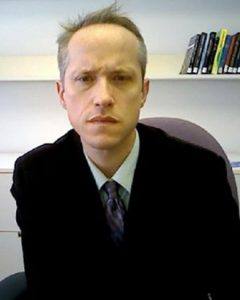 Among the several hundred people who signed up for this newsletter within two days of its launch, I recognised the e-mail addresses of perhaps twenty percent. This means that, for the rest, I have no idea at all what you know of me. So, briefly, I am, among other things, a professor of philosophy, American by birth, based in Paris since 2012.
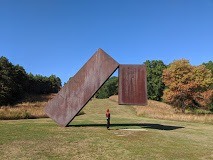 Sculpture parks proliferated, worldwide, in the second half of the twentieth century, in the wake of an identity crisis for large three-dimensional art. Modernist austerity had stripped sculpture of its traditional architectural and civic functions: there were no more integrated niches and pedestals, few new formal gardens, and an epochal apathy regarding statues—until lately! (We are now practically neo-Victorian in our awakenings—rude, for the most part—to symbolism in statuary.) Never mind the odd plaza-plunked, vaguely humanist Henry Moore. Where could one put outsized works that were almost invariably abstract—modernism’s universalist ideals persisting—to give them a chance of seeming to mean something? In nature! Conjoining the made with the unmade, gratifying both. Sculpture parks emerged as game preserves and laboratories for big art. Storm King’s early concentration of works by relevant artists of the late nineteen-sixties and seventies includes some formulaic banalities, tending to presume a surefire magic in embowered angular geometry, but even there you may savor the zest of a moment when sculpture jumped into nature’s lap. The history is complicated and obscured, in the art world, by the contemporaneous development, in the sixties, of Minimalism, which, by engaging the physical presence of viewers, shrugs off its surroundings.
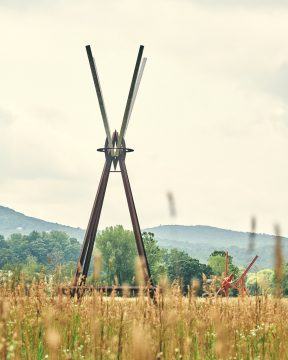 Across Storm King’s open fields and rolling meadows are giant works by Sol LeWitt, Alice Aycock, Ursula von Rydingsvard; ensconced within the paths of a wood is smaller, earlier statuary by names grown obscure, as well as a weathered, trowel-nicked concrete slab by
 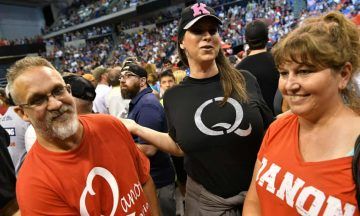 To Donald Trump, it’s “
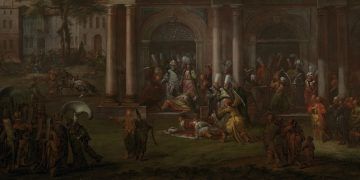 When I first moved to Washington, I attended a party at Blair House, which stands across Lafayette Square from the White House. Visiting dignitaries are often put up there. A tour was led by the chief of protocol, a fragile southerner obsessed with discretion who kept vowing never to write a book about the scandals he had seen, which he kept referring to in a veiled way. The history of the house was poignant. There was the room where Robert E. Lee was offered by
 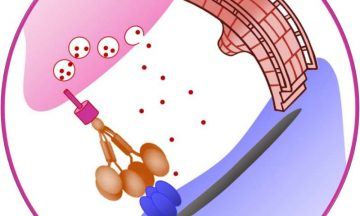 The human brain’s neuronal network undergoes lifelong changes in order to be able to assimilate information and store it in a suitable manner. This applies in particular to the generation and recall of memories. So-called synapses play a central role in the brain’s ability to adapt. They are junctions through which nerve signals are passed from one cell to the next. A number of specific molecules known as synaptic organizing proteins ensure that synapses are formed and reconfigured whenever necessary.
 Lauren Nichols
 I’ve been hearing a lot about blockchain in the last few years. I mean, who hasn’t? It’s everywhere.
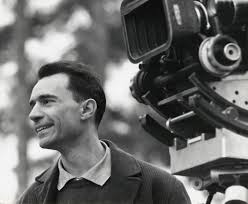 JACQUES RIVETTE: When I began making films my point of view was that of a cinephile, so my ideas about what I wanted to do were abstract. Then, after the experience of my first two films, I realised I had taken the wrong direction as regards methods of shooting. The cinema of mise en scène, where everything is carefully preplanned and where you try to ensure that what is seen on the screen corresponds as closely as possible to your original plan, was not a method in which I felt at ease or worked well. What bothered me from the outset, after I had finally managed to finish Paris Nous Appartient with all its tribulations, was what the characters said, the words they used. I had written the dialogue beforehand with my co-writer Jean Gruault (though I was 90 per cent responsible) and then it was reworked and pruned during shooting, as the film otherwise would have run four-and-a-half hours. The actors sometimes changed a word here and there, as always happens in films, but basically the dialogue was what I had written – and I found it a source of intense embarrassment. So much so that when I began work on La Religieuse, which was a project that took quite a while to get off the ground, I determined this time to use what was basically a pre-existing text.
 “[Jacques Rivette’s] whole movie, like a dream, is set between quotation marks,” Gilbert Adair suggested in Film Comment in 1974. “Like a dream, it is an anagram of reality.” The simplest way to explain the film – if there is a simple way to explain it – is that at some point Celine enters a remote mansion on the outskirts of the city, loses track of time, and ends up thrown back into daylight after an unspecified number of hours. She is dazed, and has no memory of what occurred inside the house, but feels compelled to keep returning.