
Category: Recommended Reading
Temperance: Virtue Overcoming Boundaries
Matilda Amundsen Bergström at Eurozine:
 At it’s core, temperance means finding, respecting and defending boundaries – especially one’s own. This is sometimes equated with a form of non-action, or as abstention from excess and extremes – especially in relation to bodily pleasures connected to alcohol, food and sex. As a concept, however, temperance offers a much richer array of meanings. Philosopher Alasdair Macintyre, for example, has defined temperance as the choice to not use power which is at one’s disposal. Another possibility is to understand temperance as a practice of dispensation – one which includes being without that which one desires, admitting that every fulfilled desire has consequences, and inquiring into desires and their origins. The latter is an especially significant aspect of the Greek sophrosyne, which could be translated both as temperance and self-knowledge. Yet another alternative is to view temperance as a practice of actively being with others, a form of self-restraint which turns one’s attention away from oneself towards others. From that perspective, many currently popular expressions of self-restraint, such as exercise, dieting or voluntary celibacy, are not temperate since they are motivated by the individual’s own desires. Neither do enforced limitations such as laws banning smoking or drugs have anything to do with temperance, since the virtue involves the choice to act in a certain way as much as the action itself – acknowledging the boundary as well as adhering to it.
more here.
Fangirls
Hannah Ewens at The Paris Review:
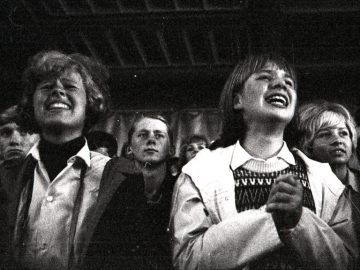
Waiting outside venues has been an integral part of the fangirl experience and something of an embodiment of their lifestyle from the very beginning. Columbus Day, New York City, 1944, a Frank Sinatra show, and the New York photojournalist Weegee was there when the first of the pop stars as we know them was about to take to the stage. “The line in front of the Paramount Theatre on Broadway starts forming at midnight,” he recalled. “By four in the morning, there are over 500 girls … They wear bobby sox (of course), bow ties (the same as Frankie wears) and have photos of Sinatra pinned to their dresses.” The three-thousand-seat house was quickly filled with girls waiting to see Sinatra for the first of his scheduled performances of that day. Apparently inside the theater the ammoniac smell of pee was heavy in the air because girls refused to leave their seats for food, water, anything, unless they were physically moved by attendants. Over the duration of the day, a riot bubbled over outside where, according to records, police had to deal with thirty to thirty-five thousand young female Sinatra fans, lining the streets around the theater, calling out to be let in.
more here.
A Dutiful Boy – utterly compelling
Ashish Ghadiali in The Guardian:
 There’s a trope of the British Asian identity narrative, once captured with such originality and brilliance in Hanif Kureishi’s Buddha of Suburbia and much replicated – in Monica Ali’s Brick Lane, for example, or Ayub Khan-Din’s East Is East – that now fills most British Asians of my generation (I’m 40) with dread. It’s the one about the second-generation immigrant held back by the ignorance of parents or a community that’s either comically absurd or violently fundamentalist. Against this backdrop, the second-generation hero or heroine emerges once they find the strength to stand apart from this reactionary past and assimilate into the mainstream of British life.
This narrative certainly had its time, but we have come to dread it, because through it we dehumanise ourselves and demean the journeys that have made us who we are. It’s also a lie, since no degree of immigrant assimilation can overturn the racism that is systemic in British life, and that our mainstream culture has the habit of perpetuating.
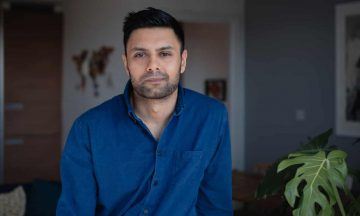
For me, the potted biography on the dust jacket of Mohsin Zaidi’s book (subtitled A Memoir of a Gay Muslim’s Journey to Acceptance) was enough to provoke the first stirrings of that familiar sense of foreboding. Here we learn that the author, raised in a “devout Muslim community”, was the “first person from his school to go to Oxford University” before going on to become, an accomplished criminal barrister, a board member of Stonewall, the UK’s biggest LGBT rights charity, and a governor of his former school in east London. It’s only a blurb, but there is a subtly Islamophobic framing here that opposes Zaidi’s “devout Muslim” background with the progressive attainment of his life and career.
More here.
The dual benefits of population-scale genomics
From Nature Research:
 With the refinement and reduced cost of sequencing technology, science has reached another inflection point: population-scale genomics, where clinical-grade assays can be used to advance healthcare, while fueling research. The Healthy Nevada Project (HNP) epitomizes that movement. A population health initiative run by the Renown Institute for Health Innovation (Renown IHI), a partnership between Renown Health and the Desert Research Institute, the project aims to combine genomic, environmental and medical data from 250,000 participants to assess the influence of genetics on health and disease. The study also uses sequencing data to screen participants for medically actionable genetic conditions, such as familial hypercholesterolemia (FH), hereditary breast and ovarian cancer syndrome (HBOC), and Lynch syndrome (LS).
…In July, Helix and the HNP team reported findings from the first 27,000 participants in an article published in Nature Medicine1. Among HNP participants, the researchers found that approximately 1 in 75 carried a variant predisposing them to HBOC, LS, or FH. Of those predisposed, nearly 22 percent had already begun to develop symptoms of disease. Importantly, 90 percent of those with medically actionable results would not have known about their increased risks for disease had they not participated in the study; patients often don’t qualify for genetic screening under current clinical guidelines.
More here.
Tuesday Poem
Guard Duty
I’m ordered to a big hump of stones
as if I were an aristocratic corpse from the Iron Age.
The rest are still back in the tent sleeping,
stretched out like spokes in a wheel.
In the tent the stove is boss: it is a big snake
that swallows a ball of fire and hisses.
But it is silent out here in the spring night
among chill stones waiting for the dawn.
Out here in the cold I start to fly
like a shaman, straight to her body–
some places pale from her swimming suit.
The sun shone right on us. The moss was hot.
I brush along the side of warm moments,
but I can’t stay there long.
I’m whistled back through space–
I crawl among the stones. Back to here and now.
Task: to be where I am.
Even when I’m in this solemn and absurd
role: I am still the place
where creation works on itself.
Dawn comes, the sparse tree trunks
take on color now, the frostbitten
forest flowers form a silent search party
after something that has disappeared in the dark.
But to be where i am . . . and to wait.
I am full of anxiety, obstinate, confused.
Things not yet happened are already here!
I feel that. They’re just out there:
a murmuring mass outside the barrier.
They can only slip in one by one.
They want to slip in. Why? They do
one by one. I am the turnstile.
by Tomas Tranströmer
trans. Robert Bly
Sunday, August 23, 2020
Ecstasy; Or, Further Remarks on Cultural Appropriation
Justin E. H. Smith at his own blog:

I recently published a short piece on cultural appropriation in Persuasion. Some of my fears about its reception quickly came true. Within hours of its posting, I had the singular misfortune of being linked approvingly by the odious cornball Ben Shapiro. In no time at all I was being followed by all manner of know-nothing right-wing riff-raff, people I do not respect and do not at all wish to affirm in their flimsy little construction of a belief system. This made me think it would be worthwhile to dilate somewhat more longwindedly on the topic here, in the hope of making it clear to those people the many respects in which I am not one of them, and also in the aim of reflecting a bit on how it is that we have arrived at this strange conjuncture, where defense of cultural appropriation is interpreted as a right-wing talking point, and on why I still believe it is essential to win it back from them.
I’ll say in passing, before getting to the main part of my reflection, that in part I blame the structures of information-flow, in which we are all forced to (pretend to) communicate today, for the automatic channeling of this topic to the side of the right. The algorithms on which the social-media parody of a public sphere operate are dichotomous in nature, and every statement has to be channeled in the one direction or the other. You can fight against these structural constraints, speaking your mind as your conscience dictates, etc., but all the forces are against you. Persuasion is itself an effort to defy the dichotomy, and so far, from what I have seen, it is maintaining a rather delicate balancing act. As for me, I find that my conscience comes through most clearly when I am writing on my own website— but this is only because it stands somewhat further apart from the structures that support all media interventions in the proper sense. Which is to say that the only way for me to say what I really mean, and not to be misunderstood, is to accept that I will be read by far fewer people.
More here.
A stepping stone for measuring quantum gravity
From Phys.org:
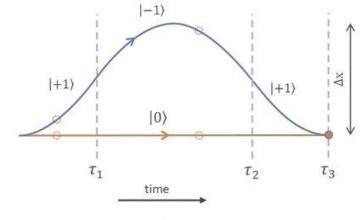 A group of theoretical physicists, including two physicists from the University of Groningen, have proposed a ‘table-top’ device that could measure gravity waves. However, their actual aim is to answer one of the biggest questions in physics: is gravity a quantum phenomenon? The key element for the device is the quantum superposition of large objects. Their design was published in New Journal of Physics on 6 August.
Already in the preprint stage, the paper that was written by Ryan J. Marshman, Peter F. Barker and Sougato Bose (University College London, UK), Gavin W. Morley (University of Warwick, UK) and Anupam Mazumdar and Steven Hoekstra (University of Groningen, the Netherlands) was hailed as a new method to measure gravity waves. Instead of the current kilometers-sized LIGO and VIRGO detectors, the physicists working in the UK and in the Netherlands proposed a table-top detector. This device would be sensitive to lower frequencies than the current detectors and it would be easy to point them to specific parts of the sky—in contrast, the current detectors only see a fixed part.
More here.
Confessions of a Xinjiang Camp Teacher
Ruth Ingram in The Diplomat:
 Qelbinur Sedik has witnessed wanton cruelty, gratuitous violence, humiliation, torture, and death meted out to her people on an unimaginable scale — but has been forced to keep the crushing secret until now.
When she first arrived in Europe, she was so traumatized she could barely speak about her ordeal. Then she found the Dutch Uyghur Human Rights Foundation (DUHRF), where people patiently listened through her many tears. The DUHRF wrote down her story, calling it “Qelbinur Sidik: A Twisted Life.” Through it, she now feels ready to tell the world what she saw in the internment camps of Xinjiang.
This account is based on excerpts from the memoir and my own interviews with her.
More here.
A lauded book about antiracism is wrong on its facts and in its assumptions
Coleman Hughes in City Journal:
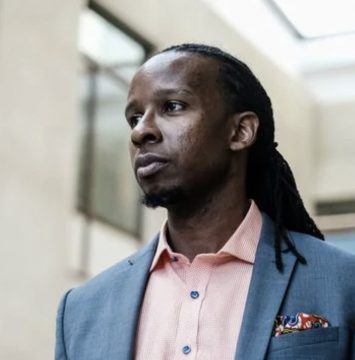
In 2016, Ibram X. Kendi became the youngest person ever to win the National Book Award for Nonfiction. His surprise bestseller, Stamped from the Beginning: The Definitive History of Racist Ideas, cast him in his role as an activist-historian, ambitiously attempting to make 600 years of racial history digestible in 500 pages. In his follow-up, How to Be an Antiracist, Kendi––now 37, a Guggenheim fellow, and a contributing writer at The Atlantic––reveals his personal side, weaving together memoir, polemic, and instruction as he invites the reader to join him on the frontlines of what I like to call the War on Racism.
If the book has a core thesis, it is that this war admits of no neutral parties and no ceasefires. For Kendi, “there is no such thing as a not-racist idea,” only “racist ideas and antiracist ideas.” His Manichaean outlook extends to policy. “Every policy in every institution in every community in every nation is producing or sustaining either racial inequity or equity,” Kendi proclaims, defining the former as racist policies and the latter as antiracist ones.
Every policy? That question was posed to Kendi by Vox cofounder Ezra Klein, who gave the hypothetical example of a capital-gains tax cut. Most of us think of the capital-gains tax, if we think about it at all, as a policy that is neutral as regards questions of race or racism. But given that blacks are underrepresented among stockowners, Klein asked, would it be racist to support a capital-gains tax cut? “Yes,” Kendi answered, without hesitation.
More here.
Scenes for Survival: “Wednesday”, a short film about COVID isolation
Comedy of Heirs
Eileen Myles in Bookforum:
 TRISTRAM SHANDY sailed into eighteenth-century literary history alongside such bawdy picaresques as Tom Jones. But unlike the rest Laurence Sterne’s creation is an antinovel: It starts and stops, has entire pages that aren’t even text—blank or solid black or marbled or filled with lines and swirls that indicate the wayward shapes of the narrative (at such moments it seems like what Sterne really is is a concrete poet). On the occasions when the author doesn’t want you to know what naughty thing he’s saying (though he quit being a minister to write, Sterne was still a modest man) there are heaving piles of asterisks. By such means—explained in an insanely arch but persistently conversational manner—you get that the book in your hands is alive and it will turn any whimsical damn way he wants. Laurence Sterne is a funny guy and there is a devastating presentness to this work.
The list of Shandean admirers includes Karl Marx, Thomas Jefferson, James Joyce, Goethe, Virginia Woolf, and David Foster Wallace. All the fuss is because so early on in English literature there was this upstart minister laughing at the act of writing and metonymically he’s laughing at life itself. And it’s the heaven of this book for me on both counts.
Yet in the midst of Tristram Shandy’s wily form-defying nature—there’s still no agreement as to whether the book is a novel at all—there is this blatant subject matter that can be variously identified as castration anxiety, (wounded) masculinity, impotence, fear of female genitalia and power, and an anticipation of, or even the fact of, being cuckolded. And kind of not minding it. One critic pointed out that every male is impotent in Tristram Shandy, including the town bull who ends the story.
More here.
The Zombie Ants: When ants are accidentally marked as dead, they find a way to rejoin the living
Edward O. Wilson in The New York Times:
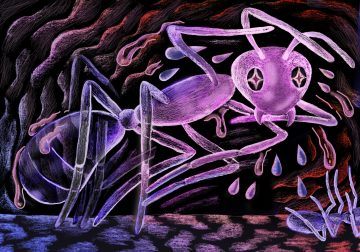 Every corpse is an ecosystem. Each fallen bird, landed fish, beached whale, decomposing log, plucked flower is destined to change from a conglomerate of giant molecules, the most complex system in the universe known, into clouds and drifts of much smaller organic molecules. The process of decay is driven by scavengers, in nature beginning with vultures and blowflies and ending with fungi and bacteria. What do ants do with their dead? In many species, if a colony member is badly injured in the field it is carried home and eaten. If injured only moderately, it may be allowed to live and heal. Most ant warriors that die in battle outside the nest never return. They instead fill the jaws and beaks of predators. An ant that dies from old age or disease inside the nest simply comes to a standstill or else falls to the side with her legs crumpled up. In most cases, she is allowed to stay in place. After, at most, a few days, a nest mate picks her up and carries her out of the nest or to a refuse pile in one of the chambers within the nest. In this cemetery chamber is also dumped miscellaneous refuse, including the inedible remains of prey. There is no ceremony. It occurred to me early in my studies of chemical communication in ants that the bodies of the dead are likely recognized by the odor of their decomposition. Of all the substances uniquely present in dead insects, one or more must be the signal that triggers corpse disposal by ants. If live ants demonstrably use such molecules to release other instinctive social behavior in the service of the colony, why not in death also?
…As a first step, I made extracts of decomposing ants. I put droplets of this material on “dummies” of dead ants made of flecks of balsam about the size of workers. When these were dropped into nests of laboratory colonies of harvesting ants, each was picked up and taken speedily to the refuse pile.
…So I asked a new question: What would happen if I daubed a live, healthy worker with one of the funereal substances? The result was gratifying. Worker ants that met their daubed nest mates picked them up, carried them alive and kicking to the cemetery, dropped them there, and left. The behavior of the undertaker was relatively calm, even casual. The dead belong with the dead. The daubed ants did what you and I would do if we were turned into zombies: We would take a bath.
More here.
Sunday Poem
Two Excerpts from Tomas Tranströmer
I.
Two truths approach each other. One comes from within,
one comes from without—and where they meet you have the chance
to catch a look at yourself.
Noticing what is about to happen, you shout desperately: “Stop!
Anything, anything, as long as I don’t have to know myself.”
……………………………..………..—Selected Poems, 1954-1986
II.
I am welcomed aboard–
a canoe of the darkest wood. It is extremely unsteady, even
when I crouch on my heels. The act of balance. If the heart
is on the left, lean the head slightly to the right, keep
your pockets empty, make no big gestures—leave all
the rhetoric behind. That’s it: rhetoric is impossible here.
The canoe skims over the water.
……………………………… —Windows & Stones, Selected Poems
Saturday, August 22, 2020
“Savings Glut” Fables and International Trade Theory: An Autopsy
 Lance Taylor in INET Economics:
The structure of the US economy began to shift markedly 40 or 50 years ago. The profit share of income grew across business cycles at 0.4% per year, or by more than 20% (that is, by eight percentage points) over five decades. Driven by rising profits, the size distribution of income shifted strongly toward households in the top one percent. The economy became increasingly dualistic, with big employment increases in low wage/low productivity sectors (Taylor with Ömer, 2020).
Foreign trade was part of this transformation. On the world stage Japan, Germany, and more recently, China exported far more than they import, creating gluts of traded goods and services. They accordingly built up stocks of “saving” which took the form of newly acquired liabilities (bonds and even money) from the rest of the world. For the USA, the process worked in reverse. The economy became an international sump with imports exceeding exports, financed by issuing liabilities such as Treasury bonds or dissaving, thus turning the country into a large net debtor.
Two decades after the process started, former Federal Reserve Governor Ben Bernanke was a canary in the world trade coal mine when he announced the presence of a “global saving glut.” The glut had already led to the 1985 Plaza Accord to devalue the dollar. By the turn of this century it was scarcely a surprise.
Bernanke (2015) is a recent reassessment, one of several shambolic mainstream explanations for the foreign trade situation. A new INET working paper (Taylor, 2020) describes their incoherence, employing Keynesian open economy macroeconomics.
More here.
130 Degrees
Bill McKibben in the New York Review of Books:
So now we have some sense of what it’s like: a full-on global-scale crisis, one that disrupts everything. Normal life—shopping for food, holding a wedding, going to work, seeing your parents—shifts dramatically. The world feels different, with every assumption about safety and predictability upended. Will you have a job? Will you die? Will you ever ride a subway again, or take a plane? It’s unlike anything we’ve ever seen.
The upheaval that has been caused by Covid-19 is also very much a harbinger of global warming. Because humans have fundamentally altered the physical workings of planet Earth, this is going to be a century of crises, many of them more dangerous than what we’re living through now. The main question is whether we’ll be able to hold the rise in temperature to a point where we can, at great expense and suffering, deal with those crises coherently, or whether they will overwhelm the coping abilities of our civilization. The latter is a distinct possibility, as Mark Lynas’s new book, Our Final Warning, makes painfully clear.
Lynas is a British journalist and activist, and in 2007, in the run-up to the Copenhagen climate conference, he published a book titled Six Degrees: Our Future on a Hotter Planet. His new volume echoes that earlier work, which was by no means cheerful. But because scientists have spent the last decade dramatically increasing understanding of the Earth’s systems, and because our societies wasted that decade by pouring ever more carbon into the atmosphere, this book—impeccably sourced and careful to hew to the wide body of published research—is far, far darker.
More here.
The Enigma of Gloom: On George Scialabba’s “How To Be Depressed”
 Gerald Russello in LA Review of Books:
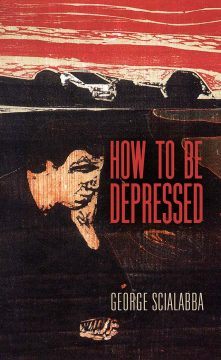
The physical or mental causes of depression still evade definitive analysis. But Scialabba argues that economic conditions can certainly exacerbate existing depression or trigger someone into a depressive episode. In one of its guises, depression makes people feel worthless, in both the cultural and economic senses. Unemployment can move someone from “the merely miserable” into actual, clinical depression.
The recent coronavirus pandemic that brought unemployment claims to record numbers has thrown this vulnerability into sharp relief. Worries over mental health have skyrocketed; the Washington Post reported that the pandemic has caused a “historic” rise in mental health issues. So, in this sense, depression is indeed an economic issue; as Scialabba wryly notes, one’s susceptibility to depression, like the skills and talents one may have at birth, are apportioned largely at random.
Suffering exists, and will exist. Money, however, and our ability to use it to ameliorate that suffering, is not random and can be directed where it is needed. Better mental health services, or a wider social safety net, might have ameliorative effects on people balanced on the edge. The suffering of many caused by depression, diagnosed or otherwise, “would also have been lessened by crumbs of that wealth”; transferred to the “already rich” over the last four decades. Scialabba’s own life is testament to that; although he remained generally consistently employed, he has never been financially secure, a concern that has only grown over his years of treatment.
More here.
The Policy Bedrock of a True New Deal
 Felicia Wong in Boston Review:
4. Federal Charters for Corporations
The relationship between corporations and the American public is broken. In good times, companies reward executives and shareholders, and in bad times, companies expect and receive bailouts. Workers are rarely the beneficiaries, but it doesn’t have to be this way.
Corporations derive their very existence—and the special advantages that come with it, like limited liability for shareholders—from the government. But for the last five decades they have steadily strayed from behavior that builds shared prosperity toward practices that maximize profit extraction and prioritize short-term profits over long-term stability. U.S. corporations started to shift toward this “shareholder value maximization” approach in the 1980s. Instead of balancing the needs of all their stakeholders, corporations focused narrowly on sending as much money as possible to shareholders. That shift contributed to a variety of economic harms: wage stagnation for workers, declining long-term investments and innovation, and slowing worker productivity.
More here.
Logistics, Labor, and State Power
 An interview with Laleh Khalili in Phenomenal World:
Katy Fox-Hodess: Your earlier work focuses on state violence in the Middle East. How did you come to be interested in logistics?
Laleh Khalili: While I was doing the interviews for my book on counterinsurgency, I spoke to several US military officers. One of them was quite sympathetic to my project and very critical of US foreign policy at that time. They said to me, in a joking way, “You academics are interested in the bleeding edge of war, but what you should look at is the money.” It turns out that the money often goes into organizing logistics. Talking with this officer, I learned that payments for fuel for military vehicles, were transferred to Kuwait. The entirety of the Kuwaiti economy had sprouted up through transporting fuel for the US military. I filed this information at the back of my mind.
Some years later, my friend David Hansen-Miller, who worked as a researcher for the International Transport Workers’ Federation, suggested that I research the conditions of dockworkers and sailors in the Arabian Peninsula. There wasn’t much work on the subject, and I knew that many countries in the Arabian peninsula don’t allow unionization. So I began to think about this as well.
More here.
Saturday Poem
“Owai kou makuahine? O ka aina no!
Owai kou kupunawahine? O ka aina no!”
……….—J. Nāwahī, 8 Iune 1895, Ke Aloha Aina
when i say
the land is my
ancestor
believe me.
when i say
the land is my
grandmother
believe me.
when i say
the land is my
mother
believe me.
believe me when i say
my ancestors
are with me
mountains and all.
by leilani portillo
from Split This Rock