Susan Glasser in The New Yorker:
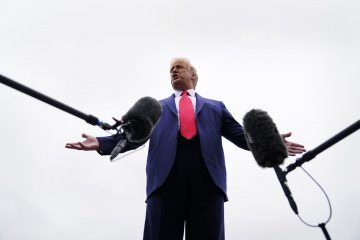 Does anything matter anymore in American politics? In the week since Donald Trump’s Convention ended with a personality-cult party on the White House lawn, the President has completely refocussed his campaign on threats to law and order from “Rioters, Anarchists, Agitators, and Looters.” He has suggested there will be a “Rigged Election”; urged supporters in North Carolina to commit election fraud, by voting twice; and likened protesters demanding racial justice to “Domestic Terrorists.” The President personally ordered a review of federal aid, with the goal of withholding funds from “anarchist” Democratic-run cities that have allowed “themselves to deteriorate into lawless zones.” And he has baselessly alleged that his Democratic opponent, Joe Biden, is taking some sort of “enhancement” drug, and claimed that Biden is the pawn of shadowy “dark forces.”
On his Twitter feed, Trump repeatedly promoted misinformation about the ongoing coronavirus pandemic while also attacking “Crazy Nancy Pelosi”; the “highly political” National Basketball Association; the governor of Oregon; the “wacky Radical Left Do Nothing Democrat Mayor of Portland”; the governor of New York, Andrew Cuomo, and his brother, CNN’s Chris Cuomo; and various other figures in the “Enemy of the People” media, including the conservative Internet aggregator Matt Drudge and MSNBC’s “very untalented” Joy Reid. Trump’s Administration, meanwhile, is withholding briefings on election interference by Russia and other foreign powers from congressional intelligence committees and telling leaders in key battleground states to be prepared for a coronavirus vaccine, which may be approved by the government just days before the election. And that’s just this week.
The rest of the news in Trump’s America, two months before Election Day, is equally gutting: twenty or so U.S. states have rising cases of covid-19, and, as many schools and universities reopen, the numbers are expected to grow. On many days, more than a thousand Americans die as a result of the pandemic. By comparison, in the worst week of the Vietnam War, just more than five hundred American personnel died, the national-security expert and former C.I.A. official David Priess noted. All told, American deaths from covid-19 are approaching two hundred thousand. Mass unemployment continues, and many companies are bracing for new, more permanent layoffs. Food banks are overwhelmed. Congress, stuck in an impasse between House Democrats and Senate Republicans, has failed to pass a new round of economic relief, and the initial aid package for small businesses and the unemployed has run out. The national debt as a share of the economy has reached its highest level since the Second World War.
None of this, apparently, has any electoral consequence.

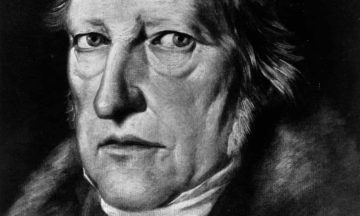 Philip Oltermann in The Guardian:
 Jesmyn Ward in Vanity Fair:
 Julianne Chung in Psyche:
 Sara Tafakori in openDemocracy:
 I
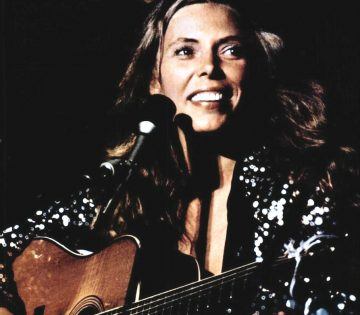
I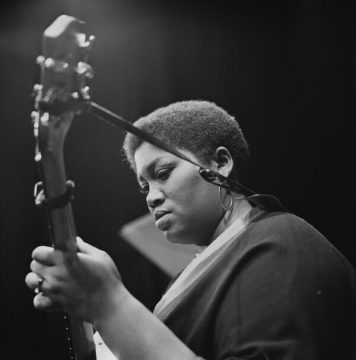 “Next a lone spotlight shone on Odetta wearing a dark loose-fitting dress, and she began singing ‘Water Boy,’ or, rather, she unleashed it. Accompanying herself with her large National acoustic guitar, eyes closed, brows knitted in concentration, she brought the full tragedy and anger of chain gang life to bear.”
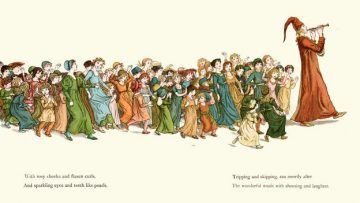 The tale in fact has survived for a very long time. Originating as medieval folklore, the story inspired a Goethe verse, Der Rattenfänger; a Grimm Brothers’ legend, The Children of Hamelin; and one of Robert Browning’s best-known poems, The Pied Piper of Hamelin. And although each writer tinkered with the story, the basics remained the same: the Piper was hired by Hamelin to rid the town of its plague of rats. Trailing after the hypnotic notes of the rat-catcher’s magical flute, the rodents politely filed through the city gates to their presumed doom.
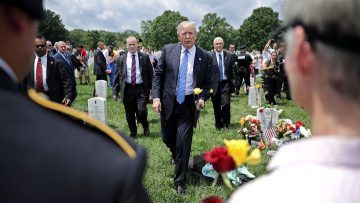 When President Donald Trump canceled a visit to the Aisne-Marne American Cemetery near Paris in 2018, he blamed rain for the last-minute decision, saying that “the helicopter couldn’t fly” and that the Secret Service wouldn’t drive him there. Neither claim was true. Trump rejected the idea of the visit because he feared his hair would become disheveled in the rain, and because he did not believe it important to honor American war dead, according to four people with firsthand knowledge of the discussion that day. In a conversation with senior staff members on the morning of the scheduled visit, Trump said, “Why should I go to that cemetery? It’s filled with losers.” In a separate conversation on the same trip, Trump referred to the more than 1,800 marines who lost their lives at Belleau Wood as “suckers” for getting killed.
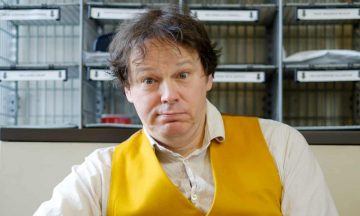 David Graeber, anthropologist and anarchist author of bestselling books on bureaucracy and economics including
  Quantum mechanics is more than a century old, but physicists still fight over what it means. Most of the hand wringing and knuckle cracking in their debates goes back to an assumption known as “realism.” This is the idea that science describes something—which we call “reality”—external to us, and to science. It’s a mode of thinking that comes to us naturally. It agrees well with our experience that the universe doesn’t seem to care what theories we have about it. Scientific history also shows that as empirical knowledge increases, we tend to converge on a shared explanation. This certainly suggests that science is somehow closing in on “the truth” about “how things really are.”
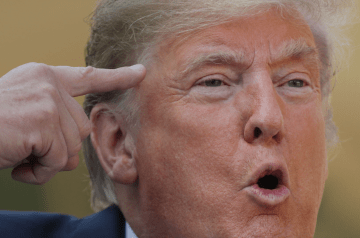 Donald Trump is so unlike most people, and so especially unlike anyone raised under a conventional moral framework, that he’s perpetually misdiagnosed. The words we see slapped on him most often, like “fascist” and “authoritarian,” nowhere near describe what he really is, and I don’t mean that as a compliment. It’s been proven across four years that Trump lacks the attention span or ambition required to implement a true dictatorial regime. He might not have a moral problem with the idea, but two minutes into the plan he’d leave the room, phone in hand, to throw on a robe and watch himself on Fox and Friends over a cheeseburger.
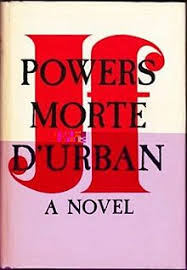 Like a lot of zealots, especially of the writerly sort, Powers was a perfectionist. His style, so clear and natural, came only with effort. His friend Sean O’Faolain liked to joke that Powers could spend a whole morning putting in a comma, and then the whole afternoon taking it out. “I don’t care to get a book out just to get a book out,” he wrote to a friend. “I’d rather make each one count—and in order to do that the way I nuts around, it takes time.” But it’s also true that Powers spent a great deal of time not writing. He insisted on going to a rented office every day—while Betty took care of cooking, cleaning, and raising the children—but, once there, he often just futzed around, reading the paper, rearranging the furniture, watching a ladybug crawl across an envelope. While in Ireland, he went to the races a lot and, like the writer in “Tinkers,” spent hours in auction houses bidding on useless stuff he couldn’t afford.
 W
W It’s not unusual for geochronologist Rainer Grün to bring human bones back with him when he returns home to Australia from excursions in Europe or Asia. Jawbones from extinct hominins in Indonesia, Neanderthal teeth from Israel, and ancient human finger bones unearthed in Saudi Arabia have all at one point spent time in his lab at Australian National University before being returned home. Grün specializes in developing methods to discern the age of such specimens. In 2016, he carried with him a particularly precious piece of cargo: a tiny sliver of fossilized bone covered in bubble wrap inside a box.