https://www.youtube.com/watch?v=NkwJ-g0iJ6w&ab_channel=Josegeraldofonseca

https://www.youtube.com/watch?v=NkwJ-g0iJ6w&ab_channel=Josegeraldofonseca
https://www.youtube.com/watch?v=RLsEvZgmRVA&ab_channel=AndrewWilliamWright
Philip Ball in Prospect Magazine:
Penrose—who has now won the Nobel—is still defining the way we see the universe. But, asked Philip Ball in 2017, in today’s world of ultra-specialised science, could a thinker of such breadth ever emerge again?
 Penrose hails from one of the great intellectual dynasties of the 20th century. His father Lionel was a distinguished psychiatrist and geneticist, his uncle was the surrealist artist Roland Penrose. Roger was one of four children; older brother Oliver became a theoretical physicist, younger brother Jonathan was British chess champion a record-breaking 10 times, and sister Shirley Hodgson is a professor of cancer genetics.
In this house there was no escaping mathematics. “I used to make polyhedra with my father,” Penrose told me. “There were no clear lines between games and toys for children and his professional work.” That, needless to say, may have been a mixed blessing: “He wasn’t very good at relating to us in an emotional way—it was all about science and mathematics.”
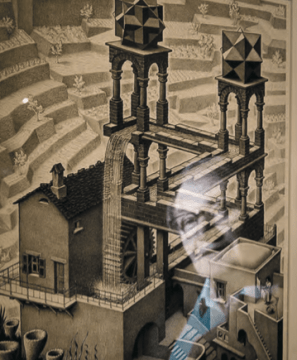
But if number games substituted for play in the Penrose home, one happy result may have been an almost playful quality of his approach to mathematics. His thinking is animated by a phenomenal visual sense of geometry. The sheer power of his mind’s eye is, his peer Martin Rees, the current Astronomer Royal, suggested to me, his defining characteristic. In all of Penrose’s books, abstruse theories are illuminated by pictorial representations. He puts this visual sensibility down to his father, but his grandfather James Doyle Penrose was, like his uncle Ronald, a professional artist. In Roger, this ability manifests itself in an intuition of complex spatial relationships, which gave him an affinity for the Dutch artist MC Escher. While a graduate student, Penrose saw “an exhibition in the Van Gogh Museum by this artist I’d never heard of. I was quite blown over. I came away and drew pictures of bridges and roads, which gradually simplified into the tribar.” This is the optical illusion of an “impossible triangle,” the corners of which make sense spatially on their own but not together.
More here.
Daniel C. Dennett in The New York Times:
 According to copies of copies of fragments of ancient texts, Pythagoras in about 500 B.C. exhorted his followers: Don’t eat beans! Why he issued this prohibition is anybody’s guess (Aristotle thought he knew), but it doesn’t much matter because the idea never caught on. According to Joseph Henrich, some unknown early church fathers about a thousand years later promulgated the edict: Don’t marry your cousin! Why they did this is also unclear, but if Henrich is right — and he develops a fascinating case brimming with evidence — this prohibition changed the face of the world, by eventually creating societies and people that were WEIRD: Western, educated, industrialized, rich, democratic. In the argument put forward in this engagingly written, excellently organized and meticulously argued book, this simple rule triggered a cascade of changes, creating states to replace tribes, science to replace lore and law to replace custom. If you are reading this you are very probably WEIRD, and so are almost all of your friends and associates, but we are outliers on many psychological measures.
The world today has billions of inhabitants who have minds strikingly different from ours. Roughly, we weirdos are individualistic, think analytically, believe in free will, take personal responsibility, feel guilt when we misbehave and think nepotism is to be vigorously discouraged, if not outlawed. Right? They (the non-WEIRD majority) identify more strongly with family, tribe, clan and ethnic group, think more “holistically,” take responsibility for what their group does (and publicly punish those who besmirch the group’s honor), feel shame — not guilt — when they misbehave and think nepotism is a natural duty.
More here.
Outside, it’s cold like the day
my father’s grandpa drowned
while Sigrid salted cod on walls
of stacked antlers. Their sons
and daughter fled to Eden
Prairie. One, my father’s uncle, lost
a claim in Manitoba, another crashed
a Hupmobile. One died ice-fishing.
My father’s mother, pink and vicious, made
him cover the bidet with plywood
when we lived in Tehran. Made me drive
all over Fairfax County in search
of Carnival glass. Told me “Never
marry a woman for her looks.” My mother’s
dad lost his lungs to mustard gas. Her mom
never gambled. Betty lived in Hollywood
working at the studios, roller-skating
with a man who would later play
Tonto. She rented a room
in a house with a victory garden until
the Tamuras were shipped
to Utah, then married Dad, who left
to kill Koreans. On the shipto Japan to join him in Kobe, my sister
scared me with stories of dwarves. My children’s
mom is small and pale, like the pages
of an appointment book, except when speaking
Spanish. Then, her hands become larakeets, her eyes
marcasite. Her grandfather knew the Franks
before they moved to Holland, and he
to Pasadena, where he never met
my mother who skis like she’s waltzing,
or my father, who came home and built
a barbeque of brick, or my sister the shrink,
or my brother who sells drugs, or my other sister
for that matter. They all live
in California and no one
ever dies. There’s a boy
at the bus stop who dances
in place: knit cap, heavy coat, an extra
chromosome, perhaps. Sometimes he raises
his arms and spins. The world starts with him.
by Jeffry Bahr
from Rattle #16, Winter 2001
Philip Graham in Ninth Letter:
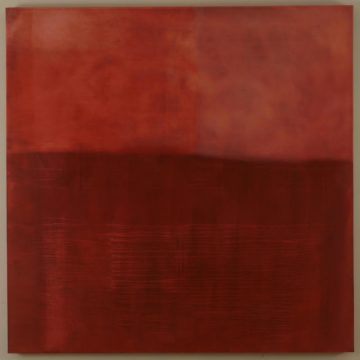
When I saw artist Nikki Terry’s painting my heart. your soul., I felt it expressed everything Ninth Letter was attempting to convey in this pandemic anthology. While at first glance its stark red colors could serve as an x-ray of this year’s tormented emotional landscape, a closer look reveals a meeting place between heart and soul, a necessary balance, something even calming and redemptive in the midst of trouble. While its essential tenderness is personal (it was created in 2018), Terry’s painting also points to a larger truth for us all: that our need for connection in the face of tribulation can help us make it through.
The various entries in this anthology (including two additional works of art by Nikki Terry) engage with the multiple calamities of 2020 and live for connection. Tabish Khair’s pandemic sonnets reach across the centuries for inspiration, transforming the iambic pentameter of Shakespeare’s love sonnets into the crushing details of our Covid landscape: endangered healthcare workers, the further enriching of the rich during the pandemic, and the inevitably brief resurgence of the natural world as humans hunker down. The hidden story behind James Lu’s account of China’s cynical betrayal of its citizens living abroad during the pandemic is the Chinese people’s hunger for a government they can trust. Gladys Vercammen-Grandjean’s delicate short essay tells us of a Dutch word that has gained a whole new level of meaning during this year’s extended quarantines: “skin-hunger.”
More here.
Hermione Lee in the New York Review of Books:
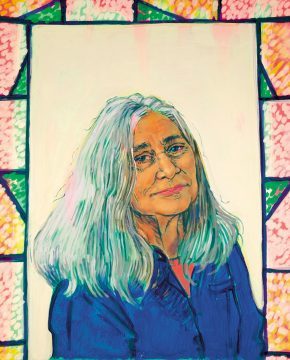
John Ames, the old preacher who has lived in the small town of Gilead, Iowa, all his life, where he is the Congregationalist minister, tells the story of Gilead, the first of a series of interconnected novels that Marilynne Robinson has been publishing since 2004. Toward the end of that meditative, troubled, searching book, the dying minister says that other peoples’ souls are, in the end, a mystery to him. Try as we might, “in every important way we are such secrets from each other…there is a separate language in each of us.” Each human being, he thinks, “is a little civilization built on the ruins of any number of preceding civilizations.” We have “resemblances,” which enable us to live together and socialize. “But all that really just allows us to coexist with the inviolable, untraversable, and utterly vast spaces between us.”
The passage is at the heart of these four books, Gilead, Home, Lila, and now Jack. (The much earlier Housekeeping, published in 1980, stands edge-on to the Gilead novels. It is set in a different part of America, with different characters and a different tone, and, unlike the later books, is entirely about women’s lives. But it shares their preoccupation with loneliness, outcasts, poverty, and the possibility of finding again what has been lost.) Ames’s ruminations on the soul are prolix, philosophical, and profoundly sad. And Robinson’s work, which takes its inspiration as much from Virgil and classical tragedy as it does from American Protestant literature, is heavy with lacrimae rerum, the “great sadness that pervades human life.”
More here.
 Jonathan Hopkin in Aeon:
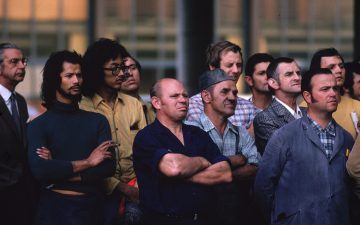
With the end of the Second World War, the economies of western Europe and North America began a period of spectacular growth. Between 1950 and 1973 GDP doubled or more. This prosperity was broadly shared, with consistent growth in living standards for rich and poor alike and the emergence of a broad middle class. The French call it les trente glorieuses – the 30 glorious years – while the Italians describe it as il miracolo economico. The story of how this golden age of shared economic growth came to be has almost been forgotten, despite it being less than a century ago. There has never been a more urgent time to remind ourselves.
How did western countries, in one quarter of the 20th century, manage to increase both equality and economic efficiency? Why did this virtuous combination ultimately fall apart by the end of the century? The answer lies in the awkward relationship between democracy and capitalism, the former founded on equal political rights, the latter tending to accentuate differences between citizens based on talent, luck or inherited advantage. Democracy has the potential to curb capitalism’s inherent tendency to generate inequality. This very inequality can undermine the ability of democratic institutions to ensure that the economy works for the majority.
The rise and fall of democratic capitalism in the postwar era is one of the most important events in modern history.
More here.
 Julian Baggini makes the case in Prospect:
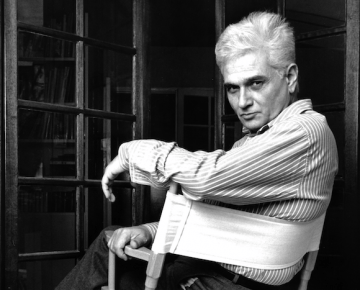
In May 1992, academics at the University of Cambridge reacted with outrage to a proposed honorary degree from their venerable institution to Jacques Derrida. A letter to the Times from 14 international philosophers followed, protesting that “M Derrida’s work does not meet accepted standards of clarity and rigour.”
Depending on your viewpoint, the incident marked the zenith or nadir of Anglo-American analytic philosophy’s resistance to what it saw as the obfuscation and sophistry of its continental European cousin. To them Derrida was a peddler of “tricks and gimmicks,” a cheap entertainer whose stock in trade was “elaborate jokes and puns.”
The irony is that the protests showed a shocking lack of rigour themselves. As Peter Salmon points out in his brilliant biography An Event, Perhaps, Derrida had never used the puerile pun “logical phallusies” that the letter writers attributed to him. This was remarkably sloppy since “it is not as though neologisms ripe for their sort of mockery are hard to find.” Salmon concludes that “none of them had taken the time to read any of Derrida’s work.”
It would have been understandable if some had tried but quickly given up. One of Derrida’s examiners at his prestigious high school, the Lycée Louis-le-Grand, wrote of his work: “The answers are brilliant in the very same way that they are obscure.” His work as an undergraduate was no easier to decipher. Louis Althusser said that he could not grade his dissertation because “it’s too difficult, too obscure.” Michel Foucault could do little better, remarking: “Well, it’s either an F or an A+.”
The Derrida portrayed by Salmon would have shared these doubts. His “nagging fear that those who saw him as a charlatan were right never left him.”
More here.
 Neil Fligstein and Steven Vogel in Boston Review:
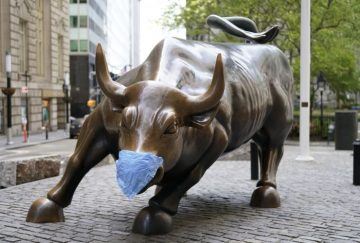
If anything could have dislodged the neoliberal doctrine of freeing the market from the government, you might have expected the coronavirus pandemic to do the trick. Of course, the same was said about the global financial crisis, which was supposed to transform everything from macroeconomic policy to financial regulation and the social safety net.
Now we are facing a particularly horrifying moment, defined by the triple shock of the Trump presidency, the pandemic, and the economic disasters that followed from it. Perhaps these—if combined with a change in power in the upcoming election—could offer a historic window of opportunity. Perhaps. But seizing the opportunity will require a new kind of political-economic thinking. Instead of starting from a stylized view of how the world ought to work, we should consider what policies have proved effective in different societies experiencing similar challenges. This comparative way of thinking increases the menu of options and may suggest novel solutions to our problems that lie outside the narrow theoretical assumptions of market-fundamentalist neoliberalism.
Neoliberalism implies a one-size-fits-all set of policy solutions: less government and more market, as if the “free market” were a single equilibrium. To the contrary, we know that there have been multiple paths to economic growth and multiple solutions to economic crises in different societies.
More here.
George Scialabba at Commonweal:
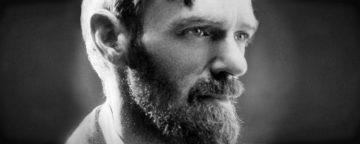 America meant all sorts of things to Lawrence, many of them adumbrated in his Studies in Classic American Literature (1923). In The Bad Side of Books, there’s an essay called “Pan in America” (1924), which starts from the cry that echoed around the Mediterranean as paganism faded: “The Great God Pan is dead!” What that meant, according to Lawrence, was that the possibility of life lived in spontaneous unison with nature dwindled as commerce, technology, and metaphysical religion advanced. Pan seemed still alive to Lawrence in the Indians of the Southwest, and he conjured a graphic account of the animist mind and imagination. But even there, Pan was “dying fast”; every Indian, Lawrence thought, “will kill Pan with his own hands for the sake of a motor car.” Who, given the choice the essay poses—“to live among the living, or to run on wheels”—would choose what Lawrence called “life”? Pretty much no one, he thought, though he returned to this opposition again and again.
more here.
Ed Simon at The Millions:
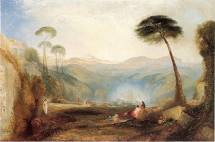 Somewhere within the storerooms of London’s staid, gray-faced Tate Gallery (for it’s currently no longer on exhibit) is an 1834 painting by J.M.W. Turner entitled “The Golden Bough.” Rendered in that painter’s characteristic sfumato of smeared light and smoky color, Turner’s composition depicts a scene from Virgil’s epic Aeneid wherein the hero is commanded by that seventh-century-old prophetic crone, the Sibyl of Cumae, to make an offering of a golden bough from a sacred tree growing upon the shores of crystalline blue Lake Avernus to the goddess Prosperina, if he wishes to descend to Hades and see the shadow of his departed father. “Obscure they went through dreary shades, that led/Along the waste dominions of the dead,” translated John Dryden in 1697, using his favored totemistic Augustinian rhyming couplets, as Aeneas descends further into the Underworld, its entrance a few miles west of Naples. As imagined by Turner, the area around the volcanic lake is pleasant, if sinister; bucolic, if eerie; pastoral, if unsettling.
more here.
Linda Feldmann in The Christian Science Monitor:
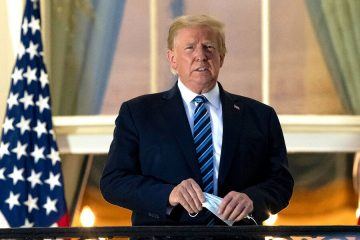 The election is 25 days away, and President Donald Trump’s political prognosis is not good. He’s losing altitude in major national polls – and more crucially, is sinking in key battleground states that will decide the winner in the Electoral College. It would be a tough time for any incumbent running for reelection. But for President Trump, whose brand is all about winning, the pressure seems especially intense. Mr. Trump says he’s eager to return to the campaign trail, following his COVID-19 diagnosis Oct. 1. On Friday, he called in to the Rush Limbaugh radio show for a two-hour “virtual MAGA rally,” and was scheduled to do an on-camera interview with a physician on Fox News’ “Tucker Carlson Tonight.” On Saturday, he plans to host hundreds of people on the White House lawn, addressing a group of “peaceful protesters for law and order” from the balcony, according to multiple media outlets. Monday, he is scheduled to travel to Florida for a campaign rally.
White House physician Sean Conley announced Thursday that Mr. Trump had completed his therapy and should be able to safely “return to public engagements” on Saturday. Medical experts who have not been treating the president question whether clearing him for public events this soon is wise. The president’s spokespeople still won’t say when he last tested negative for the virus. The political universe is not taking the news frenzy quietly.
“The past week was bizarre, berserk, almost biblical,” writes former Reagan speechwriter Peggy Noonan in a Wall Street Journal column. The most delicate question is whether Mr. Trump’s medical treatment – some of it experimental – has affected him in ways beyond his physical condition. His abrupt announcement Monday that he was calling off talks with congressional Democrats over a new stimulus package until after Election Day raised eyebrows among members of his own party, even as Republicans blamed Democrats for holding up a deal. The president soon reversed himself, tweeting on Friday: “Covid Relief Negotiations are moving along. Go Big!” But the damage caused by Mr. Trump’s statement Monday seems to be lingering. Republican Sen. Ted Cruz of Texas warned on CNBC that the election “could be a bloodbath of Watergate proportions” for the GOP if things don’t turn around. Even Senate Majority Leader Mitch McConnell, a most loyal soldier for Mr. Trump on Capitol Hill, said pointedly that he has not been to the White House since Aug. 6, citing its lax approach to virus safety measures.
More here.
Sophie Pinkham in Bookforum:
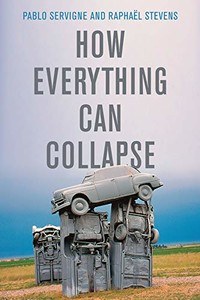 “UTOPIA HAS SUDDENLY changed camp,” write Pablo Servigne and Raphaël Stevens in How Everything Can Collapse: A Manual for Our Times, just out in an English translation by Andrew Brown. “Today, the utopian is whoever believes that everything can just keep going as before.” In 2015, when the book was first published in France, such a statement might have sounded alarmist. In 2020, Collapse feels positively prophetic. Things have not kept going as before, and it seems increasingly doubtful that they ever will again.
That doesn’t mean that these are end times. Servigne and Stevens argue that the specter of apocalypse, like the economic gospel of perpetual growth, is only a distraction from the true danger: civilizational collapse resulting from wanton exploitation of natural resources. At the end of the world we can relax, because there will be nothing left to do. Collapse, by contrast, requires hard work, because it is as much a beginning as an end. In the view of these self-styled “collapsologists,” the disintegration of national and global institutions will demand invention, resourcefulness, and a return to small, mostly self-sufficient communities that depend on local networks of mutual aid. The newly minted discipline of collapsology aims to help people prepare for this new way of being.
How Everything Can Collapse was a best seller in France, but collapsology is controversial. Some environmentalists have attacked it as counterproductive “catastrophism” that will inspire despair rather than action. For others collapsology is a disturbing survivalist fantasy. But every day it gets harder to ignore the disasters that loom before us—or that have already arrived. Most recently, the debacle of the US response to COVID-19 is a reminder of our chronic failure to prepare, no matter how obvious the threat.
More here.
Two poems by Louise Glück, winner, Nobel prize for literature 2020
All day I tried to distinguish
need from desire. Now, in the dark,
I feel only bitter sadness for us,
the builders, the planers of wood,
because I have been looking
steadily at these elms
and seen the process that creates
the writhing, stationary tree
is torment, and have understood
it will make no forms but twisted forms
Over the still world, a bird calls
waking solitary among black boughs.
You wanted to be born; I let you be born.
When has my grief ever gotten
in the way of your pleasure?
Plunging ahead
into the dark and light at the same time
eager for sensation
as though you were some new thing, wanting
to express yourselves
all brilliance, all vivacity
never thinking
this would cost you anything,
never imagining the sound of my voice
as anything but part of you—
you won’t hear it in the other world,
not clearly again,
not in birdcall or human cry,
not the clear sound, only
persistent echoing
in all sound that means good-bye, good-bye—
Jesse Norman MP in Prospect:
 Imagine a human society not so very different from our own, on which a cataclysm is about to fall. Thousands, perhaps millions, of people will die. Many others will lead shorter and less happy lives; the financial and human costs will be felt for decades, if not forever. Looking in from the outside, and thinking in terms of big ideas such as equality, justice, fairness, human rights and the rule of law, what kind of society would you want to emerge from this catastrophe? What core principles should lie at its heart?
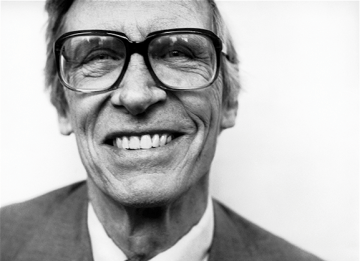
Covid-19 has thrown these fundamental questions of political philosophy into stark relief. In their scale, complexity and level of abstraction they form a sharp contrast with everyday ethical issues of honesty, integrity and the like; indeed we may sometimes wonder whether philosophy as such can make any difference at all in political contexts dominated by health, economics and party rivalries. Yet help is at hand in the life and work of John Rawls, who did more than perhaps any thinker since the Second World War to connect the practice of political philosophy with its most basic principles. His thought, inspirations and influence are explored by Katrina Forrester and Andrius Gališanka in recent books, which have achieved new relevance in the shadow of the pandemic.
The name of Rawls may not strike much of a chord today. But for three decades after the publication of his first and greatest book, A Theory of Justice, in 1971, he set a benchmark for political philosophy: substantively, methodologically and linguistically.
More here.
Taylor Dotson and Michael Bouchey at The New Atlantis:
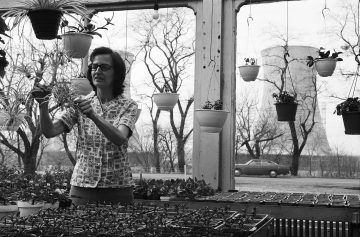
Is nuclear skepticism really anti-science? Has the time come for opponents to get over themselves and toe the scientific line?
This is too simple a way to think about the challenges posed by nuclear power. Nuclear physicist Alvin Weinberg, writing in 1972, found so many difficulties with estimating the health effects of radiation and the safety of nuclear power that he coined a new term, trans-science, to distinguish it from areas where prediction and clear answers are possible. How is it that Michael Shellenberger and Steven Pinker are able to cut through the messy complexities of nuclear power to uncover the pure, evidential truth?
The answer is that they have not actually been able to. The story about nuclear power offered by its most vocal advocates is not scientific but scientistic.
more here.
Rebecca Bengal at The Paris Review:
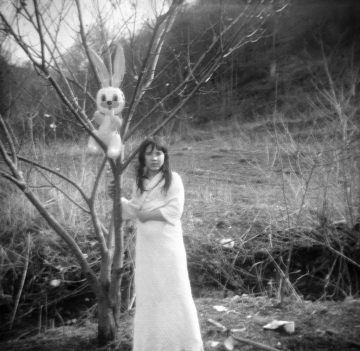 In 1976, twenty-five-year-old Wendy Ewald rented a small house on Ingram Creek in a remote landscape in eastern Kentucky, hoping to make a photographic document of “the soul and rhythm of the place.” As she writes in an essay included in the expanded new edition of Portraits and Dreams: Photographs and Stories By Children of The Appalachians, originally published in 1985, her camera landed on the “commonplaces” of Letcher County. Set in the Cumberland Mountains at the edge of Kentucky and Virginia, Lechter Country is in the rural, rolling, rugged, coal-mining heart of the still sprawling and still vastly misunderstood and frequently mispronounced region known as Appalachia (the correct pronunciation is Appa-LATCH-uh). More than a decade before Ewald’s arrival, the publication of Night Comes to the Cumberlands: A Biography of a Depressed Area, by local lawyer and environmental crusader Harry Caudill, had helped spur John F. Kennedy and later Lyndon B. Johnson to declare war on poverty in Letcher County and regions like it. But Ewald did not intend to photograph “poverty,” or to photograph the place in the reductive way it had come to be depicted. She was interested in the way the people pictured themselves.
more here.