
Adam Garfinkle in Inference Review:
THERE HAVE BEEN fakes as long as there have been frauds, and that is a very long time; but deepfakes are new fakes, and having initially loitered along the margins of general awareness, they are now occupied in haunting it. Tens of thousands of deepfakes have already been created. The technical means of fiddling with images is hardly new. Standing beside Joseph Stalin in one photograph taken along the newly completed White Sea Canal, Nikolai Yezhov disappeared from the very same photograph some months later, as he, in fact, had disappeared from life. The fakery is fine, but it is no better than that, the ensuing photograph visually unbalanced by a lot of gray canal water where Yezhov had once stood. It is thanks to a technology invented in 2014 that deepfakery is capable of taking verisimilitude to a new level.
THE ABILITY TO produce ever more persuasive deepfakes has been made possible by a recent form of machine learning called generative adversarial networks—or GANs. A GAN operator pits a generator (G) against a discriminator (D) in a gamelike environment in which G tries to fool D into incorrectly discriminating between fake and real data. The technology works by means of a series of incremental but rapid adjustments that allows D to discriminate data while G tries to fool it.
How fast are these adjustments? Very fast. A computer can play 24 trillion games of Texas Hold’em every second. To beat human opponents, a computer does not need to assess their strategies. It relies on the patterns it picks out, and assumes only that human strategy is limited to a few flexible tactics. DeepMind beat human players at 99.8% of StarCraft II games, a game subtler and more abstract than Texas Hold’em.
More here.
 Declan Walsh begins his captivating new book on Pakistan with an account of how he came to leave the country for the first time, abruptly and involuntarily in May 2013. “The angels came to spirit me away,” is the way he puts it, using the Urdu slang for the all-powerful men of the
  In Stanford in 2008, the Irish poet Eavan Boland told me how much she admired the work of
  Since Nature’s earliest issues, we have been publishing news, commentary and primary research on science and politics. But why does a journal of science need to cover politics? It’s an important question that readers often ask.
 AC: I need to rephrase this question slightly in order to answer it. “Moral realism” is a label that I deliberately don’t use in describing my image of ethics. Not that, abstractly considered, the term is obviously ill-suited to capture things I believe. It is, for instance, a conviction of mine that that there are morally salient aspects of the world that as such lend themselves to empirical discovery. A case could easily be made for speaking of moral realism in this connection. But that would likely generate confusion. When I claim that, say, humans and animals have moral qualities that are as such observable, I work with an understanding of what the world is like, and of what is involved in knowing it, that is foreign to familiar discussions of moral realism. These discussions are often structured by the assumption that objectivity excludes anything that is only adequately conceivable in terms of reference to human subjectivity. Moral realism is frequently envisioned as an improbable position on which moral values are objective in this subjectivity-extruding sense while still somehow having a direct bearing on action and choice. Thus does the specter of Mackie’s “argument from queerness” still haunt the halls of moral philosophy.
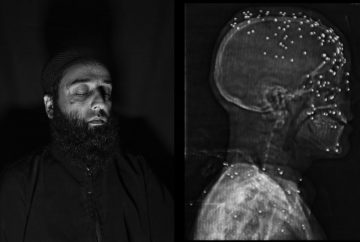 India first started using pellet-firing shotguns against Kashmiris in 2010 but the matter only hit international prominence in 2016 when protests following the death of Burhan Wani resulted in thousands of injuries, the blinding of hundreds and the deaths of over 70 people.
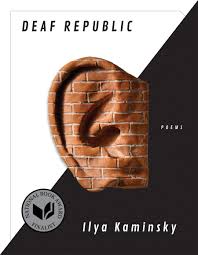 Twenty-five years after he and his parents fled Ukraine, Ilya Kaminsky went back to Odessa, the city of his childhood. As he explored the city, he did not feel that he had truly returned until he removed his hearing aids. He has written that, for him, Odessa is ‘a silent city, where the language is invisibly linked to my father’s lips moving as I watch his mouth repeat stories again and again. He turns away. The story stops.’
 There is a much darker side to his life, too. The relentless womanising, including with vulnerable people far, far younger than him; the children so numerous they were hard to keep track of; the brutal break-ups, vicious feuds and spasms of verbal cruelty that made Freud, for many people, an impossibly sulphurous figure, a coldly brilliant predator smoking with menace. Observing him at the Jewish wedding in London of the painter RB Kitaj, the poet Stephen Spender whispered to Feaver: “I can’t stand being in the same place with Lucian. He is an evil man.”
 Covid-19 has created a crisis throughout the world. This crisis has produced a test of leadership. With no good options to combat a novel pathogen, countries were forced to make hard choices about how to respond. Here in the United States, our leaders have failed that test. They have taken a crisis and turned it into a tragedy. The magnitude of this failure is astonishing.
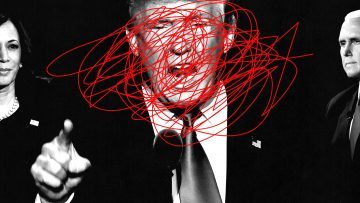 In perhaps the most chaotic week of a chaotic presidency, what was most surprising about tonight’s vice-presidential debate was how oddly normal it felt.
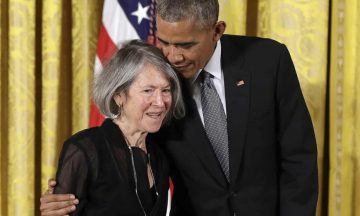
 The poet Louise Glück has become the first American woman to win the Nobel prize for literature in 27 years, cited for “her unmistakable poetic voice that with austere beauty makes individual existence universal”.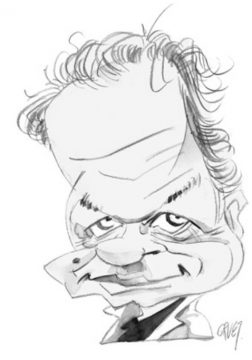
 At the first debate between Joe Biden and Donald Trump, Biden refused to say whether he’d expand the Supreme Court if Republicans confirm Barrett, insisting that the issue is a “distraction.” He’s wrong. Broaching the conversation about systemic reform after the election will be too late. And the coming Supreme Court term, which begins Monday, reflects just some of what’s at stake, this week, this month, and in the months ahead. The debate about structural changes to the court can’t wait until a hypothetical future in which everything has settled down. That future has already vanished.
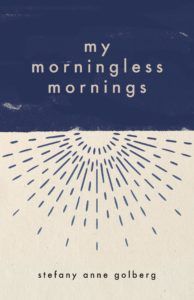 Even when ruminating upon dream diaries, werewolves, and vampires, Golberg’s erudition imbues her childlike wonder with a preacher’s certitude. She finds analogies across cultures and languages, weaving centuries-old philosophies into her personal examination of late-night gloom and early-morning revelation. There’s a selective nature to her surveys, some of which take the form of art and literary criticism. But the essays build upon successive themes, Golberg’s metaphors compounding and accreting into a more solid, ambitious exploration of identity. Who are we, these essays ask, and when are we most ourselves? “I suppose this was Jung’s point all along, that the dreamworld is not separate from the everyday world,” she considers, “that we enact our dreams in daily life as we enact our daily life in dreams, and that to divide these parts of ourselves — the sleeping self and the wide-awake self — makes us incomplete.” These analyses make approachable essays even for readers not steeped in the work of Japanese novelists and nineteenth-century painters.