
Category: Recommended Reading
Wednesday Poem
The Children of the Poor
—excerpt
What shall I give my children? who are poor,
Who are adjudged the leastwise of the land,
Who are my sweetest lepers, who demand
No velvet and no velvety velour;
But who have begged me for a brisk contour,
Crying that they are quasi, contraband
Because unfinished, graven by a hand
Less than angelic, admirable or sure.
My hand is stuffed with mode, design, device.
But I lack access to my proper stone.
And plenitude of plan shall not suffice
Nor grief nor love shall be enough alone
To ratify my little halves who bear
Across an autumn freezing everywhere.
by Gwendolyn Brooks
from Poets Choice
Time/Life Books, 1962
Alexander von Humboldt: Poet Scientist
Algis Valiunas at The New Atlantis:
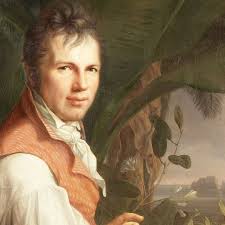 The presiding scientific genius of the Romantic age, when science had not yet been dispersed into specialties that rarely connect with one another, Alexander von Humboldt wanted to know everything, and came closer than any of his contemporaries to doing so. Except for Aristotle, no scientist before or since this German polymath can boast an intellect as universal in reach as his and as influential for the salient work of his time. His neglect today is unfortunate but instructive.
Humboldt (1769–1859) undertook to disseminate the knowledge he acquired as rapidly and widely as possible, and initiated a network of correspondents among the world’s principal scientific specialists. Thus, Humboldt’s prodigious achievement ironically made it impossible for his scientific descendants to have a career so wondrously varied as his. Taking the entirety of nature and culture as his province, through the gathering and arrangement of all the particulars that one extraordinary mind could hold, he sought “a scheme comprehending the whole material creation” — “perhaps too bold a plan.” So he declared in his 1845 summa, Cosmos: Sketch of a Physical Description of the Universe.
more here.
The Letters of Thom Gunn
Andrew McMillan at Literary Review:
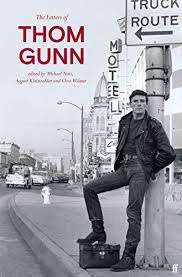 Some of the rawest moments come in early letters to Mike Kitay, Gunn’s lifelong partner, whom he met in 1952 when they were both undergraduates at Cambridge and whom he followed to the USA when Kitay returned there in 1954, after which Gunn felt able to come out. ‘We can lead rich lives together if we allow each other to, my beloved,’ Gunn writes to him in 1961. ‘Oh baby, please settle for me. I’ll never be your ideal, but you’ll never find your ideal on earth.’ It’s a letter written over the course of a week, with headings marking out the different days; it ends, ‘I can’t go on like this much longer. Please, my darling Mike.’ Gunn was largely a writer of tight, syllabic poetry who aimed for a lack of ‘central personality’; the directness and freedom of expression in letters such as these offer us a side of him we rarely, if ever, have seen before. By contrast, a letter written a few months later to the Faber editor Charles Monteith sees Gunn retreating behind a mask of business, discussing what would become a well-known combined edition of his work and that of Ted Hughes, eventually published in 1962 (the footnote reveals, interestingly, that Larkin was also to be included in the project, but his publisher at the time, the Marvell Press, said no).
more here.
Thom Gunn Reading
https://www.youtube.com/watch?v=Y_juoTTqxqM
When the Aliens Arrive, What Will They Look Like?
Arik Kershenbaum in The New York Times:
 Is anybody else out there? For as long as humans have recognized Earth as but one planet in a vast, orb-speckled universe, we have pondered the mystery of extraterrestrial life. After Nicolaus Copernicus introduced heliocentric theory to 16th century Europe, astronomers began to dream about “other worlds” — and populate them with imaginary creatures. Pioneering astronomers such as Johannes Kepler (father of planetary motion) and William Herschel (discoverer of Uranus) believed in the existence of alien life. Peering through his telescope, Herschel thought he spied towns and forests on the lunar surface. We’re still looking. In 2017, a mysterious object named “Oumuamua” was observed passing through our solar system and some astronomers have made the controversial suggestion that it may be a scout probe sent by an alien civilization. In February, the NASA Mars Perseverance Rover landed on the red planet to search for traces of ancient microbial life.
The search field is incomprehensibly large: Astronomers estimate that there are more than 100 billion planets in the Milky Way alone — plus exponentially more in the rest of the universe.
What might we find elsewhere?
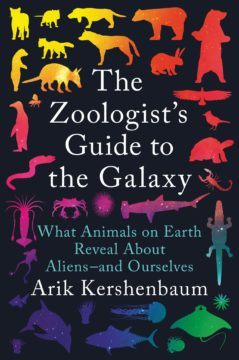
One zoologist suggests some answers actually may be hiding in plain sight, right here at home. In a provocative new book, “The Zoologist’s Guide to the Galaxy,” Arik Kershenbaum contends that life on Earth provides hints of what we might expect to find on other planets.
Kershenbaum, a scientist at the University of Cambridge, asserts that the “universal laws of biology” that govern life on Earth also apply to aliens. The most important is that species evolve by natural selection, the bedrock idea of evolutionary biology proposed by Charles Darwin. No matter how alien biochemistry might work and no matter how planetary environments might differ, Kershenbaum argues that some version of Darwinian selection would be at work — and would have channelled alien evolution to restricted menus of possibilities.
More here.
Electronic skin: from flexibility to a sense of touch
Katharine Sanderson in Nature:
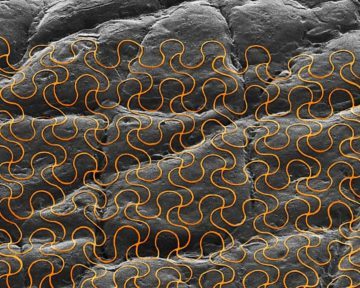 Materials scientists aren’t the first people you’d think would be pulled into the fight against COVID-19. But that’s what happened to John Rogers. He leads a team at Northwestern University in Evanston, Illinois, that develops soft, flexible, skin-like materials with health-monitoring applications. One device, designed to sit in the hollow at the base of the throat, is a wireless, Bluetooth-connected piece of polymer and circuitry that provides real-time monitoring of talking, breathing, heart rate and other vital signs, which could be used in individuals who have had a stroke and require speech therapy1.
Physicians wanted to know whether the device could be customized to spot symptoms of the coronavirus SARS-CoV-2. The short answer was ‘yes’. Some 400 of the devices are now being used in Chicago, Illinois, to help spot early signs of COVID-19 in front-line health workers, as well as for disease monitoring in patients. His team has further tweaked the design to assess how coughing rates change in people with COVID-19. “Several of us, designated as essential workers due to our COVID device work, have been in the lab on a daily basis throughout this period,” Rogers says. “I have not missed a day.” His team members also wear the devices in the lab, to monitor themselves for the onset of symptoms. “So far, nothing,” he says.
Rogers is one of the most prolific researchers of wearable skin-inspired electronics worldwide. This ‘e-skin’ technology has already made it into volunteers and clinics globally, helping to monitor vital signs in premature infants and hydration in athletes, for instance. Other e-skins are giving robots a lighter, human-like touch. But whether they are for people or robots, such devices represent a significant chemical and engineering challenge: electronic components are typically brittle and inflexible, and human skin is a malleable but difficult canvas.
More here.
Tuesday, March 23, 2021
The Era of the Wood Skyscraper Is Arriving
Klaus Sieg in Reasons to be Cheerful:
 At Vancouver’s University of British Columbia, the Brock Commons Tallwood House, sheathed in sleek blond wood, stands out among the neighboring gray concrete towers. This striking facade isn’t just an aesthetic choice. When it opened in 2017, the 18-story residence hall was the tallest building constructed of timber in the world. Erected from prefabricated components in just 70 days, it was faster and cheaper to build than a conventional building. What’s more, its material saved over 2,400 metric tons of carbon emissions.
Brock Commons defies a century of high-rise construction norms. Since the dawn of the skyscraper age, cement, concrete and steel have molded our vertical urban realms. But the environmental consequences of these materials has led some in the construction industry back to wood, a material that’s more sustainable and, with each technological leap, an increasingly viable option for large-scale projects.
Proponents of wood construction argue that it is carbon negative, in that it effectively takes CO2 captured by trees and locks it into the buildings it supports. But wood construction has its challenges. Only in the last few years has it begun to come into its own, shepherded by a wave of government incentives, pent-up demand and technological advancements.
More here.
The Quest to Tell Science from Pseudoscience
Michael D. Gordin in the Boston Review:
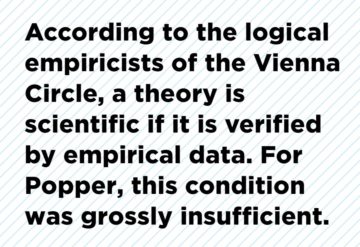 This is the “demarcation problem,” as the Austrian-British philosopher Karl Popper famously called it. The solution is not at all obvious. You cannot just rely on those parts of science that are correct, since science is a work in progress. Much of what scientists claim is provisional, after all, and often turns out to be wrong. That does not mean those who were wrong were engaged in “pseudoscience,” or even that they were doing “bad science”—this is just how science operates. What makes a theory scientific is something other than the fact that it is right.
Of the answers that have been proposed, Popper’s own criterion—falsifiability—remains the most commonly invoked, despite serious criticism from both philosophers and scientists. These attacks fatally weakened Popper’s proposal, yet its persistence over a century of debates helps to illustrate the challenge of demarcation—a problem no less central today than it was when Popper broached it.
More here.
Kazuo Ishiguro’s 2017 Nobel Lecture
Islamic Homophobia is Empowered by Leftist Silence
Jimmy Bangash in Queer Majority:
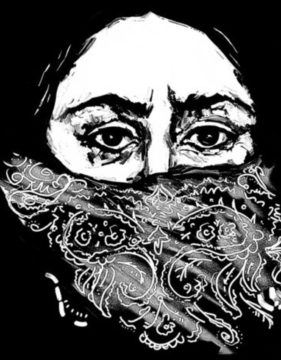 In Muslim communities, homosexuality is intrinsically linked to anxiety, intimidation, violence, and, in some cases, death. For many, it involves living a closeted existence for fear of being ostracised or disowned. Islamic theological teachings, disseminated by religious institutions and espoused by community leaders, range from preaching for our execution to advising us to live a life of celibacy. Yet voices on the left, historically a stronghold of LGBTI support, do not sufficiently decry the abysmal treatment of gay and bi people of Muslim heritage, nor do they adequately mobilize against this specific and brutal form of homophobia.
This piece will scrutinize homophobia in the Muslim community and explore the left’s reluctance to criticize it in a consistent and productive manner. It will not explore the growth of the LGBTI Muslim movement which champions equality and representation of LGBTI individuals; rather it will focus on the dominant, wider Muslim community’s response to homosexuality.
More here.
Tuesday Poem
On a Squirrel, Crossing the Road in Autumn, In New England
Crossing the road under the elm trees,
About the mechanism of my car,
About the Commonwealth of Massachusetts,
About Mozart, India, Arcturus,
That wins my praise. I engage
At once in whirling squirrel-praise.
.
He obeys the orders of nature
Without knowing them.
It is what he does not know
That makes him beautiful.
Such a knot of little purposeful nature!
.
I who can see him as he cannot see himself
Repose in the ignorance that is his blessing.
.
It is what man does not know of God
Composes the visible poem of the world.
…………………………….. Just missed him!
.
Richard Eberhart
from Time/Life Books, 1962
When Constitutions Took Over the World
Jill Lepore in The New Yorker:
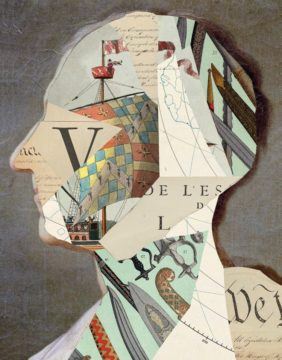 In 1947, Kurt Gödel, Albert Einstein, and Oskar Morgenstern drove from Princeton to Trenton in Morgenstern’s car. The three men, who’d fled Nazi Europe and become close friends at the Institute for Advanced Study, were on their way to a courthouse where Gödel, an Austrian exile, was scheduled to take the U.S.-citizenship exam, something his two friends had done already. Morgenstern had founded game theory, Einstein had founded the theory of relativity, and Gödel, the greatest logician since Aristotle, had revolutionized mathematics and philosophy with his incompleteness theorems. Morgenstern drove. Gödel sat in the back. Einstein, up front with Morgenstern, turned around and said, teasing, “Now, Gödel, are you really well prepared for this examination?” Gödel looked stricken.
To prepare for his citizenship test, knowing that he’d be asked questions about the U.S. Constitution, Gödel had dedicated himself to the study of American history and constitutional law. Time and again, he’d phoned Morgenstern with rising panic about the exam. (Gödel, a paranoid recluse who later died of starvation, used the telephone to speak with people even when they were in the same room.) Morgenstern reassured him that “at most they might ask what sort of government we have.” But Gödel only grew more upset. Eventually, as Morgenstern later recalled, “he rather excitedly told me that in looking at the Constitution, to his distress, he had found some inner contradictions and that he could show how in a perfectly legal manner it would be possible for somebody to become a dictator and set up a Fascist regime, never intended by those who drew up the Constitution.” He’d found a logical flaw. Morgenstern told Einstein about Gödel’s theory; both of them told Gödel not to bring it up during the exam. When they got to the courtroom, the three men sat before a judge, who asked Gödel about the Austrian government.
“It was a republic, but the constitution was such that it finally was changed into a dictatorship,” Gödel said.
“That is very bad,” the judge replied. “This could not happen in this country.”
Morgenstern and Einstein must have exchanged anxious glances. Gödel could not be stopped.
“Oh, yes,” he said. “I can prove it.”
“Oh, God, let’s not go into this,” the judge said, and ended the examination.
More here.
How Intelligent Could Life Be Without Natural Selection?
Arik Kershenbaum in Nautilus:
 Natural selection seems, at first glance, to be so frustratingly inefficient. Generation after generation of baby gazelles are born, destined to be eaten by lions. Only by chance is one baby born with longer legs, able to run faster, and so escape being eaten. Of course, the very beauty of natural selection is that it doesn’t require any foresight; natural selection explains life in the universe precisely because there is no presumption of any prior knowledge. No Creator is necessary, because the evolutionary process is guaranteed to proceed even without any predefined rules. Life evolves—albeit slowly—without having to know where it’s going.
But what if it were all different? What would life look like if it did know where it was going?
The 1950s physicist Anatoly Dneprov wrote quirky and characteristically Soviet science fiction. His novel Crabs on the Island tells the story of two engineers conducting an experiment in cybernetics on a deserted island. A single self-replicating robot (a “crab”) is released, and forages for the raw materials to build other robots. Soon the island is overrun with baby robot crabs. But the crabs begin to mutate. Some are larger than others, and ruthlessly cannibalize the smaller robots for spare parts to build even larger robots. How would such an experiment end? Catastrophically, of course, as is consistent with the genre, with robot crabs spreading exponentially across the entire island.
Science fiction can be terribly pessimistic, but that pessimism is unfounded. Other factors are at play. Resources are limited. Eventually, even the crabs on the island run out of materials with which to make new robots. Admittedly, humans have caused tremendous damage to our own planet, but we’ve hardly destroyed the universe. In fact, there’s no indication in the night sky that any organism, biological or artificial, has spread its influence as far and wide as we might expect if they were growing exponentially like robot crabs.
More here.
On Peter Gizzi’s ‘Now It’s Dark’
Terence Diggory at Salmagundi:
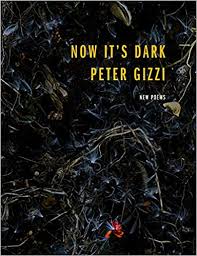 An especially mysterious manifestation of the materiality of language in these poems is the projection of voice from, or into, the material world. Repeatedly, at special moments, things speak: “the hollyhocks spoke”; “Freezing rain with silver seems to be speaking”; “these colors speak”; “The sky speaks to me”; “The roofs speak”; “the room alive speaks when the corpse speaks… and the earth speaks”; “the trees and grass are speaking”; “the old sun / is speaking.” This eruption of voice from things—Gizzi calls it “thinging,” in a pun on “singing”—seems to mark that recovery of the world that Gizzi associates with elegy in the second “Now It’s Dark” poem. However, in the volume Now It’s Dark, that recovery is purchased at the price of another loss, that of “the speaking subject,” as it is called in psycholinguistic theory, or the one who says “I,” in the traditional view of lyric poetry. Drawing on that theory, Language writers accused lyric poetry of escaping into an illusory interior world inhabited by an equally illusory “I.”
more here.
Peter Gizzi with Ocean Vuong
The World’s Oldest Wooden Sculpture
Franz Lidz at the NYT:
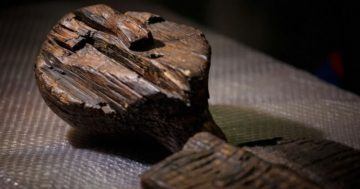 The world’s oldest known wooden sculpture — a nine-foot-tall totem pole thousands of years old — looms over a hushed chamber of an obscure Russian museum in the Ural Mountains, not far from the Siberian border. As mysterious as the huge stone figures of Easter Island, the Shigir Idol, as it is called, is a landscape of uneasy spirits that baffles the modern onlooker.
Dug out of a peat bog by gold miners in 1890, the relic, or what’s left of it, is carved from a great slab of freshly cut larch. Scattered among the geometric patterns (zigzags, chevrons, herringbones) are eight human faces, each with slashes for eyes that peer not so benignly from the front and back planes.
The topmost mouth, set in a head shaped like an inverted teardrop, is wide open and slightly unnerving.
more here.
Sunday, March 21, 2021
Philip Roth drew and smudged and drew again the line between life and art, and with every book it became harder to distinguish between them
Michael Gorra in the New York Review of Books:
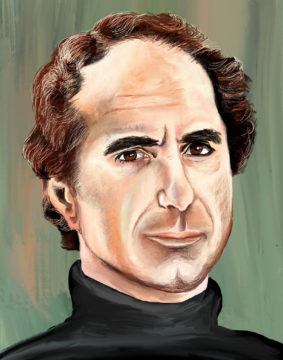
Let’s begin with the body, the corpus to which this six-foot-two lefty was bound. Start with his back. In 1955 he pulled a shift of KP on his last day of basic training and met an industrial-size kettle of potatoes. Hefting it was a two-man job, but the other soldier dropped his end and left him to support its weight alone. Something popped, and the next morning he could barely walk. Try a heating pad, they told him, and an army doctor accused him of malingering. It was never really treated, and the pain never went entirely away. He used a steel back brace for a while, and in the 1970s he sometimes needed a foam neck collar; from middle age on he had to work at a standing desk, spelling himself with long periods of lying on the floor. Only in 2002 did he accept the need for surgery, but by then one disk after another had so fully degenerated that there wasn’t much left to save.
More here.
Humans evolved to run on less water than our closest primate relatives
Robin A. Smith in Duke Today:
 When you think about what separates humans from chimpanzees and other apes, you might think of our big brains, or the fact that we get around on two legs rather than four. But we have another distinguishing feature: water efficiency.
That’s the take-home of a new study that, for the first time, measures precisely how much water humans lose and replace each day compared with our closest living animal relatives.
Our bodies are constantly losing water: when we sweat, go to the bathroom, even when we breathe. That water needs to be replenished to keep blood volume and other body fluids within normal ranges.
And yet, research published March 5 in the journal Current Biology shows that the human body uses 30% to 50% less water per day than our closest animal cousins. In other words, among primates, humans evolved to be the low-flow model.
More here.
The Anarchist Abstractionist — Who was Alexander Grothendieck?
Jørgen Veisdal in Cantor’s Paradise:
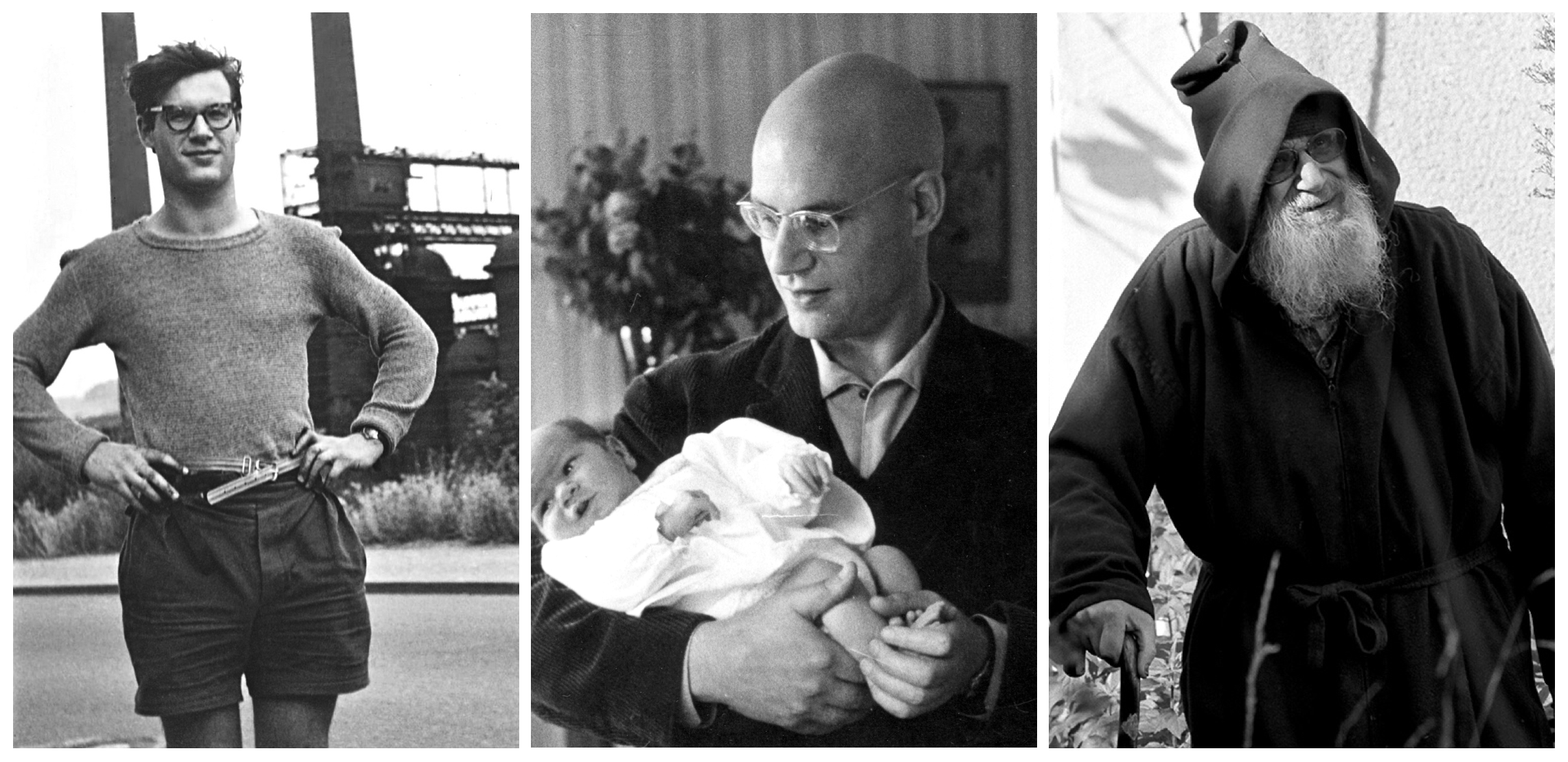 Mathematician Alexander Grothendieck was born in 1928 to anarchist parents who left him to spend the majority of his formative years with foster parents. His father was murdered in Auschwitz. As his mother was detained, he grew up stateless, hiding from the Gestapo in occupied France. All the while, he taught himself mathematics from books and before his twentieth birthday had re-discovered for himself a proof of the Lebesgue measure, a staple of integration theory. Later a rising star in the hot-shot French mathematical milieu of 1950s and 60s, Grothendieck would in his “golden years” from 1955–1970 move from subject to subject, introducing revolutionary new ideas as he went along:
“This just kept happening over and over again, where he would come upon some problem that people had thought about for, in some cases, a hundred years […] and just completely transformed what people thought the subject was about” — Nick Katz, Princeton University
In 1966 he was awarded the Field’s Medal, mathematics’ highest honour for his contributions to algebraic geometry, homological algebra, and K-theory. Four years later, he famously abandoned his professorship at the “French Institute for Advanced Study” for political reasons. Indeed, he left mathematics altogether in 1991 to instead live in seclusion in a remote village at the foot of the Pyrenees Mountains. Rarely ever seen or heard from since, he spent the last twenty-three years of his life in isolation, refusing to communicate with anyone, at times attempting to sustain himself on “a diet of dandelion soup” while writing thousands upon thousands of pages of text on spirituality and a “coming day of reckoning”.
This is the story of Alexander Grothendieck, perhaps the most technically gifted mathematician of the twentieth century.
More here.