
Category: Recommended Reading
Wednesday Poem
A Happy Thought
Assuming this is the last day of my life
(which might mean it is almost the first)
I’m struck blind but my blindness is bright.
Prepare for what’s known here as death;
have no fear of that strange word forever.
Even I can see there’s nothing there
to be afraid of: having already been
to forever I’m unable to recall
anything that scared me, there, or hurt.
What frightened me, apparently, and hurt
was being born. But I got over that
with no hard feelings. Dying, I imagine,
it will be the same deal, lonesomer maybe,
but surely no more shocking or prolonged-
It’s dark as I recall, then bright, so bright.
by Franz Wright
from The Best American Poetry 2006
Scribner Poetry
Neurobiologists take an unexpected detour to decode decision-making
Anastasia Gorelova in Phys.Org:
 In a paper published in Nature Neuroscience last week, University of Pittsburgh researchers described how reward signals in the brain are modulated by uncertainty. Dopamine signals are intertwined with reward learning; they teach the brain which cues or actions predict the best rewards. New findings from the Stauffer lab at Pitt School of Medicine indicate that dopamine signals also reflect the certainty surrounding reward predictions. In short, dopamine signals might teach the brain about the likelihood of getting a reward.
Briefly, what is the background for this study?
KR: We were studying ambiguity—a complex environmental factor that makes it hard for humans and animals to know what to predict—and this project was a cool detour that arose organically from our preliminary data. We found something interesting that we were not expecting, and we saw it to completion.
WS: Dopamine neurons are crucial for reward learning. Dopamine neurons are activated by rewards that are better than predicted and suppressed by rewards that are worse than predicted. This pattern of activity is reminiscent of “reward prediction errors,” the differences between received and predicted rewards. Reward prediction errors are crucial to animal and machine learning. However, in classical animal and machine learning theories, ‘predicted rewards’ are simply the average value of past outcomes. Although these predictions are useful, it would be much more useful to predict average values as well as more complex statistics that reflect uncertainty. Therefore, we wanted to know whether dopamine teaching signals reflect those more complex statistics, and whether they could be used to teach the brain about real-world incentives.
More here.
Why the ‘nice guy’ penalty disadvantages all workers
Christine Ro in BBC:
 David Wyatt has worked in public relations for more than 20 years, having worked his way up to become a senior vice-president at an Austin, Texas-based firm. He recognises his privileges as a straight white man whose education was paid for. Yet even with all of his advantages, he believes his career has been impacted by a subtle bias: one against men who shun macho stereotypes, even in a field largely made up of women. His work style is gentle; he believes the adage about catching more flies with honey. And although he’s never been formally reprimanded or punished for his way of working, he believes that it’s meant he’s climbed the ladder more slowly than more traditionally masculine colleagues.
“I’ve had a lower profile than many of my other male colleagues who portray a sort of sportsman-like sharkiness in the business world. Many of them act more cutthroat in going after the big accounts whereas I have been more of an observer and a server,” reflects Wyatt. “For my entire career, the alpha-male types who make fun of co-workers as a matter of course, goof off but largely deliver, use denigrating terms for women and junior staffers and generally behave in a cocky manner have been advanced more quickly, been recognised more vocally.”
Wyatt is among others who believe men’s career trajectories can depend on how well they fit gendered preconceptions. How this plays out depends enormously on class and sector, of course – a surgeon will face different expectations than an oil worker – but, overall, there’s a great deal of research suggesting that men are disliked, distrusted and passed over when they exhibit qualities stereotypically assigned to women. As the pandemic has shifted so much of working life into homes and private spaces, it’s also important to consider how rigid gender norms hurt men, and how everyone can benefit from easing them.
More here.
The Baddest Man in Town
Eric McHenry at The American Scholar:
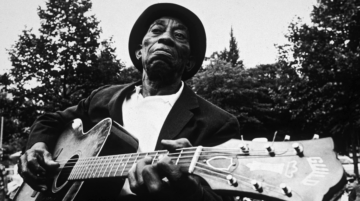 Mississippi John Hurt, Cab Calloway, Woody Guthrie, James Brown, Wilson Pickett, Tina Turner, Bob Dylan, and Beck are among the hundreds who have sung a version of Stagolee’s story. Lloyd Price took a rollicking rendition of “Stagger Lee” to the top of the pop charts in 1959. Such brushes with mainstream success never compromised Stag’s street cred, though. In bars, barbershops, and prisons, he remained “the baddest n—– who ever lived,” the antihero of profane epics and rhyming “toasts” whose exploits offered a fantasy of freedom from life’s indignities. Stagolee haunts the prose of Richard Wright and Toni Morrison; James Baldwin worked on a novel about the character and late in his life published a long poem called “Staggerlee Wonders.”
Scholars of African-American studies generally agree that both the pimp protagonists of ’70s blaxploitation films and the self-mythologists of gangsta rap are Stagolee’s direct descendants: mononymous, fearless, and fastidious about their name-brand apparel.
more here.
Mississippi John Hurt – The Ballad Of Stagger Lee
The Album of Unwritten Work
Nat Trotman at Cabinet Magazine:
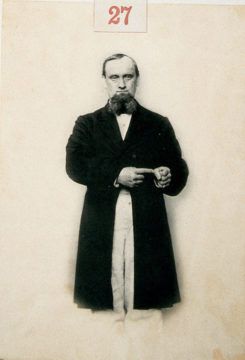 In 1843, the Independent Order of Odd Fellowship was established in Baltimore following a wave of reforms within the Grand Lodge of Odd Fellows of the United States. In the years since the Odd Fellows first arrived from England in 1819, the fraternal organization had gained a reputation for boisterous carousing while garnering membership as a working-class alternative to Freemasonry. The Antimasonic movement of the 1830s introduced a massive wave of upper-middle-class initiates to the Odd Fellows, who brought with them a new emphasis on moral uprightness. Initiation fees increased, a newly formed judicial system expelled disreputable members, and alcohol was banned from all lodges, which began to save and invest their funds, no longer assisting members in times of need. In this new spirit of exclusivity and high principles, the I.O.O.F. instituted a body of rituals to accompany a streamlined and regulated order of degrees. The keys to these rituals were a set of books owned by each Grand Lodge, the “Albums of Written and Unwritten Work.”
more here.
Tuesday, March 16, 2021
Daniel Dennett’s lifelong quest to understand the making of the mind
Joshua Rothman in The New Yorker:
 Four billion years ago, Earth was a lifeless place. Nothing struggled, thought, or wanted. Slowly, that changed. Seawater leached chemicals from rocks; near thermal vents, those chemicals jostled and combined. Some hit upon the trick of making copies of themselves that, in turn, made more copies. The replicating chains were caught in oily bubbles, which protected them and made replication easier; eventually, they began to venture out into the open sea. A new level of order had been achieved on Earth. Life had begun.
The tree of life grew, its branches stretching toward complexity. Organisms developed systems, subsystems, and sub-subsystems, layered in ever-deepening regression. They used these systems to anticipate their future and to change it. When they looked within, some found that they had selves—constellations of memories, ideas, and purposes that emerged from the systems inside. They experienced being alive and had thoughts about that experience. They developed language and used it to know themselves; they began to ask how they had been made.
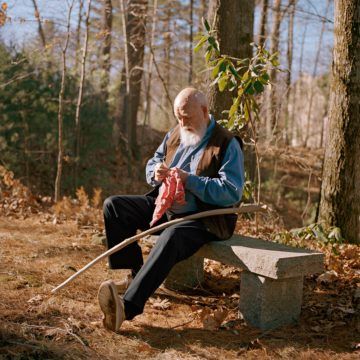
This, to a first approximation, is the secular story of our creation. It has no single author; it’s been written collaboratively by scientists over the past few centuries. If, however, it could be said to belong to any single person, that person might be Daniel Dennett, a seventy-four-year-old philosopher who teaches at Tufts. In the course of forty years, and more than a dozen books, Dennett has endeavored to explain how a soulless world could have given rise to a soulful one. His special focus is the creation of the human mind.
More here.
Sean Carroll’s Mindscape Podcast: Daryl Morey on Analytics, Psychology, and Basketball
Sean Carroll in Preposterous Universe:
 You might think that human beings, exhausted by competing for resources and rewards in the real world, would take it easy and stick to cooperation in their spare time. But no; we are fascinated by competition, and invent games and sports to create artificial competition just for fun. These competitions turn out to be wonderful laboratories for exploring concepts like optimization, resource allocation, strategy, and human psychology. Today’s guest, Daryl Morey, is a world leader in thinking analytically about sports, as well as the relationship between impersonal data and the vagaries of human behavior. He’s currently an executive in charge of the Philadelphia 76ers, but I promise you don’t need to be a fan of the Sixers or of basketball or of sports in general to enjoy this wide-ranging conversation.
More here.
100 years since Albert’s Nobel
It was also his birthday on Sunday.
Lessons from all democracies
David Stasavage in Aeon:
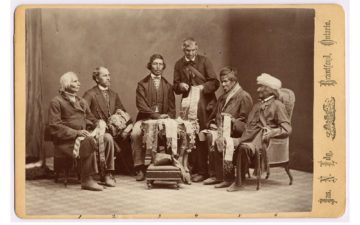 Today, many people see democracy as under threat in a way that only a decade ago seemed unimaginable. Following the fall of the Berlin Wall in 1989, it seemed like democracy was the way of the future. But nowadays, the state of democracy looks very different; we hear about ‘backsliding’ and ‘decay’ and other descriptions of a sort of creeping authoritarianism. Some long-established democracies, such as the United States, are witnessing a violation of governmental norms once thought secure, and this has culminated in the recent insurrection at the US Capitol. If democracy is a torch that shines for a time before then burning out – think of Classical Athens and Renaissance city republics – it all feels as if we might be heading toward a new period of darkness. What can we do to reverse this apparent trend and support democracy?
First, we must dispense with the idea that democracy is like a torch that gets passed from one leading society to another. The core feature of democracy – that those who rule can do so only with the consent of the people – wasn’t invented in one place at one time: it evolved independently in a great many human societies.
More here.
Christopher Lasch – The Culture of Narcissism
Graham Greene’s Dark Heart
Joan Acocella at The New Yorker:
 “The first thing I remember is sitting in a pram at the top of a hill with a dead dog lying at my feet.” So opens an early chapter of a memoir by Graham Greene, who is viewed by some—including Richard Greene (no relation), the author of a new biography of Graham, “The Unquiet Englishman” (Norton)—as one of the most important British novelists of his already extraordinary generation. (It included George Orwell, Evelyn Waugh, Anthony Powell, Elizabeth Bowen.) The dog, Graham’s sister’s pug, had just been run over, and the nanny couldn’t think of how to get the carcass home other than to stow it in the carriage with the baby. If that doesn’t suffice to set the tone for the rather lurid events of Greene’s life, one need only turn the page, to find him, at five or so, watching a man run into a local almshouse to slit his own throat. Around that time, Greene taught himself to read, and he always remembered the cover illustration of the first book to which he gained admission. It showed, he said, “a boy, bound and gagged, dangling at the end of a rope inside a well with water rising above his waist.”
more here.
Nora Barnacle’s Love Letters to James Joyce
Nuala O’Connor at The Paris Review:
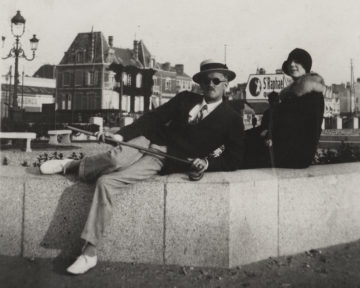 When researching my bio-fictional novel about Emily Dickinson, I read the erotic letters between Emily’s brother, Austin, and his mistress, Mabel Loomis Todd. The letters were direct, steamy, and quite mad in parts—for their paranoia and plotting—and I thought uncomfortably, No one on earth should be privy to these kinds of intimacies! When I first read Joyce’s letters to Nora, I was similarly gobsmacked. I recognized the frank language and the explicit, obscene imaginings. I liked, too, the intimate, tender spillover into poetic trances. But I was made wide-eyed, particularly, by his obsession with defecation as an erotic act. There are numerous references to Joyce’s love for what he calls “the most shameful and filthy act of the body.” Over and over he refers to being turned on by “shit,” “farts,” and “brown stains.” Even now, more familiar with the letters, I squirm a bit when I read this from Joyce to Nora: “The smallest things give me a great cockstand—a whorish movement of your mouth, a little brown stain on the seat of your white drawers, a sudden dirty word spluttered out by your wet lips, a sudden immodest noise made by you behind and then a bad smell slowly curling up out of your backside. At such moments I feel mad to do it in some filthy way, to feel your hot lecherous lips sucking away at me.” This was an utterly private sharing between lovers, the things they traded to bind themselves together, and Joyce’s fetish ought not bother me at all, as I shouldn’t know about it. Although, anyone who has read Molly Bloom’s wondrous speech in the Penelope episode of Ulysses might reasonably guess at Joyce’s delight in the coprophilic. When Molly wants money, she plans to let Bloom kiss her bottom, saying he can “stick his tongue 7 miles up my hole as hes there my brown part then Ill tell him I want £1.”
more here.
Tuesday Poem
Thanks
with the night falling we are saying thank you
we are stopping on the bridges to bow from the railings
we are running out of the glass rooms
with our mouths full of food to look at the sky
and say thank you
we are standing by the water thanking it
standing by the windows looking out
in our directions
back from a series of hospitals back from a mugging
after funerals we are saying thank you
after the news of the dead
whether or not we knew them we are saying thank you
over telephones we are saying thank you
in doorways and in the backs of cars and in elevators
remembering wars and the police at the door
and the beatings on stairs we are saying thank you
in the banks we are saying thank you
in the faces of the officials and the rich
and of all who will never change
we go on saying thank you thank you
with the animals dying around us
taking our feelings we are saying thank you
with the forests falling faster than the minutes
of our lives we are saying thank you
with the words going out like cells of a brain
with the cities growing over us
we are saying thank you faster and faster
with nobody listening we are saying thank you
thank you we are saying and waving
dark though it is
by W.S. Merwin
from Migration: New and Selected Poems
Copper Canyon Press, 2005)
In this Kashmiri library, the power of books goes beyond words
Safina Nabi in The Christian Science Monitor:
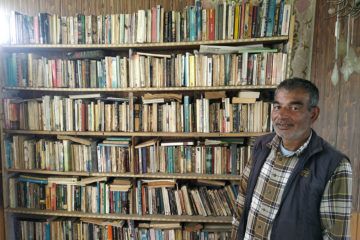 After climbing a stiff wooden stair, we reach the “Traveler’s Library,” its walls painted white and windows open on three sides. The front overlooks Dal Lake’s houseboats and other boats for everyday use. Next to an old green sofa is a woven wicker table. And on the right are Mr. Oata’s books. With about 600 volumes, this library may not look like much. But for years, this room has been a place where Kashmir – a beautiful but long fought-over Muslim-majority region, tucked at the top of India – has touched the wider world. It’s been an oasis for visitors, and readers; but most of all, for one book-lover who can’t read. “Ask as many questions as you can to get the information you require,” Mrs. Oata says, before her husband comes in. “He will not explain things on his own.” She laughs and leaves the room.
As Mr. Oata, dressed in a warm shirt and vest, walks me through his library I scan the names on the shelves. “Only Time Will Tell” and “The Sins of the Father,” by English novelist Jeffrey Archer. Next to them is Paulo Coelho, from Brazil. There are books by Jane Austen, Dan Brown, and Majgull Axelsson, a Swedish journalist. He speaks hesitantly, in a soft voice. But once he starts chatting about books, his voice overflows with enthusiasm.
Born in Kashmir, the eldest son of a plumber and a housewife, he left home at 16 in search of work to support his family. He moved across India, from one tourist destination to the next, selling Kashmiri arts and crafts. He still regrets not completing his formal education. Now and then, he noticed tourists at his stall holding books. One day, a man handed one to Mr. Oata, who asked him to summarize its contents. From then on, he asked book browsers if they’d be willing to swap, and tell him what the story was about – “and they would do it happily.” Over the years, he moved to India’s southeast, then west to Karnataka, selling jewelry, shawls, rugs, and hand-embroidered bags. Over time, he collected hundreds of books, mostly by international authors, and created his first small library. But he yearned to come back to the Kashmir Valley. So after much deliberation, he packed his books and went home in 2007. “I feel writers are always alive forever through their books, even after death, and for me that is such an interesting aspect,” Mr. Oata says, adding that his books are his “most precious possession.” “Though I cannot read, I can remember most of the books: their theme, the name of the author, and the country that the author belonged to,” he says. “I have remembered it all by remembering the color of the book, its cover page, and symbols.”
More here.
CRISPR-based gene therapy dampens pain in mice
Ariana Remmel in Nature:
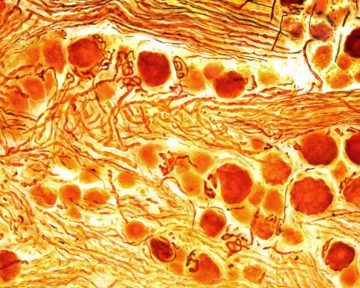 Some studies estimate that a large proportion of the population in Europe and the United States — as high as 50% — experiences chronic pain2,3. This pain can become debilitating over time by limiting a person’s activity and having a negative effect on their mental health. Despite the prevalence of the condition, few options exist for providing long-term relief without side effects. Even so, doctors have been moving away from prescribing opioids owing to addiction risk, and that has pared down their options even further.
This plight inspired bioengineer Ana Moreno and colleagues at the University of California, San Diego, to seek an alternative treatment. Pain registers with the brain when a stimulus — such as touching a scalding hot pan or being poked with a sharp object — triggers neurons to send an electrical signal through the nerves in the spinal cord and upwards to the brain. This happens when pore-like openings along the neuron — called ion channels — open and close to allow ions to pass through, which transmits a current along the nerve. With chronic pain, parts of this pathway can become hyperactive.
Although there are many types of ion channel, studies have suggested that a sodium channel called Nav1.7 could play a central part in chronic pain. When people have mutations in the gene coding for this channel, they either experience extreme, constant pain, or can’t feel any pain at all.
So Moreno and her team thought they might be able to stop pain signals travelling to the brain by preventing neurons from producing Nav1.7.
More here.
Sunday, March 14, 2021
Friends of the Devil: Towards a Posthumous Aesthetics of Rock and Roll
Justin E. H. Smith in his Substack Newsletter:
 In 1987 I had a sort-of-girlfriend, let us call her Nikki, who came from a devout Catholic working-class family of French-Canadian heritage. When I met her she had just returned from a family pilgrimage to Medjugorje, in post-Tito, pre-war Yugoslavia, where her mother and father had hoped to see the famed weeping statue of Mary, fluentis lacrimis. I knew enough of Slavic etymology already to be intrigued by that town’s name, like the young W. V. O. Quine, who once found himself on a street in Prague that started with the preposition Pod, and thought: “I must be at the bottom of something”. The Medju clearly meant the place was between or amidst something or other, but what exactly? Mountains? Woe? I had to know.
The Virgin seems to have come up dry throughout the family’s Bosnian sojourn, but Nikki’s crisis of faith was in any case already in full flower, and it is unlikely that even a heavy flow of miraculous tears could have kept her sufficiently pious to avert the family drama that awaited on their return to California. For Nikki had been collecting tapes and records, 12-inch singles and albums, that severally and individually struck her mother as unwholesome: Depeche Mode, The Smiths, Siouxsie and the Banshees, Love and Rockets, and, most of all, The Cure. I don’t recall how many such artifacts she had amassed —the quantities get inflated by memory—, but there were at least several dozen recordings there, all vaguely suggestive, in the graphic presentation of their contents, of deviant sexuality, vampiric nocturnes, dangerous ecstasies, and trysts with the devil. So one day Nikki comes home from school and learns that all her cherished litanies of Satan, all these neo-Baudelairean baubles, have been thrown in the trash, hauled away to the dump, and replaced, by way of consolation, with a single item: a vinyl 12-inch extended remix of Rick Astley’s fresh new hit, “Never Gonna Give You Up”.
More here.
The underworld of finch smuggling
Kimon de Greef in Guernica:
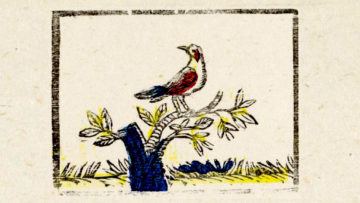 Last winter, Ray Harinarain, a heating and air-conditioning contractor living in Brooklyn, flew home to Guyana with several thousand dollars in cash. Escorted by armed guards, he drove from village to village, examining wild finches like some veterinary talent scout. The birds had been captured in nearby forests using glue strips or nets. Some were visibly frightened by life in captivity. A few had begun the halting process of habituation, waiting on their perches instead of bashing against the bars. And the “baddest” birds—which in Guyanese patois means the best birds—were just about ready to burst into song.
The chestnut-bellied seed finch, known in Guyana as the towa-towa, is at the center of a lucrative underground trade that culminates in Queens, New York, where immigrant Guyanese men engage the birds in elaborate, secretive competitions. Male finches sing to attract mates and intimidate their rivals; owners and spectators bet on them, awarding victory to the bird that sings most vigorously. The competitions, or “races,” resemble a kind of bloodless cockfighting—at once a display of human and avian masculinity. And yet the song, clean and delicate, is archetypically sweet, like something you might hear on a recorded meditation.
The tradition known as “birdsport” has given rise to a lucrative underworld business, with champion finches selling for as much as nine thousand dollars.
More here.
Do We Absolutely Disagree?
Alan Jacobs in The Hedgehog Review:
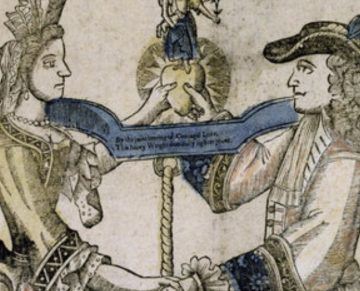 A good many people claim to be “free speech absolutists,” but I’m not sure whether they really are. Push an absolutist hard enough with edge cases and you typically discover that they do indeed draw lines beyond which speech may not be permitted to go. (How many celebrants of free speech advocate the elimination of libel and slander laws?) But even if true absolutists exist, some of the people most often cited in support of free speech certainly were not so absolute. And there may be useful lessons for us in that.
For instance: The problem with citing John Milton’s “Areopagitica” (1644)—as David Bromwich does here, for instance—in support of freedom of speech or of the press is that immediately after making his eloquent plea for unlicensed printing, Milton adds,
I mean not tolerated popery, and open superstition, which as it extirpates all religious and civil supremacies, so itself should be extirpate…that also which is impious or evil absolutely against faith or manners no law can possibly permit that intends not to unlaw itself.
Free speech, sure, but of course not for Catholics. It should go without saying that this is Milton’s own opinion.
More here.