Saturday Poem

Design

I pour a coating of salt on the table
and make a circle in it with my finger.
This is the cycle of life
I say to no one.
This is the wheel of fortune,
the Arctic Circle.
This is the ring of Kerry
and the white rose of Tralee
I say to the ghosts of my family,
the dead fathers,
the aunt who drowned,
my unborn brothers and sisters,
my unborn children.
This is the sun with its glittering spokes
and the bitter moon.
This is the absolute circle of geometry
I say to the crack in the wall,
to the birds who cross the window.
This is the wheel I just invented
to roll through the rest of my life
I say
touching my finger to my tongue.

by Billy Collins
from Sailing Alone Around the Room
Random House 2002

Enjoying the content on 3QD? Help keep us going by donating now.

Friday, April 3, 2026

Photographs from the collection of Hasan Belal

From the European Review of Books:

Belal felt life had become « too fast, stripped of slowness and reflection, and constrained by the lack of freedom to live and experience fully. » Visiting his hometown, Tartus, he opened a drawer of old family photographs. Some he rephotographed, wondering if he could bring the archive back to life: « an act of resistance against forgetting, speed, and the indifference imposed by years of war. »

Belal’s mother and father in Tartus in 1986.

More here.

The Many Roots of Our Suffering: Reflections on Robert Trivers (1943–2026)

Steven Pinker at Quillette:

In March 2026, three prominent thinkers died within a day of each other. Lavish obituaries immediately marked the deaths of the always-wrong environmentalist Paul Ehrlich and the often-obscure political philosopher Jürgen Habermas. But two weeks after the death of Robert Trivers, one of the greatest evolutionary biologists since Charles Darwin, not a single major news source has noticed his passing. This despite Trivers’s singular accomplishment of showing how the endlessly fascinating complexities of human relations are grounded in the wellsprings of complex life. And despite the fact that the man’s life was itself an object of fascination. Trivers was no ordinary academic. He was privileged in upbringing but louche in lifestyle, personally endearing but at times obstreperous and irresponsible, otherworldly brilliant but forehead-slappingly foolish.

Trivers’s contributions belong in the special category of ideas that are obvious once they are explained, yet eluded great minds for ages; simple enough to be stated in a few words, yet with implications that have busied scientists for decades. In an astonishing creative burst from 1971 to 1975, Trivers wrote five seminal essays that invoked patterns of genetic overlap to explain each of the major human relationships: male with female, parent with child, sibling with sibling, partner with partner, and a person with himself or herself.

The fallout for science was vast. The fields of sociobiology, evolutionary psychology, behavioural ecology, and Darwinian social science are largely projects that test Trivers’s hypotheses.

More here.

Enjoying the content on 3QD? Help keep us going by donating now.

A Shakeup Is Coming for the Nation-State

Stephen Sims in The New Atlantis:

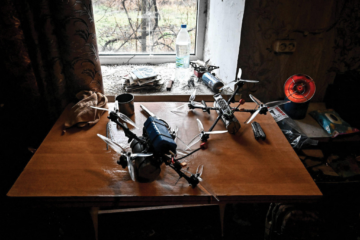
The drones had been trained using AI to recognize Tu-95 “Bear” bombers based on photographs taken of a decommissioned version in a Ukrainian air museum and to recognize the weakest point of the bombers, often the fuel tanks in the wings. This allowed the drones, flying first autonomously and then with human pilots, to strike Russian bombers with high precision as far away as Siberia.
In the grand scheme of geopolitics, these events were small. The conflict between Iran and Israel ended up being more like glorified shadowboxing than real war, and the Ukrainian strike on Russia did nothing to change the relentless, grinding attrition of the front line. These events are not obvious ruptures in international politics, as when nuclear fire consumed Hiroshima and Nagasaki in August 1945. That moment announced with dreadful clarity that the future of war and strategy would never be the same. The use of AI coupled with drones, however, is more like Sputnik in 1957, a seemingly small event that nevertheless drastically altered the human relationship to technology.

More here.

Enjoying the content on 3QD? Help keep us going by donating now.

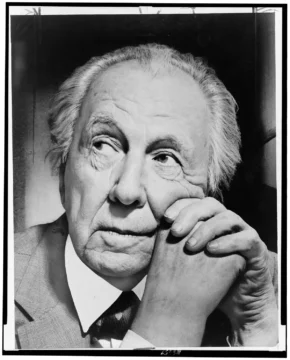
The house is a work of art: Frank Lloyd Wright exalted the individual and made ordinary life beautiful

Andrew Deming in aeon:

I was 10 when Frank Lloyd Wright first entered my consciousness. I was sitting crosslegged on the beige carpet of my bedroom in a tract house in Melbourne, Florida, watching a Ken Burns documentary about Wright on PBS. Both my parents were schoolteachers, interested in history and travel; for them, the world of architecture belonged to another planet entirely: buildings were background texture. But I noticed the scalloped sink in my parents’ bathroom. I noticed that the façade my house shared with so many on our cul-de-sac looked strangely better in its mirrored version across the street – or perhaps it was only that their landscaping added the faintest sense of intention to a place otherwise void of character. And then there was Wright, whose buildings felt impossibly different from anything I’d seen. His rooms were not rectangles to be filled but worlds unto themselves – shadows, stone, light pouring in sideways. His spaces, at once intimate and vast, were shaped by ideas I had no words for, yet immediately recognised. His work reached backwards and forwards simultaneously: primitive shelter reimagined with an aesthetic that felt both timeless and unmistakably American.

More here.

Enjoying the content on 3QD? Help keep us going by donating now.

Brothers and Sisters: On the fiction of siblings

Christine Smallwood in Harper’s Magazine:

To live in society involves putting up with people who we did not choose to know and may in fact prefer not to exist. Even those we basically like and get along with are sure, from time to time, to inspire in us the wish that they would (painlessly, briefly) disappear. But it is an obdurate and inconvenient fact that people don’t turn on and off like appliances; they don’t come into or out of being according to our will. To be in a relationship with others—whether platonic, romantic, or political—requires enduring them without going crazy. Our earliest and most formative experience with the problem of other people is the sibling relationship.

Psychoanalysts say that around the age of two or two and a half, children become preoccupied with the notion of siblings. 

More here.

Enjoying the content on 3QD? Help keep us going by donating now.

Friday Poem

Hints of Pale Lemon

the light pouring in my window
has hints of pale lemon
as they might say on the back
of a wine bottle

well, yes, it is the best of wines
so I sit in my chair drinking it in
but find I have some questions

for body – I thought we were
in this together jogging side by side
through the years, but here you are
about to turn 89 leaving me far behind
somewhere in my 50’s, maybe 40’s even

why are you hurrying? pause for a few years
let me catch up then we’ll get
a couple of walkers and push
on together to wherever we’re going

by Nils Peterson


Enjoying the content on 3QD? Help keep us going by donating now.

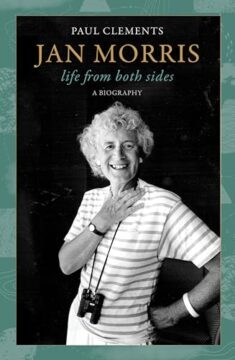
Jan Morris: A Life

Piers Brendon at Literary Review:

The subject of this excellent biography wished to be remembered as Jan ‘Empire’ Morris, author of the great imperial trilogy Pax Britannica, but she correctly predicted that the valedictory headlines would read ‘Sex Change Author Dies’. As James Morris, he had won early fame as the Times reporter who broke the news of the conquest of Everest on Coronation Day, 1953. And Morris’s real distinction, as Sara Wheeler affirms, was as a travel writer. It was a term she loathed. (Wheeler follows Morris’s own lead in using male pronouns for the author’s early life and female ones after 1970, when transition was nearing completion.) But as a young man James had immersed himself in Charles Doughty’s Travels in Arabia Deserta and Alexander Kinglake’s Eothen, and went on to evoke the character of places far and near in vivid prose, turning each odyssey into a personal adventure. Sometimes, it is true, Morris indulged in narcissism and euphuism: slam shut his book about Oxford, said Dennis Potter, and ‘the purple ought to ooze out like the juice of squashed plums’. Yet Morris was, Wheeler plausibly maintains, ‘among the finest descriptive writers who ever lived’.

more here.

Enjoying the content on 3QD? Help keep us going by donating now.

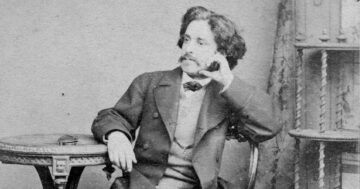
The Importance of Being Idle

Robert Zaretsky at The American Scholar:

During Lafargue’s own lifetime, the nature of work was undergoing a traumatic transformation. The seismic effect of the first and second industrial revolutions, as well as the quickening pace of globalization, proved an extinction event for traditional forms of production. “The gods and kings of the past,” declared the historian Eric Hobsbawm, “were powerless before the businessmen and steam engines of the present.” As factory workers and unskilled laborers replaced ateliers and artisans, the former struggled to organize themselves, a struggle into which Lafargue threw himself body and soul.
Or, perhaps, not his entire soul. His essay’s title reveals a dramatic divergence of goals he and union leaders held. He bemoans the demand of workers for shorter workdays (which often lasted as long as 12 hours), insisting that curtailing work hours did not represent victory but defeat: “Shame on the proletariat, only slaves would have been capable of such baseness” to have sought such an outcome. On the contrary, he declaims, workers should oppose the very notion of work.

more here.

Enjoying the content on 3QD? Help keep us going by donating now.

Thursday, April 2, 2026

Against The Concept Of Telescopic Altruism

Scott Alexander at Astral Codex Ten:

“Telescopic altruism” is a supposed tendency for some people to ignore those close to them in favor of those further away. Like its cousin “virtue signaling”, it usually gets used to own the libs. Some lib cares about people in Gaza – why? Shouldn’t she be thinking about her friends and neighbors instead? The only possible explanation is that she’s an evil person who hates everyone around her, but manages to feel superior to decent people by pretending to “care” about foreigners who she’ll never meet.

This collapses upon five seconds’ thought. Okay, so the lib is angry about the Israeli military killing 50,000 people in Gaza. Do you think she would be angry if the Israeli military killed 50,000 of her neighbors? Probably yes? Then what’s the problem?

“But vegetarians care about animals more than humans!” Okay, yeah, they sure do get mad about a billion pigs kept for their entire lives in cages too small to turn around in, then murdered and eaten. Do you think they’d care if a billion of their closest friends were kept for their entire lives in cages too small to turn around in, then murdered and eaten? I dunno, seems bad.

More here.

Enjoying the content on 3QD? Help keep us going by donating now.

Inside the ‘self-driving’ lab revolution

Rachel Brazil in Nature:

Measuring 5 metres square by 3 metres high, Eve takes up at least half of the floor space in the laboratory it now calls home.
The robotic platform at the Chalmers University of Technology in Gothenburg, Sweden, is the brainchild of autonomous-lab pioneer Ross King. It is powered by artificial intelligence, self-driving and “fairly quiet”, King says. But it’s also fast. Working at full speed, Eve’s robotic arm can move a few metres per second, with a positional accuracy of a fraction of a millimetre. The team usually runs Eve slower than that — otherwise, King says, “it’s too scary”.

Eve automates the process of early-stage drug design. One of Eve’s early achievements came in 2018, around three years after it was created, when it identified that the common antimicrobial compound triclosan can target an enzyme that is crucial to the survival of Plasmodium malaria parasites during their dormant phase in the liver1. To do this, Eve independently screened some 1,600 chemicals and modelled how their structure related to their activity to predict which ones were worth testing. King and his group armed the robot with background knowledge and a machine-learning framework for developing hypotheses. Eve then used those elements to design experiments to test these hypotheses and, crucially, performed them itself. The finding gave researchers a potential route to fighting treatment-resistant malaria.

More here.

Enjoying the content on 3QD? Help keep us going by donating now.

How Elon Musk is reshaping the world

Christopher Webb in The Guardian:

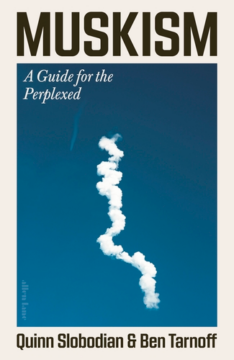
Genius industrialist or clownish conman, humanity’s saviour from a rapidly crumbling planet or rabid social media troll – the verdicts on the world’s richest person vary in flavour, but most share something in common: they focus on Musk as an individual. In their study, Quinn Slobodian, a historian at Boston University, and Ben Tarnoff, a tech writer, wish to reframe the conversation. The most important question, they argue, is not “who is Musk?” but “what is Musk a symptom of?”

As the title suggests, their answer is “Muskism”, the coinage a deliberate nod to Fordism, the shorthand for 20th-century capitalism built on the pairing of mass production with mass consumption. If Fordism was the last century’s operating system, Slobodian and Tarnoff contend that Muskism is this century’s.

Like Fordism, it is a modernising project. Unlike Fordism, it does not aim to distribute its rewards widely. Its central promise is “sovereignty through technology”: the fantasy that, in an increasingly unstable world, states and individuals can become more self-reliant by plugging into Musk’s infrastructure. This is Muskism’s version of a social contract. But, as the authors point out, the reality is quite different: rather than self-reliance, we are offered merely greater reliance on the Techno-king of Tesla himself.

More here.

Enjoying the content on 3QD? Help keep us going by donating now.

The Met Museum’s Historic Raphael Exhibition

Natalie Haddad at Hyperallergic:

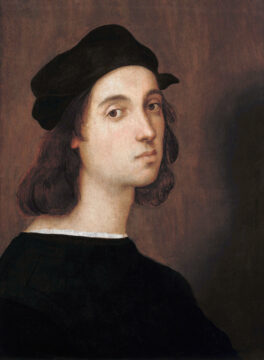
“Nature created him as a gift to the world,” wrote Giorgio Vasari of Raphael in the 16th-century compendium The Lives of the Artists. Roughly 500 years later, the sentiment still holds true. Born in 1483 in Urbino, Italy, a small center of 15th and 16th-century art and culture, Raphael embodies the ideal of the Renaissance man: In his 37 years, he established himself as a painter rivaling Leonardo da Vinci and Michelangelo, ran a thriving studio, and expanded into architecture and design. Yet it’s the humanism of his art, reflecting his own empathic personality, that continues to resonate across time and space.

Sublime Poetry, opening this weekend at the Metropolitan Museum, is the first comprehensive Raphael survey in the United States, encompassing his childhood apprenticeships through his late-life fame and accomplishments. If that seems surprising, consider the logistics involved in securing more than 170 works by the Renaissance master from over 60 global collections, ranging from celebrated masterpieces such as “The Virgin and Child with the Infant Saint John the Baptist in a Landscape (The Alba Madonna)” (1509–11) to the fragile drawings that were the cornerstone of his practice, like the Ashmolean Museum’s beguiling “Portrait of a Young Boy (Presumed to be a Self-Portrait)” (c. 1500) and the Louvre’s breathtaking “Saint Catherine of Alexandria in Three-Quarter Length” (c. 1507).

more here.

Enjoying the content on 3QD? Help keep us going by donating now.

Thursday Poem

In Solitude

In solitude, we remain
face to face with the
naked being of things.
And yet we find that the
nakedness of reality,
which we have feared,
is neither a matter of
terror nor of shame.

It is clothed in the friendly
communion of silence, and this
silence is related to love.

The world our words have tried to classify,
to control, and even to despise
(because they could not contain it)
comes close to us, for silence
teaches us to know reality
by respecting it where words
have defiled it . . .

by Thomas Merton
from Poetic Outlaws

Enjoying the content on 3QD? Help keep us going by donating now.

Looking Beyond the Brain to Alleviate Depression Symptoms

Shelby Bradford in The Scientist:

Worldwide, more than 330 million people have depression, with major depressive disorder representing one of the most common psychiatric disorders in clinics. Up to 30 percent of these patients don’t have improved mood after trying two different medications, at which point their provider may consider their condition to be treatment-resistant depression.1

In addition to altered mood, people with depression also often experience physiological symptoms, such as sleep problems, digestive disorders, and changes to their blood pressure or heart rate. However, these symptoms also occur when the autonomic nervous system, responsible for maintaining normal bodily functions through the sympathetic and parasympathetic branches, is dysfunctional. Dysregulation in this system can lead to oxidative stress that can strain mitochondria and decrease cardiac function, reducing proper blood circulation.

More here.

Enjoying the content on 3QD? Help keep us going by donating now.