
Joshua Rapp Learn in Discover:
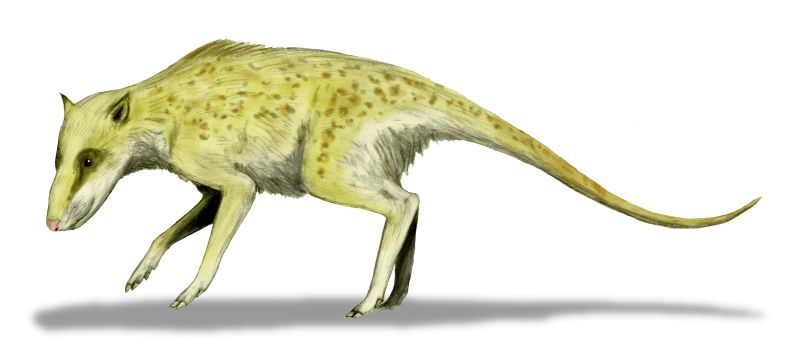 The largest animals that have ever existed on our planet descended from a miniature deer-like creature that walked on four legs in the swamps of ancient India.
Cetaceans include everything from dolphins to whales. They are fairly unique among mammals in that they live permanently in the sea — something they share with only a few other types of live-bearing, warm-blooded species.
But their evolutionary ancestors weren’t always the seafaring types. In fact, just 50 million years ago, ancestors of all cetaceans were small creatures called Indohyus that waded through swamps on four legs.
“Indohyus basically looked like a tiny little deer, a deer the size of a cat,” says Hans Thewissen, a professor at Northeast Ohio Medical University who has studied whale evolution for years and wrote the book The Walking Whales: From Land to Water in Eight Million Years.
How did these creatures go from that to blue whales the length of about two city buses? It took a lot of small changes over tens of millions of years.
More here.
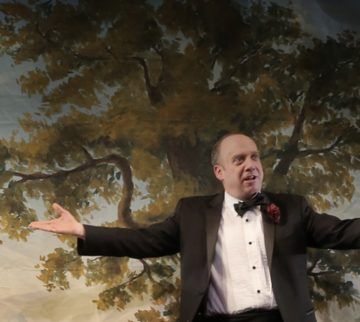 Like other artists, the actor is a kind of shaman. If the audience is lucky, we go with this emotional magician to other worlds and other versions of ourselves. Our enchantment or immersion into another world is not just theoretical, but sensory and emotional. How do actor and audience achieve this shared mysterious transportation? This shared ritual draws upon a kind of sixth sense, the imagination. The actor’s imagination has gone into emotional territories of intense feeling before us. Now they guide us like a psychopomp into those emotional territories by recreating them in front of us.
 I HAVE NEVER BEEN ABLE
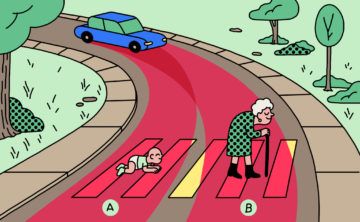 In 2014 researchers at the MIT Media Lab designed an experiment called
 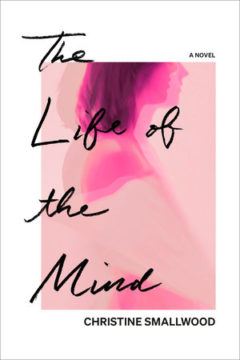 Charlie Tyson reviews Christine Smallwood’s The Life of the Mind in The Chronicle of Higher Education:
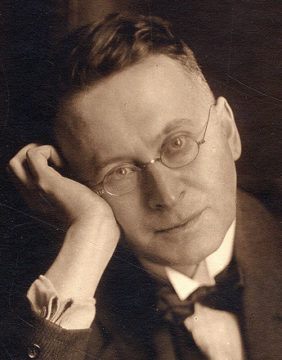 Ari Linden in Public Books:
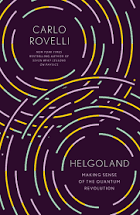 With the light touch of a skilled storyteller, Rovelli reveals that Heisenberg had been wrestling with the inner workings of the quantum atom in which electrons travel around the nucleus only in certain orbits, at certain distances, with certain precise energies before magically “leaping” from one orbit to another. Among the unsolved questions he was grappling with on Helgoland were: why only these orbits? Why only certain orbital leaps? As he tried to overcome the failure of existing formulas to replicate the intensity of the light emitted as an electron leapt between orbits, Heisenberg made an astonishing leap of his own. He decided to focus only on those quantities that are observable – the light an atom emits when an electron jumps. It was a strange idea but one that, as Rovelli points out, made it possible to account for all the recalcitrant facts and to develop a mathematically coherent theory of the atomic world.
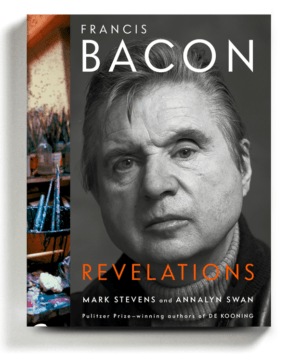 “A deep-end girl,” he called himself, not one “minnying along the sidewalk of life.”
 Maggie O’Farrell found the prospect of writing the central scenes of her
  ROAD WARRIOR In the month since the publication of her memoir, “
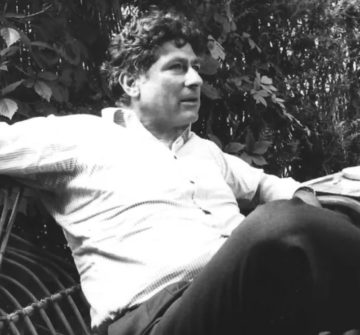 Edward Said was our prince,” the Egyptian novelist Ahdaf Soueif recently said in a conversation reflecting on the Palestinian public intellectual’s life and writings. An incomparable thinker, Said is credited with founding postcolonial studies, penning histories of cultural representation and “the Other,” and, in so doing, upending the Anglo-American academy. His Orientalism, published in 1978, is among the most cited books in modern history, by
 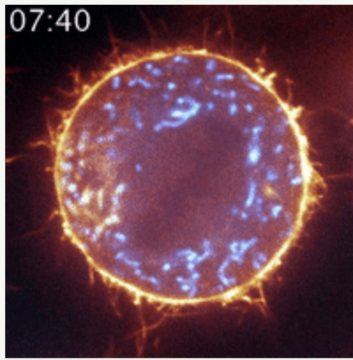 In a landmark study, a team led by researchers at the Perelman School of Medicine at the University of Pennsylvania has discovered—and filmed—the molecular details of how a cell, just before it divides in two, shuffles important internal components called mitochondria to distribute them evenly to its two daughter cells.