
Category: Recommended Reading
Is Climate Change a Foreign Policy Issue?
Seaver Wang in The New Atlantis:
 In the Himalayas and the Middle East, countries feud over water. In the African Sahel, farmers feud over cropland. In the melting Arctic, governments feud over seabed minerals. Climate change has provided bottomless inspiration for aspiring paperback novelists. But while thrillers must thrill and generals must fret, fears about the national security threats that climate change could present remain too vague to act on. The geopolitical reasons for a strong U.S. response to climate change lie not in what Americans might imagine about tomorrow’s world politics but in the global political relationships at stake today.
The imagined scenario goes something like this: The world fails to halt climate change in the coming decades and remains dependent on fossil fuels. A warming climate produces greater resource scarcity, leading to more frequent wars and mass displacement of people. Global crises over energy supplies threaten the U.S. economy and international treaties, and soldiers get pulled into resource wars to protect American interests and allies.
These visions of the future might make good ammunition for Hollywood, but they provide a far too narrow, distant, and pessimistic frame for climate change as a U.S. foreign policy issue.
More here.
The Angel of Death
Why Computers Won’t Make Themselves Smarter
Ted Chiang at The New Yorker:
 Some proponents of an intelligence explosion argue that it’s possible to increase a system’s intelligence without fully understanding how the system works. They imply that intelligent systems, such as the human brain or an A.I. program, have one or more hidden “intelligence knobs,” and that we only need to be smart enough to find the knobs. I’m not sure that we currently have many good candidates for these knobs, so it’s hard to evaluate the reasonableness of this idea. Perhaps the most commonly suggested way to “turn up” artificial intelligence is to increase the speed of the hardware on which a program runs. Some have said that, once we create software that is as intelligent as a human being, running the software on a faster computer will effectively create superhuman intelligence. Would this lead to an intelligence explosion?
more here.
How to Write a Constitution
Linda Colley at Literary Review:
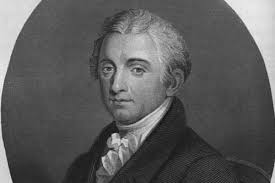 Morris’s writing took many forms. As well as maintaining a diary, he penned poems in multiple languages to the many women he seduced over the years in Europe and the United States (‘I know it to be wrong, but cannot help it’). He translated lines from Greek and Roman classics and produced pamphlets on finance and commerce. He also wrote the American constitution, quite literally. One of the fifty-odd delegates who met in Philadelphia over the summer of 1787 to draft this document, Morris chaired the constitutional convention’s ‘committee of style’ (the fact that a committee of this sort was judged desirable is suggestive). It was Morris, James Madison records, who was chiefly responsible for ‘the finish given to the style and arrangement’ of the American constitution. Most dramatically, it was he who replaced its initial matter-of-fact opening with one of the most influential phrases – and pieces of fiction – ever devised: ‘We the People of the United States…’
more here.
Wednesday Poem
Invitations
To rhetoric: quarry me
for the stones of such tombs as may rise
in your honor.
To molecules: let me be carbon.
To the burners of bones: let me be charcoal.
To drosophila: declaim me
of finger bananas.
To eyes: that they might look askance
in the darkness and find me.
by Campbell McGrath
from Nouns and Verbs
Harper Collins, 2019
Puzzling Through Our Eternal Quest for Wellness
Rachel Syme in The New Yorker:
 About halfway through a recent episode of “POOG,” a new podcast that is essentially one long, unbroken conversation about “wellness” between the comedians and longtime friends Kate Berlant and Jacqueline Novak, the hosts spend several minutes trying—and failing—to devise a grand theory about the existential sorrow of eating ice cream. “The pleasure of eating an ice-cream cone for me,” Novak says, in the blustery tone of a motivational speaker, “involves the attempt to contain, catch up, stay present to the cone. Because the cone will not wait.” Berlant, a seasoned improviser, leaps into the game. “And it’s grief,” she says, with no trace of irony. “And it’s loss, because it’s so beautiful, it’s handed to you, and you’re constantly having to reckon with the fact that it is dying, and yet you’re experiencing it.”
From here, the conversation begins to warp into almost sublime absurdity. Novak suggests that what she ultimately desires is not the cone itself but the emptiness that comes after the cone has been consumed, or what she calls “the dead endlessness of infinite possibility.” She makes several attempts to refine this idea, in a state of increasing agitation. And then she begins to cry. “Are you crying because you are still untangling what this theory is?” Berlant asks. “No,” Novak blubbers. “I’m crying out of the humiliation of being seen as I am.”
At first, listening to this meltdown, I wondered what, precisely, was going on. Novak and Berlant are brilliant comics, denizens of the alternative-standup scene that bridges the gap between punch lines and performance art. They had to be up to something. And then, after several incantatory hours of listening to them talk, it became clear: “poog” is a show about wellness which is, in a dazzling and purposefully deranged way, utterly unwell. Of course Novak can’t process her desire to have everything and nothing at once; like so much of the language of being “healthy” in a fractured world, her yearning can never compute. “poog” is not just “Goop” (as in Gwyneth Paltrow’s life-style empire) spelled backward—it’s an attempt to push the wellness industrial complex fully through the looking glass. Each episode begins the same way. “This is our hobby,” Berlant says. “This is our hell,” Novak adds. “This is our naked desire for free products,” Berlant concludes.
More here.
Your Immune System Evolves To Fight Coronavirus Variants
Monique Brouillette in Scientific American:
 A lot of worry has been triggered by discoveries that variants of the pandemic-causing coronavirus can be more infectious than the original. But now scientists are starting to find some signs of hope on the human side of this microbe-host interaction. By studying the blood of COVID survivors and people who have been vaccinated, immunologists are learning that some of our immune system cells—which remember past infections and react to them—might have their own abilities to change, countering mutations in the virus. What this means, scientists think, is that the immune system might have evolved its own way of dealing with variants.
“Essentially, the immune system is trying to get ahead of the virus,” says Michel Nussenzweig, an immunologist at the Rockefeller University, who conducted some recent studies that tracked this phenomenon. The emerging idea is that the body maintains reserve armies of antibody-producing cells in addition to the original cells that responded to the initial invasion by the SARS-CoV-2 virus. Over time some reserve cells mutate and produce antibodies that are better able to recognize new viral versions. “It’s really elegant mechanism that that we’ve evolved, basically, to be able to handle things like variants,” says Marion Pepper, an immunologist at the University of Washington, who was not involved in Nussenzweig’s research. Whether there are enough of these cells, and their antibodies, to confer protection against a shape-shifting SARS-CoV-2 is still being figured out.
More here.
Tuesday, March 30, 2021
Is credentialism “the last acceptable prejudice”?
Jonathan B. Imber in The Hedgehog Review:
 As we learn in The Tyranny of Merit, Michael Sandel’s view of meritocracy rests in part on the historical claim that it is grounded in the Calvinist understanding of predestination. “Combined with the idea that the elect must prove their election through work in a calling,” he writes, such a doctrine “leads to the notion that worldly success is a good indication of who is destined for salvation.” In this he follows Max Weber in The Protestant Ethic and the Spirit of Capitalism, but Sandel extends this thesis to the present moment, citing the evangelical idea of the “prosperity gospel” and the secular rationalizations of such well-known achievers as Lloyd Blankfein (CEO of Goldman Sachs) and John Mackey (founder of Whole Foods), who represent the understanding of health and wealth “as matters of praise and blame…a meritocratic way of looking at life.”
Sandel, a professor of political philosophy at Harvard University, believes that two accounts of what constitutes a just society have been made in market terms. He calls one “free-market liberalism” (or “neoliberalism”) and the other “welfare state liberalism” (or “egalitarian liberalism”). Neither has adequately explained or proposed ways to restrain inequality. The same is especially true of libertarian philosophers, or “luck egalitarians,” who justify inequality by distinguishing between those who are responsible for their misfortunes and those who are victims of bad luck. Meanwhile, the progressive investment in education has had the unintended consequence of widening inequality: “The weaponization of college credentials,” Sandel notes, “shows how merit can become a kind of tyranny.” One damaging effect of this is the “eroding of social esteem accorded those who had not gone to college,” which is particularly bad when you remember that only about one in three American adults graduates from a four-year college.
More here.
Sean Carroll’s Mindscape Podcast: Dean Buonomano on Time, Reality, and the Brain
Sean Carroll in Preposterous Universe:
 “Time” and “the brain” are two of those things that are somewhat mysterious, but it would be hard for us to live without. So just imagine how much fun it is to bring them together. Dean Buonomano is one of the leading neuroscientists studying how our brains perceive time, which is part of the bigger issue of how we construct models of the physical world around us. We talk about how the brain tells time very differently than the clocks that we’re used to, using different neuronal mechanisms for different timescales. This brings us to a very interesting conversation about the nature of time itself — Dean is a presentist, who believes that only the current moment qualifies as “real,” but we don’t hold that against him.
More here.
Isaac Newton’s Discovery That Transformed the Calculation of Pi
The bank effect and the big boat blocking the Suez
Brendan Greeley in the Financial Times:
 The hardest thing about teaching someone how to drive a boat is that it’s not at all like driving a car. To steer a car, you turn the wheel until your nose is pointing where you want to go, then you straighten out and go there. This works because the car is attached to the road. It’s when the car itself is no longer attached to the road that things get weird. When you turn too hard, for example, the rubber in your tyres loses purchase on the street, and you are “in drift”. The normal rules no longer apply.
When you drive a boat, you are always in drift. You are attached to nothing. Stuff happens in the water beneath you that does not make any intuitive sense. Sometimes your stern (your tail) moves faster than your bow (your nose), and in a different direction. Sometimes both stern and bow are moving in the same direction at the same speed, but it’s not the direction the bow is pointed. On a boat, you don’t always go where you’re pointed.
On Wednesday, the Golden-Class container ship Ever Given made an unplanned berth in the sand on both sides of the Suez Canal, stopping trade between Europe and Asia.
More here.
Tuesday Poem
Man and Boy
I
‘Catch the old one first’
(My father’s joke was also old, and heavy
And predictable). ‘then the young ones
Will all follow, and Bob’s your uncle.’
On slow bright river evenings, the sweet time
Made him afraid we’d take too much for granted
And so our spirits must be lightly checked.
Blessed be down-to-earth! Blessed be highs!
Blessed be the attachment of dumb love
In that broad-backed, low-set man
Who feared debt all his life, but now and then
Could make a splash like the salmon he said he was
‘A big as a wee pork pig by the sound of it’.
II
In earshot of the pool where the salmon jumped
Back through its own unheard concentric soundwaves
A mower leans forever on his scythe.
He has mown himself to the center of the field
And stands in a final perfect ring
of sunlit stubble.
‘Go and tell your father,’ the mower says
(He said it to my father who told me),
‘I have it mowed as clean as a new sixpence.’
My father is a barefoot boy with news,
Running at eye-level with weeds and stooks
On the afternoon of his own father’s death.
The open, black half of the half-door waits.
I feel much heat and hurry in the air.
I feel his legs and quick heels far away
And strange as my own—when he will piggyback me
At a great height, light-headed and thin-boned,
Like a witless elder rescued from the fire.
by Seamus Heaney
from Seeing Things
Faber & Faber, 1991
A New Light on DNA Storage
Steve Nadis in Harvard Magazine:
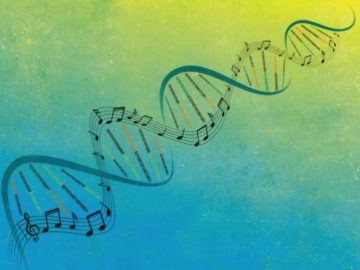 DIGITAL-DATA PRODUCTION is expanding so fast that, within two decades, storing it in flash-drive memory chips could consume 10 to 100 times the anticipated supply of microchip-grade silicon. With new ways of storing information desperately needed, Winthrop professor of genetics George Church is turning to one of the oldest means of doing so: the DNA molecule, which has been replicating and mutating on Earth for three and a half billion years. By 2025, accumulated global data is expected to reach 175 billion trillion bytes—all of which could, in principle, be contained in less than 180 pounds of DNA, housed within a 15-gallon drum. DNA stores information in a “modern” way, explains Church, who heads the synthetic biology group at Harvard’s Wyss Institute for Biologically Inspired Engineering (see “Engineering Life,” January-February 2020, page 37, for more about synthetic biology). Digital information storage, he explains, “is based on just two numbers, 0s and 1s, and DNA is analogous.” Its code has just four letters: A (adenine), T (thymine), C (cytosine) and G (guanine)—the bases or nucleotides comprising the rungs of DNA’s double helix-shaped ladder, which can be arranged in whatever order scientists choose.
In an October 2020 paper in Nature Communications, Church and colleagues described an advance that brings DNA information storage closer to commercial feasibility. They showed for the first time that DNA could be synthesized, and information thereby encoded, in an enzyme-facilitated process controlled by light. The team also demonstrated another first: the use of enzymes to achieve parallel synthesis of multiple DNA strands. They pulled two measures of music from a Super Mario Brothers video game, digitized it, converted it to a DNA code, and synthesized it. The DNA was then sequenced to decipher its code, redigitized, and converted back to a musical format. The point was to test a new approach to synthesis involving both enzymes and light. The first of these steps was demonstrated in 2019 when Church’s group showed that terminal deoxynucleotidyl transferase (TdT)—an enzyme found in immune cells—could be used for DNA synthesis and information storage. TdT works well, says Wyss staff scientist Daniel Wiegand, “because its only job is to find the end of a DNA chain and add a base to it.”
More here.
The quest to tell science from pseudoscience
Michael Gordin in Boston Review:
 Where do you place the boundary between “science” and “pseudoscience”? The question is more than academic. The answers we give have consequences—in part because, as health policy scholar Timothy Caulfield wrote in Nature last April during the first wave of COVID-19, “tolerating pseudoscience can cause real harm.” We want to know which doctrines count as bona fide science (with all the resulting prestige that carries) and which are imposters.
This is the “demarcation problem,” as the Austrian-British philosopher Karl Popper famously called it. The solution is not at all obvious. You cannot just rely on those parts of science that are correct, since science is a work in progress. Much of what scientists claim is provisional, after all, and often turns out to be wrong. That does not mean those who were wrong were engaged in “pseudoscience,” or even that they were doing “bad science”—this is just how science operates. What makes a theory scientific is something other than the fact that it is right.
Of the answers that have been proposed, Popper’s own criterion—falsifiability—remains the most commonly invoked, despite serious criticism from both philosophers and scientists. These attacks fatally weakened Popper’s proposal, yet its persistence over a century of debates helps to illustrate the challenge of demarcation—a problem no less central today than it was when Popper broached it.
More here.
Moral Conflict and Kant (Bernard Williams – 1972)
https://www.youtube.com/watch?v=xzN_gNPSkR0
Why Philo Matters
Gregory E. Sterling at Marginalia Review:
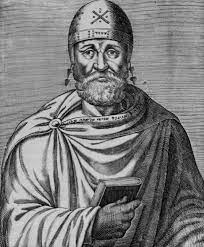 What should I say about Philo whom critics call…the ‘Jewish Plato’?” So said Saint Jerome, who spent the later years of his life as an ascetic in the cave traditionally associated with the birth of Jesus. He went on to defend Philo’s integration of philosophy and biblical interpretation and was the first to report the widely circulated bon mot among early Christian authors: “either Plato philonizes or Philo platonizes,” recognizing the degree to which Philo had incorporated Hellenistic philosophy–especially Platonism– into Judaism.
It was the knowledge of God that most interested Philo. While he did not restrict this to Platonism, he was particularly attracted to it, especially in the form in which the tradition developed in Alexandria in the first century BCE.
more here.
Gary Panter’s Punk Everyman
Nicole Rudick at the Paris Review:
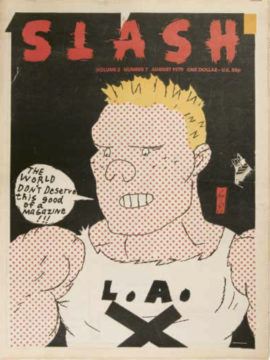 According to Panter, he didn’t set out to create Jimbo, “he just showed up.” Jimbo made his first public appearance in the punk magazine Slash in 1977 and his cover debut two years later. His pug-nosed mug moved to Françoise Mouly and Art Spiegelman’s radical art-comics anthology Raw in 1981; some of Jimbo’s stories there made up the first Raw One-Shot, a spin-off of the periodical, the following year. He joined an ensemble cast in Panter’s Cola Madnes, written in 1983 but not published until 2000, and landed his first full-length book, Jimbo: Adventures in Paradise, in 1988, published by Raw and Pantheon. Jimbo has since starred in four issues of a self-titled comic published by Zongo in the nineties and stood in for Dante in two illuminated-manuscripts-cum-comic-books: Jimbo in Purgatory (2004) and Jimbo’s Inferno (2006). He is, as you read these words, being sent out into fresh adventures by Panter’s fervid imagination and tireless pen.
more here.
Sunday, March 28, 2021
Periodicity, “Postmodernism”, and the Excesses of the New Realism
Justin E. H. Smith in his Substack Newsletter:
 Shortly after September 11, 2001, Bruno Latour for example began to suspect the intellectual fashion to which he himself had contributed so much was at least in part responsible for creating a global environment in which “we each have our own truths”. This realization came for him when, returning to his native village in Bourgogne and speaking with the common people who work the Latour family vineyards, he learned that, for a good number of them, “their own truths” told them it was “the Jews” who brought down the Twin Towers. Other science-studies luminaries too, who had previously delighted in stoking the idea that science is but a discourse alongside others, came to realize that they shared at least some responsibility for a wide array of suspicious attempts to join the narrativity train, to spin the past according to taste, such as the Creation Science Museum of Petersburg, Kentucky, or the crypto-creationist Discovery Institute, both of which were, if run by reactionaries, nevertheless effective illustrations of the usefulness of postmodernism.
The reckoning with what “theory” had wrought was broad and various. Even the Catholic postmodernist philosopher Jean-Luc Marion felt compelled, in the preface to a later edition of his 1982 apophatic summa, God Without Being, to reply to critics who worried that he was tiptoeing right up to the brink of atheism. Don’t worry, he reassured them, notwithstanding the title of this book, God is.
More here.
Moshe Behar on the International Holocaust Remembrance Alliance’s definition of Antisemitism
Moshe Behar at the University of Notre Dame’s website Contending Modernities:
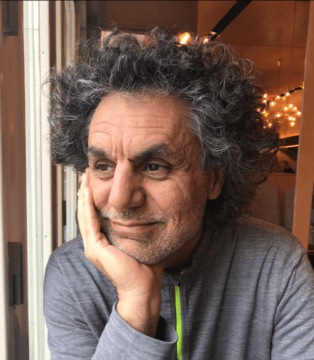 I am a non-white Mizrahi Jewish academic who has been studying Israel/Palestine and the history of Jews in the Middle East for two decades. My family hails from Ottoman Palestine, Egypt, Tunisia, and the Greek islands of Zakynthos and Corfu. All too many of us were murdered by Nazi Génocidaires (and rest assured that we will not forget or forgive). Precisely because of this scholarly and biographic background I was embarrassed to read the letter sent by England’s Secretary of State for Education, Gavin Williamson, to all university vice chancellors. Utilizing an authoritarian tone devoid of understatement, Williamson demanded that all universities in England adopt formally what is called “the working definition of antisemitism” drafted by the International Holocaust Remembrance Alliance (IHRA).
Born in 1976, Williamson has been a Tory politician for 25 years. He and his party have not been noteworthy for their passionate activism against racism, antisemitism included. Nor did Williamson find it problematic to serve under Boris Johnson, author of Seventy-Two Virgins (HarperCollins, 2004), a novel that disappointingly recycled antisemitic tropes and stereotypical portrayals of Jews and other British minority ethnic groups.
The letter Williamson authored is littered with antisemitic tropes.
More here.