
Subway
I knew he was not in the house, my Autistic son
whose presence is a heat, a warm breath blown
backwards through my mouth into me. I could feel
my breath in the empty air and disappearing and
I couldn’t feel him.
At the stops I am lost
the doors clanging open
I feel larger than I am
and wild and their eyes
take me in and I want
to be in my room where
the subway is a map
on my wall I see even
in my sleep. But when
the doors close I feel
the movement and
release. I am small.
I am part of the engine.
I am part of the man’s
eye looking into the
dark tunnel. I am
just a brightness.
I am made of sound
and blur.
After a week the police worried about finding him
a man in every train and still it was like he had
disappeared, and I knew he could. He could drift,
forget to be human and I would have to call him
back from indifferent eyes.
When I saw him again he was playing a video game
and I hugged him and he didn’t look at me or the men
who had saved his life. He stared at the screen like
it was a future. And I knew we were not enough.
We cannot carry him fast through the darkness, fast
so his mind unravels, fast so he forgets he is grounded
in the house that is green and fifth from the corner,
third street down from the Avenue, 26 miles from
the river, thousands of miles from the true sky,
the sky that lifts us up, the sky that makes us birds.
by Joseph Humphrey
from The Rutherford Red Wheelbarrow Poets, 2010
 A few years ago, when my daughter was a freshman at Columbia University, one of only a few from Arkansas, I had the audacity to propose to then-president Lee Bollinger that the university add a hands-on component to its core curriculum. The core curriculum is intended to build a common framework of understanding as a baseline for academic life and what proceeds from it. Even though my academic credentials might not have caught Bollinger’s attention, I believed that I had something to offer as a craftsman and woodworker, and a father.
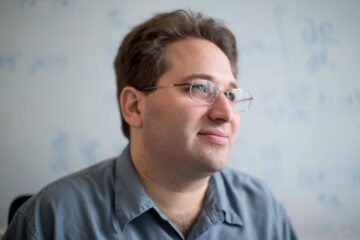 Dr. Scott Aaronson is the David J. Bruton Jr. Centennial Professor of Computer Science at UT Austin. He is known for his work as a computer scientist and research into complexity theory and quantum computing, and more recently for his work at OpenAI, the creators of ChatGPT, on AI alignment. I sat down with Dr. Aaronson to talk about the nature of quantum computing, why we should care, and his thoughts on the recent developments in artificial intelligence.
 Bérubé’s new book, The Ex-Human, is about science fiction. Bérubé offers thoughtful close readings of a number of classic science fiction texts: Ursula Le Guin’s The Left Hand of Darkness, Cixin Liu’s The Three-Body Problem, Margaret Atwood’s Oryx and Crake, Philip K. Dick’s Do Androids Dream of Electric Sleep? (with some reference to its film adaptation as Blade Runner), Arthur C. Clarke’s 2001 (with some reference to its better-known film adaptation by Stanley Kubrick), and Octavia Butler’s Parable series and Lilith’s Brood series.
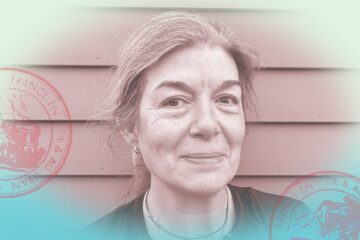 “I’m a writer; I tell stories,” reads the first line of Claire Messud’s
  Older people who aren’t picky eaters appear to have better brain health than those who prefer more limited diets, according to a large study of British adults. The
 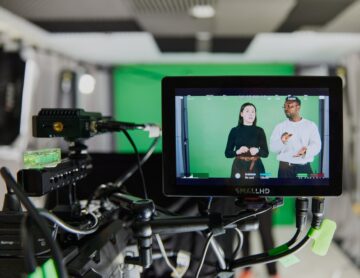 I’m stressed and running late, because what do you wear for the rest of eternity?
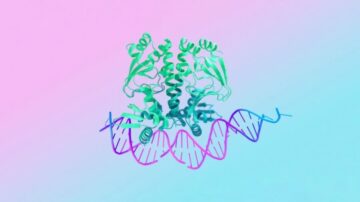 Proteins are biological workhorses. They build our bodies and orchestrate the molecular processes in cells that keep them healthy. They also present a wealth of targets for new medications. From everyday pain relievers to sophisticated cancer immunotherapies, most current drugs interact with a protein. Deciphering protein architectures could lead to new treatments. That was the promise of AlphaFold 2, an AI model from Google DeepMind that predicted how proteins gain their distinctive shapes based on the sequences of their constituent molecules alone. Released in 2020, the tool was a breakthrough half a decade in the making. But proteins don’t work alone. They inhabit an entire cellular universe and often collaborate with other molecular inhabitants like, for example, DNA, the body’s genetic blueprint.
 As radical as they might seem, calls for limits on wealth are as old as civilization itself. The Hebrew Bible and Torah recognized years during which debts should be cancelled, slaves set free and property redistributed from rich to poor. In classical Greece, Aristotle praised cities that kept wealth inequality in check to enhance political stability. And in 1942, then-US president Franklin D. Roosevelt argued that annual incomes should be capped at the current equivalent of US$480,000.
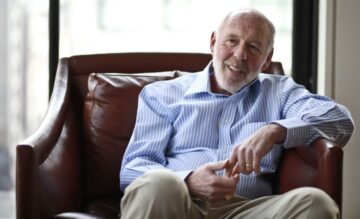 Mr. Simons equipped his colleagues with advanced computers to process torrents of data filtered through mathematical models, and turned the four investment funds in his new firm,
 Editor-in-chief Sarahanne Field describes herself and her team at the Journal of Trial & Error as wanting to highlight the “ugly side of science — the parts of the process that have gone wrong”.
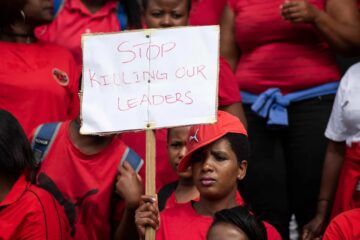 Richard Pithouse: Mandela was released from prison on February 11, 1990, suddenly opening up the field of political possibility after a long and exhausting stalemate between the progressive forces, which were largely organized in two groups: the United Democratic Front (UDF) and the trade unions, and the apartheid state. What did Mandela’s release mean to you?
 In the years following American independence, many questions would be asked, in different spheres, of what it meant to be a citizen, and
 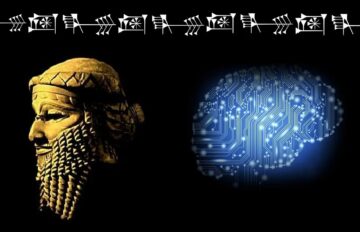 Longevity and eternal youth have frequently been sought after down through the ages, and efforts to keep from dying and fight off age have a long and interesting history.