
Category: Recommended Reading
‘He likes scaring people’: how Modi’s right-hand man, Amit Shah, runs India
Atul Dev in The Guardian:
 Today, Amit Shah isn’t home minister for Gujarat, but all of India. From the heart of power in Delhi, he is in charge of domestic policy, commands the capital city’s police force, and oversees the Indian state’s intelligence apparatus. He is, simply put, the second-most powerful man in the country. With the BJP poised to win the current general election, he is all but certain to remain so for at least the next five years. For Modi, he is what Dick Cheney and Karl Rove were for George W Bush – the muscle as well as the brain – rolled into one. Over the past decade, he has been the key architect in remaking India according to the BJP’s Hindu nationalist ideology.
A defining feature of life in India today is the suffocating atmosphere of menace and threat to critics of the government. Shah is the face and embodiment of this fear, which lurks everywhere, from the newsrooms to the courtrooms, and which inspires a sense of alarm that is bigger than the sum of the facts and anecdotes that can be amassed to illustrate it.
More here.
Eastern Traditions: Why Are Suffering And Ritual Vital?
Translating is like X-raying a book. You get a deep tissue read
Hephzibah Anderson in The Guardian:
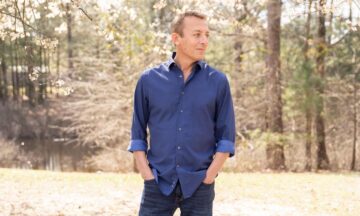 Sam Taylor, 53, was living in rural France with four well-received novels to his name when he realised that he wasn’t going to be able to support his family through writing alone. After being turned down for bar work in nearby Lourdes, he decided to try literary translating, starting with Laurent Binet’s Goncourt-winning novel HHhH. So began an award-winning second career that has seen him work with high-profile authors including Leila Slimani and David Diop. Now based in Texas, he has returned to novel-writing with The Two Loves of Sophie Strom. Centring on a provocative idea, it opens in 1930s Vienna as antisemitic neighbours torch 13-year-old Max Spiegelman’s home. In a parallel universe, the fire leaves Max an orphan, and he’s adopted by an Aryan family who rename him Hans and encourage him to join the Hitler-Jugend. At night, Max and Hans, on opposing sides of history, dream of each other’s lives.
Where did the idea come from?
Weirdly enough, the spark came from a line in my first novel [The Republic of Trees, 2005], about the night self and the day self, the waking self and the sleeping self. It’s sliding doors, except the twist is Max and Hans are dreaming about each other, so they’re aware of each other’s lives.
More here.
What Is Human Energy?
Richard Cohen at Lapham’s Quarterly:
 William Ewart Gladstone was Britain’s prime minister four times between 1868 and 1894, a member of Parliament for more than sixty years, a brilliant and passionate orator, an accomplished writer, and an indefatigable social reformer. Lord Kilbracken, his private secretary, estimated that if a figure of 100 could represent the energy of an ordinary man and 200 that of an exceptional one, Gladstone’s energy would be represented by a figure of at least 1,000.
That’s some multiple. But then I vividly remember the day a Benedictine monk walked into my high school classroom and told us, “Some people are more alive than others. Even permanently so.” I find that true to my own experience, even if it is hard to state clearly in what form such vitality exists.
There are over a dozen common forms of energy, as usually itemized, from chemical, gravitational, and electromagnetic to nuclear, thermal, and wind. It is a formidable register—but human energy rarely appears in such listings.
more here.
Lab-grown sperm and eggs: ‘epigenetic’ reset in human cells paves the way
Heidi Ledford in Nature:
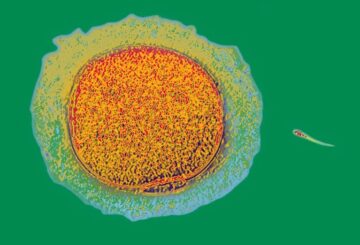 The day when human sperm and eggs can be grown in the laboratory has inched a step closer, with the discovery of a way to recreate a crucial developmental step in a dish1. The advance, described 20 May in Nature, addresses a major hurdle: how to ensure that the chemical tags on the DNA and associated proteins in artificially produced sperm and eggs are placed properly. These tags are part of a cell’s ‘epigenome’ and can influence whether genes are turned on or off. The epigenome changes over a person’s lifetime; during the development of the cells that will eventually give rise to sperm or eggs, these marks must be wiped clean and then reset to their original state.
“Epigenetic reprogramming is key to making the next generation,” says Mitinori Saitou, a stem-cell biologist at Kyoto University in Japan, and a co-author of the paper. He and his team worked out how to activate this reprogramming — something that had been one of the biggest challenges in generating human sperm and eggs in the laboratory, he says. But Saitou is quick to note that there are further steps left to conquer, and that the epigenetic reprogramming his lab has achieved is not perfect. “There is still much work to be done and considerable time required to address these challenges,” agrees Fan Guo, a reproductive epigeneticist at the Chinese Academy of Sciences Institute of Zoology in Beijing.
More here.
Vermeer’s World And Ours
Matthew Longo at The Point:

In Dutch Golden Age art, the normal is odd, and the extraordinary is ordinary. The saying in Moser’s title—“upside-down world”—derives from a Dutch expression, “de omgekeerde wereld or de wereld op zijn kop [the world stood on its head],” used to describe “when the normal order of things is reversed.” Carel Fabritius’s famous painting, The Goldfinch (1654), is a good example. It is a simple portrait of a bird chained to its feeding box. “Nothing about it should make it unforgettable—but it is unforgettable,” Moser writes.
What makes these paintings so recognizable is that their ordinary is our ordinary too. No one better exemplifies this than Vermeer, whose work foregrounds individual subjectivity, especially in its modern, secular form. This comes out clearly in his use of light—crisp, outrageous even, often streaming in from an open window—which casts his subjects into relief and lifts them from their settings. In The Milkmaid (ca. 1657-58), a woman, front-lit, pours milk from a jug; the backdrop behind her is bare. Originally a rack had been affixed to the wall, which Vermeer later painted over. He preferred the contrast of his subject’s body against the plain wall, bringing her out of the clutter and into the light.
more here.
Tuesday, May 21, 2024
How Victorian artist Louis Wain ushered in the age of the cat
Sam Leith in The Guardian:
 ‘Catland”, as Kathryn Hughes describes it, is two things. One is the imaginary universe of Louis Wain’s illustrations – in which cats walk on their hind legs and wear clothes, and humans do not feature. In the late Victorian and Edwardian eras, these kitschy pictures were everywhere and he was world famous. He’s all but forgotten now, though his influence lives on. And one of the ways it does, Hughes argues, is in the other “Catland”, the one we all live in. Wain’s career accompanied a transformation in attitudes between 1870 and 1939 in which cats went from being necessary evils or outright pests to fixtures of home and hearth.
For much of human history, cats were nameless creatures who lived on scraps, caught mice and unsightly diseases, yowled in streets, were familiars of witches and had fireworks stuffed up their bums by cruel children. Now, flesh-and-blood cats are beloved family pets, selectively bred, and accustomed to lives of expensive idleness, while fictional cats are cute rather than vicious, cuddly rather than satanic. The small part of the internet that isn’t pornography, it’s sometimes observed, is mostly cat pictures.
In 50 chapters, Hughes tours these two Catlands using Wain’s life story – “which runs, or rather zigzags, through this book” – to stitch it all together.
More here.
Binge drinking is a growing public health crisis − a neurobiologist explains how research on alcohol use disorder has shifted
Nikki Crowley in The Conversation:
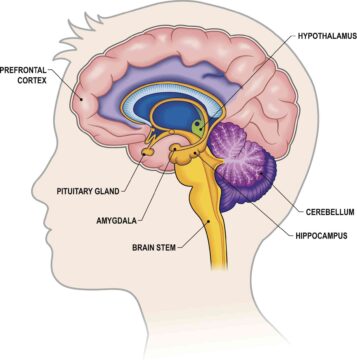 I am a neurobiologist focused on understanding the chemicals and brain regions that underlie addiction to alcohol. I study how neuropeptides – unique signaling molecules in the prefrontal cortex, one of the key brain regions in decision-making, risk-taking and reward – are altered by repeated exposure to binge alcohol consumption in animal models.
My lab focuses on understanding how things like alcohol alter these brain systems before diagnosable addiction, so that we can better inform efforts toward both prevention and treatment.
More here.
Presidential debates have outlived their usefulness
John McWhorter in Persuasion:
 Donald Trump is incapable of meaningful participation in such an event. Only in the sense that “match” can apply to both chess and mud wrestling could the word “debate” apply both to the Kennedy-Nixon event and to Trump’s on-stage behavior. Trump cannot help but distort a debate into a cage-fight. He will, again, shamelessly lie and endlessly interrupt.
This is especially problematic because Trump’s behavior during such events can be misleadingly seductive. Being highly focused on the details of political issues is by no means a human universal, and probably should not be. But this means that what can determine elections, especially with our modern media, is charisma. To many, Trump’s unplugged alpha splatter lends an enticing sense of vigor, strength, and even leadership quality.
More here.
Jerry Seinfeld delivers Duke’s 2024 Commencement Address
The Anxious Love Songs of Billie Eilish
Amanda Petrusich at The New Yorker:
 Earlier this year, the singer and songwriter Billie Eilish, who is twenty-two, became the youngest two-time Oscar winner in history, collecting the Best Original Song award for “What Was I Made For?,” a delicate existential ballad that she co-wrote for the film “Barbie.” (She also won in 2022, for “No Time to Die,” a moody and portentous Bond theme.) Incidentally, Eilish is also the youngest person ever to have a clean sweep of all four of the main Grammy categories (Best New Artist, Record of the Year, Song of the Year, and Album of the Year), which she achieved in 2020, for her début LP, “When We All Fall Asleep, Where Do We Go?” At that year’s ceremony, moments before Album of the Year was announced, Eilish can be seen mouthing, “Please don’t be me”; onstage, standing alongside her brother Finneas O’Connell, who is also her co-writer and producer, she seemed bewildered, if not mortified. “We wrote an album about depression, and suicidal thoughts, and climate change,” O’Connell told the crowd. “We stand up here confused and grateful.” It’s both heartening and slightly mystifying that Eilish, who writes sombre, idiosyncratic, goth-tinged electro-pop about her loneliness and boredom, has become such a lodestone for industry accolades.
more here.
Billie Eilish – THE GREATEST
Hot Pants At The Sodomy Disco
Pedro Lemebel at The Paris Review:
 On the edge of the Alameda, practically bumping up against the old Church of Saint Francis, the gay club flashes a fuchsia neon sign that sparks the sinful festivities. An invitation to go down the steps and enter the colorful furnace of music-fever sweating on the dance floor. The fairy parade descends the uneven staircase like goddesses of a Mapuche Olympus. High and mighty, their stride gliding right over the threadbare carpet. Magnificent and exacting as they adjust the safety pins in their freshly ironed pants. Practically queens, if not for the loose red stitches of a quickie fix. Practically stars, except for the fake jeans logo tattooed on one of the asscheeks.
Some are practically teenagers, in bright sportswear and Adidas sneakers, wrapped in springtime’s pastel colors, healthy glow on loan from a blush compact. Practically girls, if not for the creased faces and the frightful bags under their eyes. Giddy from rushing to get there, they show up tittering each night at the dance cathedral inside the basement of an old Santiago cinema, where you can still see the black-and-gold Etruscan friezes and Hellenic columns, where the stench of sweaty seat cushions hits hard once you finally get past the burly bouncer at the door.
more here.
Francis Ford Coppola’s Megabudget New Movie Is a Journey Into the Heart of Madness
Sam Adams in Slate:
 Francis Ford Coppola’s Megalopolis took 41 years to make. It might take as long to understand. Coppola’s magnum opus, which premiered in competition at the Cannes Film Festival last night, is a movie of extraordinary highs and baffling lows, alternately dazzling and confounding. Sometimes, in the same moment, it’s both. When I asked colleagues who’d seen it—at a remote early-morning screening, added at the last minute to accommodate Coppola’s preference for IMAX—they looked at me like the mute humans in the Planet of the Apes movies, as if their powers of speech had abruptly and unexpectedly deserted them. No one wants to trash an elderly legend’s passion project, one that, after decades of trying and failing to get it made, he finally financed with some $120 million of his own money—not to mention one that is dedicated to his late wife, Eleanor, who died last month. But it’s also a film that defies and even actively resists description, one that sounds even loopier in summary than its 138 minutes feel. You have to see it to believe it. And even then, you may not.
More here.
Using Genetic Cartography to Map Cell Lineage
Laura Tran in The Scientist:
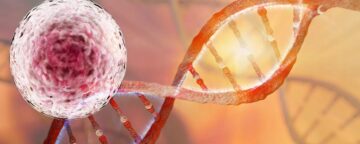 Hematopoietic stem cells (HSC) are cellular factories that churn out blood and immune cells, but their production output varies significantly. This variation influences the success of bone marrow transplant therapies, which are heavily dependent on the quantity and type of blood cells in donor HSC transplantation.1 Although gene expression influences cell lineage, the regulatory mechanism remains unclear. “This is an example where therapeutic usage precedes our understanding of the fundamental mechanism. [HSC] are clinically proved to be useful, so it really drives further research to better understand their regulation,” remarked Rong Lu, a stem cell biologist at the University of Southern California.
When investigating HSC regulation to improve immune regeneration, Lu and her team identified associations between gene activity that modulate the variety and amount of immune cell production. Their findings, published in Science Advances, provide insights into how distinct genetic features can improve optimization of donor cell pools for therapies.
More here.
Tuesday Poem
Necessary Conjunction
I have turned to look at him.
We are sitting together,
having breakfast,
in the code of congruence
known only to man and woman married many years.
And all at once,
I see his hand.
A loose fist of fingers,
lying very still,
by itself.
Inert beside his empty coffee cup.
At this same instant,
I see that this is what my loving him
boils down to:
not great things clamoring for remembrance –
the moments of infinity we brought to loving;
or the calm, substantial truth of
bodies lying side by side in sleep.
And not the everything of two lives
being one, for half a lifetime.
Just his hand.
by Peggy Freydberg
from Poems from the Pond
Hybrid Nation, 2015
Monday, May 20, 2024
Monday Video
Song “Why We Sing” by Greg Gilpin, Unibz Voices Choir directed by Johann van der Sandt. In the Pfarrkirche St. Michael in Brixen, South Tyrol, on May 17, 2024.
Sunday, May 19, 2024
Sam Alito’s flag flew upside down. Are his ethics?
Ruth Marcus in The Washington Post:
 The upside-down U.S. flag flying at the home of Supreme Court Justice Samuel A. Alito Jr. — only days after the Trump-inspired insurrection on Jan. 6, 2021 — shouldn’t come as much of a surprise. After all, Alito has been doing the moral equivalent for years —and at the office, which is way worse. In oral arguments, in speeches and in opinions themselves, he is the Fox News-iest of justices, most likely to pick up on conservative media talking points and most predictably partisan when it comes to his votes.
Of course, the flag flying was grossly improper, an apparent endorsement of the “Stop the Steal” movement. Alito himself seemed to recognize this as he blamed his wife for the oh-say-can-you-see moment, asserting it flew just briefly after a neighborhood dispute escalated into a profane personal attack on Martha-Ann Alito. She should apologize; whatever the provocation, justices and their wives should behave in a way that is above reproach. This wasn’t. And the justice himself should provide more information about how long the flag was up, how quickly he intervened, and why. That would help the public assess whether Alito should heed calls from Democrats such as Sen. Dick Durbin (Ill.) and House Minority Leader Hakeem Jeffries (N.Y.) to recuse himself from the election-related cases now pending, one involving former president Donald Trump’s assertion that he has absolute presidential immunity from criminal prosecution for his official acts, the other concerning the scope of an obstruction statute under which Trump has been charged.
I’m not there — not yet, although The Post’s reporting on neighbors who said the flag was upside down for two to five days gives me pause.
More here.
This Plastic Is Embedded With Bacterial Spores That Break It Down After It’s Thrown Out
Edd Gent in Singularity Hub:
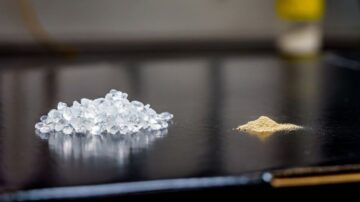 Getting microbes to eat plastic is a frequently touted solution to our growing waste problem, but making the approach practical is tricky. A new technique that impregnates plastic with the spores of plastic-eating bacteria could make the idea a reality. The impact of plastic waste on the environment and our health has gained increasing attention in recent years. The latest round of UN talks aiming for a global treaty to end plastic pollution just concluded in Ottawa, Canada earlier this week, though considerable disagreements remain.
Recycling will inevitably be a crucial ingredient in any plan to deal with the problem. But a 2022 report from the Organization for Economic Cooperation and Development found only 9 percent of plastic waste ever gets recycled. That’s partly due to the fact that existing recycling approaches are energy intensive and time consuming. This has spurred a search for new approaches, and one of the most promising is the use of bacteria to break down plastics, either by rendering them harmless or using them to produce building blocks that can be repurposed into other valuable materials and chemicals. The main problem with the approach is making sure plastic waste ends up in the same place as these plastic-loving bacteria.
Now, researchers have come up with an ingenious solution: embed microbes in plastic during the manufacturing process. Not only did the approach result in 93 percent of the plastic biodegrading within five months, but it even increased the strength and stretchability of the material. “What’s remarkable is that our material breaks down even without the presence of additional microbes,” project co-leader Jon Pokorski from the University of California San Diego said in a press release. “Chances are, most of these plastics will likely not end up in microbially rich composting facilities. So this ability to self-degrade in a microbe-free environment makes our technology more versatile.”
More here.