
Mark Jarman at the Hudson Review:
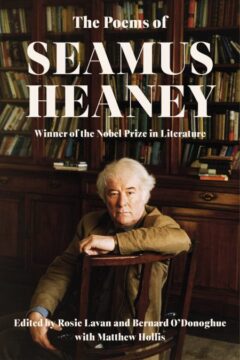 By the end of Heaney’s life, all literary laurels became destined for him and created a lore of fame, from the rhyming epithet “Famous Seamus,” said to have been coined by the English poet James Fenton, and anecdotes of his having to apologize once again to another worthy and deserving Irish poet when the award came instead and once again to Famous Seamus. I have heard the Irish poet Ciaran Carson speak of this dilemma. And I have heard Heaney’s friend Michael Longley who tells of an exchange with an English Don. “How do you feel about the Heaney phenomenon?” said Don asked Longley. To which Longley replied, “Envious.”
Heaney the poet is more the heir to Robert Lowell than to W. B. Yeats, though Lowell himself might be said to be heir to Yeats. Read Heaney’s poems and see the way the tones and textures of Heaney’s life collect sound and form not only from Lowell’s Life Studies but also from Theodore Roethke’s lyric sequences. By mid century the lyric in English had aspired to, in Hart Crane’s famous phrase, new thresholds, new anatomies.
more here.
Enjoying the content on 3QD? Help keep us going by donating now.
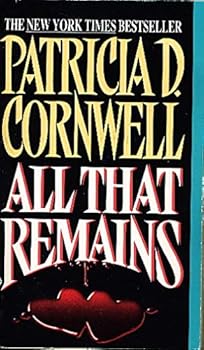 It has long been conventional for crime novelists to describe killers using the language of insanity, madness, and mental illness. But in the crime novels of the 1990s, another term keeps cropping up: sick. The murderer in Blanche on the Lam is “sick….Very sick.” In A Walk among the Tombstones, Block’s detective Matt Scudder decides that the serial killers are either “sick…or evil…take your pick.” In L.A. Confidential, the serial killer Douglas Dieterling isn’t mad, he’s “quite physiologically ill. He gets brain inflammations periodically.” The physiological effects of brain inflammation are also mentioned in White Butterfly, where the big reveal about serial killer J.T. Saunders is that he suffers from syphilis, which has affected his brain. As one of Mosley’s characters explains, “VD can make you insane.” Cornwell makes the sickness more literal still. The killer in All That Remains is identified only after it is discovered that he suffers from “aplastic anemia.”
 W
W Instead of having companies build a specialized interface for every kind of work, the AI generates the right interface on the fly. I suspect the future isn’t one interface to rule them all. It’s AI that generates the right interface for the moment, an agent on your desktop, a chart in a conversation, a custom app to solve a problem. We’re moving from adapting to the AI’s interface to the AI adapting its interface to you.
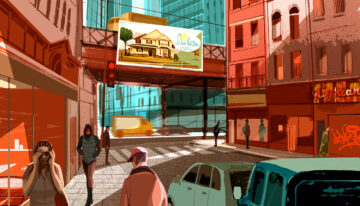 Think of what the typical American city looks like today: its hollowed-out core dotted with parking lots, its run-down inner-city neighborhoods, its sprawl.
 If all goes to plan, as soon as tomorrow, NASA will launch four people on a journey around the Moon. The mission, known as Artemis II, would be the first time humans have left Earth’s protective environment and travelled into deep space since the US Apollo programme, which ended more than half a century ago. And it could carry its astronauts farther from Earth than any humans have ever travelled.
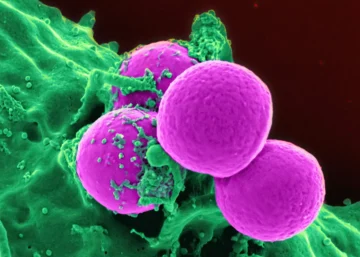 A mixture of bacteria lounge in a dish. Like the bugs populating our guts, most are benign or beneficial. But a deadly strain hides among them. These bacteria can easily escape last-line antibiotics, rapidly spread, and cause mayhem. But in this case, a single dose of genetically engineered cells hunts them down and wipes out nearly the entire population in a day, while leaving all the other harmless cells alone.
 At the beginning of
 O
O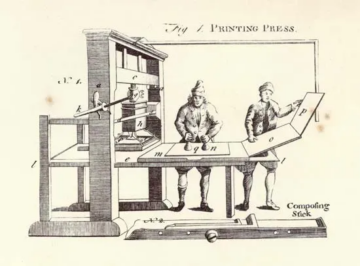 Right now is a weird time to be a political economist. AI is straining our already brittle political institutions. We might lurch into a dystopia in which we live in the grips of a techno-leviathan, forced by our employers to train our own AI replacements, then kicked to the curb in a society organized to the benefit of a tiny number of people who control the machinery that controls the world.
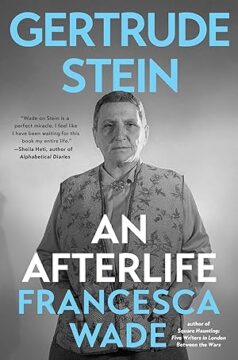 No one understands Gertrude Stein. For this, we should all give thanks. It is almost a cliché to emphasize her work’s difficulty, but her writing remains imposing, both due to its sheer volume—her unpublished writings were originally collected in eight volumes, to say nothing of the numerous books published during her life—and its style.
 Dry Leaf
  As
As 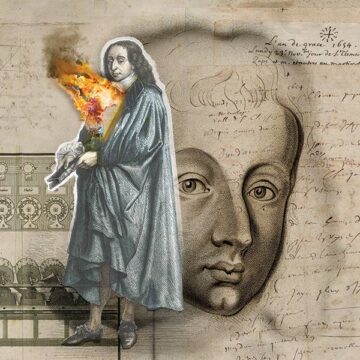 On a cold November night in 1654,