
Joseph Lawler in The New Atlantis:
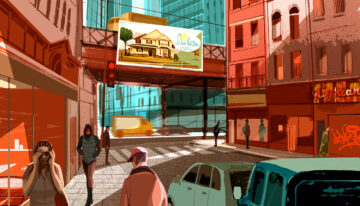 Think of what the typical American city looks like today: its hollowed-out core dotted with parking lots, its run-down inner-city neighborhoods, its sprawl.
How did this happen? Cities weren’t like this a hundred years ago. They were real cities in the sense in which most people would understand the word, with jobs, businesses, houses, churches, and every other institution related to daily life concentrated around a dense center. Today, cities are almost the inverse of that, with a large population settled out in sprawl, and a hollowed-out center where far fewer people live.
Conversations about this transformation typically collapse into a focus on attitudes about cars. On one extreme, urbanists blame an American fetish for SUVs and highway construction for our lack of charming walkable neighborhoods and the destruction of areas that might have developed into such places. On the other extreme, suburbanists view urbanists as anti-car fanatics who want to use government policy to choke off the low-density single-family housing development that has characterized America since World War II.
What they both tend to overlook is that almost all Americans today have spent their entire lives under a set of federal laws and rules that have helped hollow out the cores of our cities.
More here.
Enjoying the content on 3QD? Help keep us going by donating now.