
Ellen Wexler in Smithsonian:
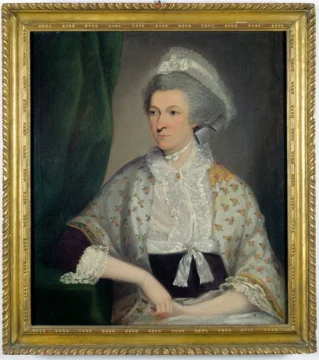 As John Adams lobbied in Philadelphia for American independence, his wife, Abigail, was consumed with questions. She filled pages with them, often complaining when John didn’t answer fully or quickly enough. “What code of laws will be established?” she wrote to him from their home in Braintree, Massachusetts, in November 1775. “Who shall frame these laws? Who will give them force and energy?” Five months later, as members of the Second Continental Congress dragged their feet on separation from Britain, she wondered, “Shall we not be despised by foreign powers for hesitating so long?”
In her letters, Abigail kept her husband abreast of the siege of Boston, vividly describing “the rattling of the windows, the jar of the house and the continual roar of 24-pounders.” She read Thomas Paine’s “Common Sense” and asked how the seminal pamphlet had been received in Congress. “She prided herself on navigating the most important intellectual currents of her era,” biographer Woody Holton writes in Abigail Adams: A Life. “To an extent that does not seem unusual today but that would have astonished her grandmother, Abigail liked to think about her thoughts.”
Fortunately, John also liked his wife’s inclination for reflection. In a teasing letter dated to 1764, the year they married, he wrote that her “habit of reading, writing and thinking” caused her to slouch. He also chided her for sitting too often with her legs crossed, which “springs I fear from the former source vizt. too much thinking. These things ought not to be!” By early 1776, John and Abigail both had a lot on their minds. They longed to speak freely about the creation of a new nation, which was looking more plausible every day. “Is there no way for two friendly souls to converse together although the bodies are 400 miles off?” John wrote. “Yes, by letter. But I want a better communication. I want to hear you think or to see your thoughts.”
More here.
Enjoying the content on 3QD? Help keep us going by donating now.