
Mark Jarman at the Hudson Review:
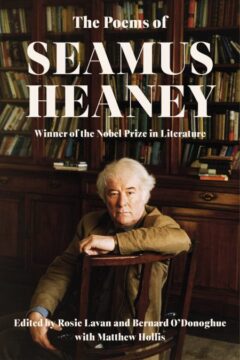 By the end of Heaney’s life, all literary laurels became destined for him and created a lore of fame, from the rhyming epithet “Famous Seamus,” said to have been coined by the English poet James Fenton, and anecdotes of his having to apologize once again to another worthy and deserving Irish poet when the award came instead and once again to Famous Seamus. I have heard the Irish poet Ciaran Carson speak of this dilemma. And I have heard Heaney’s friend Michael Longley who tells of an exchange with an English Don. “How do you feel about the Heaney phenomenon?” said Don asked Longley. To which Longley replied, “Envious.”
Heaney the poet is more the heir to Robert Lowell than to W. B. Yeats, though Lowell himself might be said to be heir to Yeats. Read Heaney’s poems and see the way the tones and textures of Heaney’s life collect sound and form not only from Lowell’s Life Studies but also from Theodore Roethke’s lyric sequences. By mid century the lyric in English had aspired to, in Hart Crane’s famous phrase, new thresholds, new anatomies.
more here.
Enjoying the content on 3QD? Help keep us going by donating now.