
Graham Tomlin in Plough:
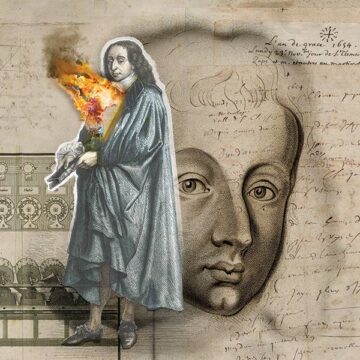 On a cold November night in 1654, a young Frenchman, well known in fashionable circles for his scientific experiments and mathematical genius, sat down to pray in his small apartment in Paris. What happened next surprised him. For about two hours, he had an extraordinary experience of the presence of God, which turned his life around and set him on a new trajectory.
The man was Blaise Pascal. He told no one of this experience, but wrote an account of it which he hid in the lining of his jacket. It was found by chance by a servant preparing his body for burial when he died eight years later. The document became known as the Mémorial and the event as Pascal’s “Night of Fire.”
The term “cultural Christianity” has become prominent recently, notably when the public atheist Richard Dawkins described himself as a “cultural Christian.” He claims to enjoy Christmas carols and church architecture, despite not believing a word of Christian doctrine – recognizing, as he put it, “a distinction between being a believing Christian and being a cultural Christian.”
Before his Night of Fire, Pascal was by no means an atheist like Dawkins, or even a mere cultural Christian.
More here.
Enjoying the content on 3QD? Help keep us going by donating now.