Tomiwa Owolade in The Ideas Letter:
I am not from New York. I am not Jewish. I am not a member of a Marxist group. I did not live through the 1930s and 1940s. I am a 27-year-old British-Nigerian who grew up in London. Yet the New York Intellectuals are my people.
They are my people because even though they had ample reason to be defined by their identity, they tried to transcend their personal circumstances with their wide-ranging embrace of culture. They didn’t see themselves, and they should not be seen, simply as Jewish New Yorkers who were advocating anti-fascism and anti-Stalinism in the middle of the 20th century; they possessed a universalist spirit. And this is a spirit to which I aspire.
I remember the wonder I felt reading my first James Baldwin essays from his 1955 collection Notes of a Native Son at my university library or watching I Am Not Your Negro, Raoul Peck’s excellent documentary about Baldwin, on a bright spring afternoon of 2017. I remember in my early 20s picking up Elizabeth Hardwick’s fat collection of criticism (published by NYRB Classics) in a second-hand bookshop and devouring it. I remember discovering the lives and works of other New York Intellectuals in Louis Menand’s monumental 2021 cultural history The Free World: Art and Thought in the Cold War.
More here. Relatedly, Leonard Benardo in The New Statesman:
For many years my mother taught a course on women in literature in a public high school in the Bronx, New York. In the first half of the semester, she selected texts by men writing about women. The second half, books penned by women about women. Hers was a pedagogical conceit that fostered lively discussion among engaged teenagers as to how men and women write differently about the female experience.
Write Like a Man: Jewish Masculinity and the New York Intellectuals is historian Ronnie Grinberg’s variation on my mother’s theme. Grinberg wants to know how the writing of a legendary band of essayists and critics, dubbed the New York Intellectuals by one of its members, reflects what she calls a “secular Jewish masculinity”. Grinberg is especially focused on how the few women writers of the circle were engulfed by a masculine milieu, a trope that recurs in her book like a Wagnerian leitmotif. Did “secular Jewish masculinity” toughen the prose of (and establish a pose for) the New York Intellectuals? What exactly does it mean to “write like a man”, and is it a useful frame to reassess the criticism of this hallowed group?
The New York Intellectuals are customarily associated with that cohort of striving first-generation Jews who met in New York’s great public university, City College of New York (CCNY), and forged comradeships through the impassioned contestation of ideas. From the 1930s through the 1980s, by means of small journals with outsized influence – Partisan Review, Commentary, Encounter – this loosely fitted imagined community produced some of the most incisive and bold American writing of the 20th century. Arguing the World, Joseph Dorman’s documentary from 1997, which traced the intellectual life trajectories of four of its members, Daniel Bell, Irving Kristol, Irving Howe and Nathan Glazer, is the consummate statement of their original convictions and different roads taken. Predominantly male, white and Jewish, there were still others in the polymathic cauldron of the New York Intellectuals who were not: Hannah Arendt, James Baldwin, Mary McCarthy, Elizabeth Hardwick and Dwight Macdonald. What held such a complicated group together and over generations? In a word, ideas. Ideas were the currency, and politics and culture the canvas, upon which the American world of letters took a great leap forward.

 If you are single and looking for a romantic partner, chances are that you have used a dating app. But the likelihood that others will like, or even see, your profile may depend on your race.
 Today is a big one for Kemmerer—for the coal plant workers who will be able to see their future job site being constructed across the highway, for the local construction workers who will be part of a 1,600-person skilled labor force building the plant, and for the local businesses that will take care of the new workforce.
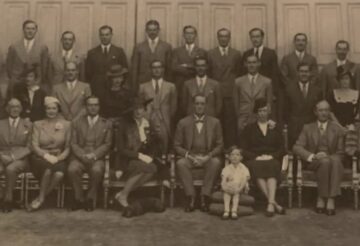 “I feel enormous shame about what happened,” Susannah Herbert tells me.
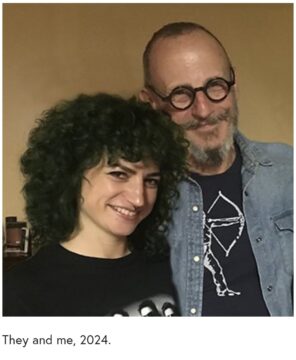 I successfully raised two children to adulthood who, until recently, I called my daughters. But in the past year, one of them has asked that I not refer to her with terms associated with females. She doesn’t feel that words like “her,” “ma’am,” or “daughter” describe her. In fact, she doesn’t think of herself as a woman and does not like to be referred to as “she.” Her pronouns are “they” and “them.”
 Last month, researchers discovered cells in the brainstem that regulate inflammation throughout the body. In response to an injury, these nerve cells not only sense inflammatory molecules, but also dial their circulating levels up and down to keep infections from harming healthy tissues. The discovery adds control of the immune system to the brainstem’s core functions — a list that also includes monitoring heart rate, breathing and aspects of taste — and suggests new potential targets for treating inflammatory disorders like arthritis and inflammatory bowel disease.
 H
H
 I
I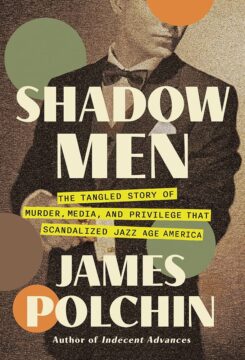 The case was the stuff of tabloid dreams. It had everything: murder, blackmail, money, class, secrets, even the occult. And the public, in the time of Prohibition, anti-vice crusades and so-called purity campaigns to combat germs, couldn’t get enough of it.