
Kate Mackenzie and Tim Sahay in The Polycrisis Dispatch:
This week the Brian Deese — former WH National Economic Council director of Bidenomics — essay in Foreign Affairs calling for a “green US Marshall Plan” has inevitably drawn a lot of attention. We’re planning a bigger analysis in the next Polycrisis newsletter around mid-late September. (If you’re not signed up, go here and do it). This week, we reflecting on pivotal moments and themes that led to this particular development.
But first, let’s deal with the concern over the “Marshall Plan” label:
Whatever its shortcomings, Deese’s proposal does attempt to reckon with new realities: China has had a Cambrian Explosion in clean tech manufacturing; China’s overseas development finance is seen in the south as more appealing and less conditional than the US; many southern countries are exasperated with the world order; and US domestic politics are in a permanent trench war. And climate change can’t be stopped without addressing all of this and more.
More here.
Enjoying the content on 3QD? Help keep us going by donating now.
 The central gag of Slough House, the organization, is that the worst spies in London have been thrown together in one building and punished with terrible, useless jobs. When MI5 rookie River Cartwright is sent to Slough House, for example, he’s put to work sorting through garbage he steals from bins. When he asks Jackson Lamb, his boss, what he’s meant to be looking for, Lamb cracks, “The remnants of a once promising career.”
 I
I S
S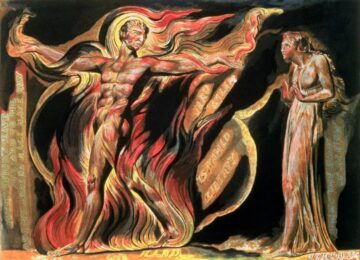 What is a novel, or any work of art, but the product of its time, of commerce? What is it but another colorful consumer unit, to be slid dutifully on a shelf or hawked through the internet? I’ve been mulling, of late, actions and reactions, the trope of the lone genius and the trope of systems. One held very long in the culture before being defenestrated, in academia at least, over the last several decades. The other is now dominant—at least, among those in the know, those who still analyze literature. In a systems conception, the genius of creation is disregarded and dismissed; no lone spark could truly emerge, no individual could labor, by herself, to write the novels, poems, or plays that endure across the ages, or even get remembered a decade after publication. Christian Lorentzen’s
  But I’d like to turn, at least at the outset, to a consideration of the sheer artistry of Morrison’s film, how even though its pacing is entirely dictated by the inevitable facticity and specificity of the tick-tock of the film’s method (all Morrison has done is to expertly align the time-signatures of a wide array of simultaneously running cameras and then cut in and out amongst them, guiding the viewer’s attention across a shifting grid of all that simultaneity), it is still remarkable how many editorially flecked or at any rate consciously discerned and foregrounded themes nevertheless emerge.
  On its surface, the book is deceptively simple. At first hating Svalbard and seeing only bleak desolation, she undergoes a change, learning a great deal about herself, humanity, and the wild in the process. This is a cliched appraisal of the book, but part of its charm is how clearly these beats are telegraphed, and how skillfully she delivers on what you already suspect is coming.
 The same week this new two-volume edition of Charles Baudelaire’s Œuvres complètes arrived in bookshops, Spotify unveiled a new advert in the Paris Métro. It read: “You knew Le Spleen de Paris, here’s the Spleen of La Courneuve”. In the heart of the Seine-Saint-Denis banlieue, La Courneuve is a few miles north of the centre of Paris, where Baudelaire was born and mostly raised. On the other side of the périphérique ring road, it is where Jules Jomby’s family moved from Cameroon when he was six. Jules grew up in the blocks of council flats called the Cité des 4000, famously profiled in Jean-Luc Godard’s Deux ou trois choses que je sais d’elle (1967). Later, Jules was to adopt the stage name Dinos as he launched a successful rap career; later still, he was to draw inspiration from Baudelaire on his track “Spleen”, from his first studio album, Imany (2018).
 From its inception, pop (and rock) music was about youth. It offered a sound and a culture that stood in direct contrast, if not opposition, to the smugness of America’s Greatest Generation and to the choking conformity of postwar austerity Britain. It was made by the young, for the young. It was supposed to be ephemeral, disposable, temporary. The consumers would grow tired of the dance and move on to more adult, societally useful pursuits; the performers would have their moment in the spotlight, then develop jowls and get proper jobs.
 We’re talking the day after the general election. How do you feel about Labour winning power?
 I
I The rape and killing of a 31-year-old woman medical resident has touched off protests across India as the country grapples with inadequate protections for women and increasing