
Hannah Thomasy in The Scientist:
 When Julie Moreno arrived at Texas A&M University as a first-generation student in 2000, she wanted to work in veterinary medicine. But the opportunity to work in a research laboratory during her time as an undergraduate ignited her passion for science and changed the course of her life. “Before that, I was never exposed to research,” said Moreno. “I didn’t even know it was an option.”
Once she had discovered this career path, she never looked back. After completing her undergraduate degree, she applied to a PhD program at Colorado State University (CSU), where her interest in neuroscience began to blossom. “I love the brain,” she enthused. “It’s super exciting because there’s so many unknowns—like a big puzzle that we haven’t figured out yet.” In her graduate work, Moreno investigated the neurotoxic effects of manganese exposure on brain development, exploring the roles of glial cells and neuroinflammatory pathways in mediating these effects and identifying estrogen as a potential protective factor.1,2 She impressed fellow lab members, including Katriana Popichak, an undergraduate researcher at the time, with her dedication to her research as well as her unflagging commitment to helping others.
More here.
Enjoying the content on 3QD? Help keep us going by donating now.
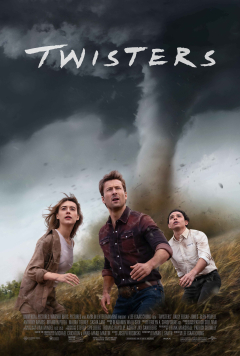 Right away, Lee Isaac Chung’s Twisters won me over with a twist I did not expect: it killed off almost its entire cast of young STEM jerks in the first big scene. I’m so sick of these chipper teams of Spielbergian science kids in everything. Read a real book for a change. “Five years later,” they’ve been replaced by an alternative group of gnarly storm-chasing tornado wranglers—older STEM kids in disguise, but a slight improvement.
 I
I T
T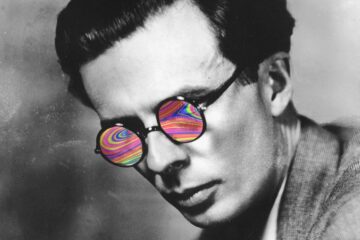 Around Christmas Eve 1955,
  Genetic analysis of a Neanderthal fossil found in France reveals that it was from a previously unknown lineage, a remnant of an ancient population that had remained in extreme isolation for more than 50,000 years. This finding sheds new light on the final phase of the species’ existence.
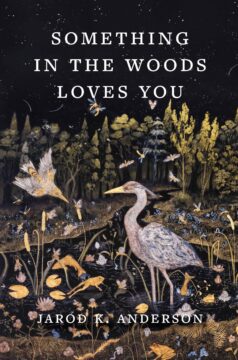 I have difficulty interpreting the nature of my own life, a thing I feel intimately and continuously, so it’s not surprising that we can’t all agree on the nature of herons.
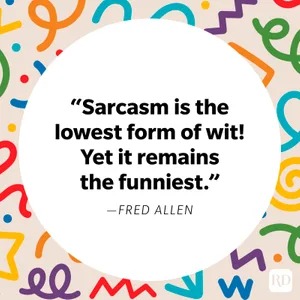 Love ’em or hate ’em, there’s a reason sarcasm quotes are all over the internet. Like funny sayings, sarcasm quotes play with the interpretation of words and tone in a way that can stretch your brain if you’re not expecting it. To use sarcasm, you have to say something that’s the opposite of what you mean (kind of like uttering a
 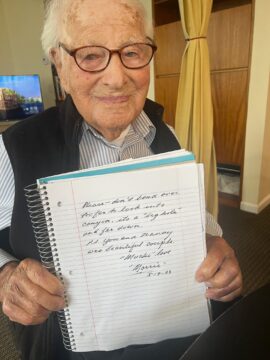 About a month ago, Judith Hansen popped awake in the predawn hours, thinking about her father’s brain.
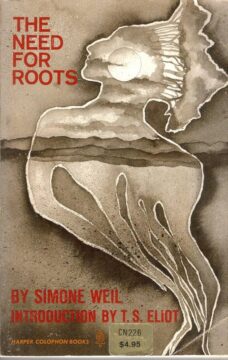 The French philosopher Simone Weil was a soul at odds with herself and with a world of affliction. The causes she espoused as a social activist and the faith she professed as a mystic were urgent to her and, as she saw it, to humanity. Little of her work was published in her lifetime, but since her death, at thirty-four, in 1943, it has inspired an almost cultlike following among readers who share her hunger for grace, and for what she called “decreation”—deliverance from enthrallment to the self.