
Tom Jenks in The Guardian:
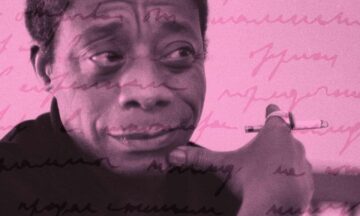 Baldwin was 33 in 1957, when he published his short story Sonny’s Blues, and it might be said that the whole of his lifetime went into the story. Readers today coming for the first time to this tale of Harlem life and heroin addiction might view it in contemporary terms, and there’s no harm in that: the messages in the story are as evergreen as the biblical allusions Baldwin uses in the story. But it is also worth recalling that in 1957 there was no Civil Rights Act, the struggle over Jim Crow laws and segregation had a long way to go, and racial conditions and inequalities were deplorable and disregarded by most white Americans. The story poses two brothers’ estrangement over addiction and their ultimate rapprochement as a quietly implicit analogy to racial division and an inspiration toward unity and love, and rides, as its title suggests, on music, specifically jazz. Only a reader with a heart of stone will fail to be moved to tears of recognition, sorrow and joy when the story reaches its conclusion.
More here.
Enjoying the content on 3QD? Help keep us going by donating now.
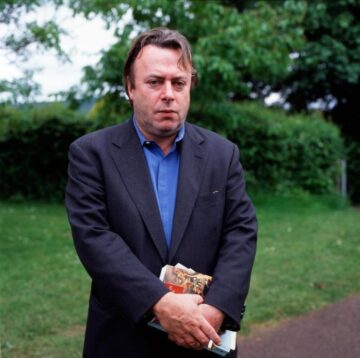 Like Saul Bellow’s Von Humboldt Fleisher, Hitchens was a “champion detractor,” a terrific hater, and always more fun to read when he was denouncing than when he was praising. Rare is the enemy or ideological foe who gets mentioned in these pages without incurring a quick swat of the pen. Thus, we are treated to “the sinister cretin Reagan,” “that recreational vulpicide Roger Scruton,” “Senator Karl Mundt, a dinosaur Republican and tireless witch-hunter,” “James Jesus Angleton, crazed and criminal head of the CIA,” and so on. Some critics have found such comments silly or bad-mannered. “He was always too ready with abuse,” George Scialabba wrote after Hitchens’s death. I agree, and no doubt being so amused by name-calling is a bad habit, but reading these essays I found it one I was more than happy to indulge.
 From causing a stir
 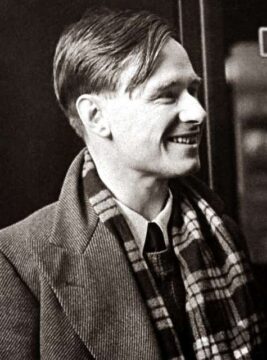 Many writers’ graves are
  I
I Welcome to Lit Trivia, the Book Review’s regular quiz about books, authors and literary culture. This week’s installment challenges you to identify classic novels from the descriptions in their original — and, well, not wholly positive — reviews in the pages of The New York Times. In the five multiple-choice questions below, tap or click on the answer you think is correct. After the last question, you’ll find links to the books if you’d like to do some further reading.