
Jerry Saltz at Vulture:
Abigail Goldman’s micro-renderings of scenes of carnage, created at 1:87 scale, are a testament to the pull of the small, especially at a time when art is getting bigger and more elaborately produced. In one tableau that could have come out of Breaking Bad, a shipping storage container in a gravel field contains a bloody corpse and a woman with her hands up as two gunmen nearby take aim. Another features a powder-blue van in a desert and two men warming their hands over an oil-drum fire, a mutilated corpse splayed between them. A third features a machine-gun-toting Queen Elizabeth and her two corgis standing over a dead man. Behind her, the paintings, the china in the cabinet, the upholstered chairs, the patterned wallpaper — all are perfect.
Goldman calls her works “Die-o-ramas.” I call them a cross between nightmares, documentary, and horror. In her day job, she is an investigator for a public defender outside Seattle, researching horrendous incidents of death, murder, and suicide.
more here.
Enjoying the content on 3QD? Help keep us going by donating now.
 When history is about to take an abrupt turn, is there something in people’s eyes or in their secret longings that pre-announces it somehow—and that minds of a particular cast (poets and visionaries or perhaps psychiatrists) can read clearly and even put into words? If the world were to end next year, who would know about it today, and how? When we look back on the past, we say sometimes that there were “clear signs” that this or that event would happen, that the “writing was on the wall.” But how many of these signs were really there, and how many are projected back by hindsight? The problem is of special importance to historians. How can the historian single out a past event, focus on it exclusively, and pretend not to know what came after? How can a scholar fake ignorance?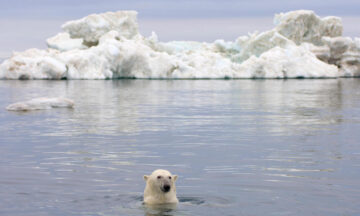
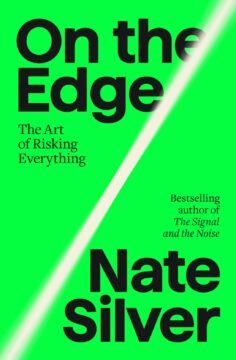 In 2016, Nate Silver was panned in the press and on social media for his presidential election forecast. His model
 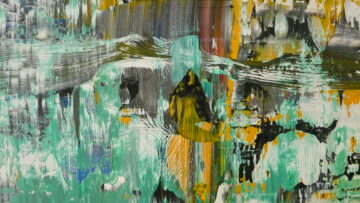 In the spring of 1961, Gerhard Richter, a young East German artist noted mainly for his portraits and socialist wall paintings, slipped through the last chink in the Iron Curtain—West Berlin—and fled to the Federal Republic of Germany. A few weeks later, he justified this move in a letter to his former teacher at the Dresden Academy of Fine Arts: “My reasons are mainly professional. The whole cultural ‘climate’ of the West can offer me more, in that it corresponds better and more coherently with my way of being and working than that of the East.”
 My first visceral memories of the regime in Iran were formed before I was born. My mother had been in the notorious Evin prison in the 1980s, when hanged bodies were lined up along the entrance path so that prisoners knew what to expect. Although naturally apolitical, my mother was seen with a dissident. She narrowly escaped lynching, only because the dissident learned of my mother’s arrest and turned herself in.
 W
W T
T T
T Though bears loom large in our collective imagination, their flesh-and-blood counterparts are increasingly losing ground. Eight Bears, the debut of environmental journalist Gloria Dickie, draws on visits to key hotspots where Earth’s remaining bear species come into conflict with humans. By interviewing scores of people, both conservationists and those suffering at the paws of these large predators, this nuanced and thought-provoking reportage asks whether humans and bears can coexist.
 In the
  SEVENTY YEARS AGO, Ray Bradbury, then 33 years old—the author of The Martian Chronicles (1950), The Illustrated Man (1951), and Fahrenheit 451 (1953)—stood in front of a mirror in a London hotel room and declared, “I … am Herman Melville!” It was a last-ditch effort to channel the great American writer of Moby-Dick (1851). For Bradbury, it was either that or accept complete failure.
 A
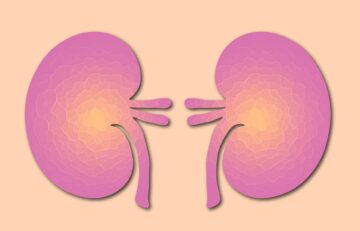
A Depression doesn’t mean you’re always feeling low. Sure, most times it’s hard to crawl out of bed or get motivated. Once in a while, however, you feel a spark of your old self—only to get sucked back into an emotional black hole. There’s a reason for this variability. Depression changes brain connections, even when the person is feeling okay at the moment. Scientists have long tried to map these alternate networks. But traditional brain mapping technologies average multiple brains, which doesn’t capture individual brain changes.